Hyoscyamus kurdicus
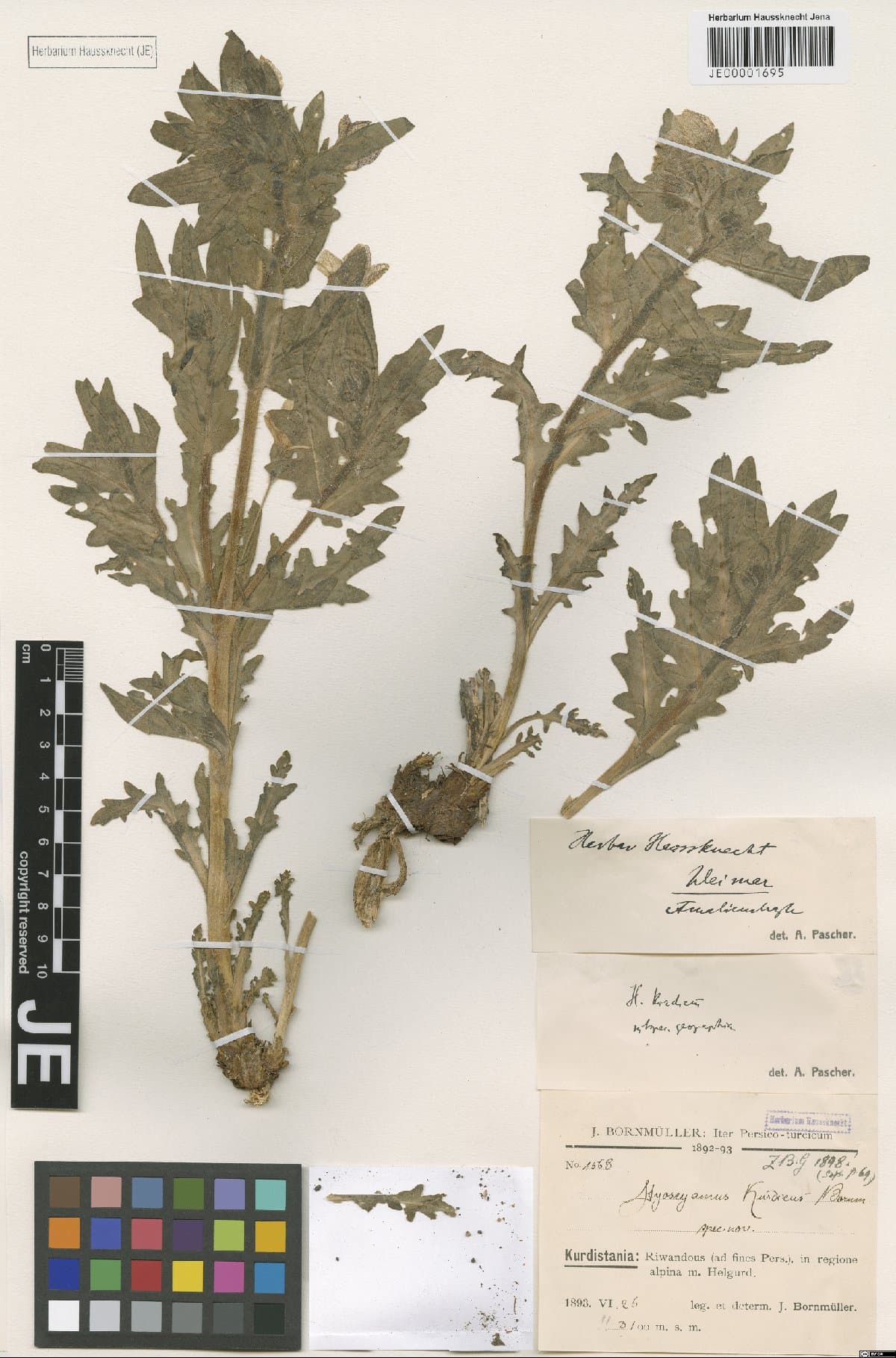
Image: Bornmüller,J.F.N. Iter persico-turcicum 1892–93 (J. Bornmüller) 1568 (cc-by)
NameHyoscyamus kurdicus
Scientific NameHyoscyamus kurdicus
Common NamesKurdish Henbane, Henbane
Plant FamilySolanaceae
Natural HabitatNative to alpine regions of Kurdistan, specifically noted near Riwanous (close to the Persian border) on Mount Helgurd at elevations around 3100 meters above sea level. It thrives in rocky, mountainous environments.
Parts Usedleaf,root,whole_plant
Medicinal Actionsanalgesic, nervine, sedative
Traditional UsesTraditionally used as a potent sedative and analgesic for pain relief, insomnia, and nervous conditions. Due to its high toxicity, it was historically employed with extreme caution for conditions requiring strong antispasmodic or narcotic effects.
Active ConstituentsHyoscyamine, Scopolamine, Atropine
Preparation Methodsinfusion, tincture, poultice, powder
Contraindications & WarningsHighly toxic; contraindicated in pregnancy, breastfeeding, glaucoma, prostate enlargement, heart conditions, and gastrointestinal obstruction. May interact dangerously with other central nervous system depressants, anticholinergics, and alcohol.
Cultivation NotesPrefers well-drained, rocky or sandy soils in full sun to partial shade, typical of its native alpine habitat. Requires specific conditions to mimic its high-altitude, mountainous environment.
Rarityuncommon
Description
Hyoscyamus kurdicus is a herbaceous plant characterized by its robust stem and deeply lobed or toothed leaves, which appear somewhat hairy in the dried specimen. It typically grows from a taproot system, forming a bushy habit.