Cuscuta desmouliniana
NameCuscuta desmouliniana
Scientific NameCuscuta desmouliniana
Common NamesDesmoulins' Dodder, Dodder, Love Vine
Plant FamilyConvolvulaceae
Natural HabitatThis parasitic plant typically grows on a variety of herbaceous and woody host plants in disturbed areas, fields, roadsides, and open woodlands, often in temperate regions.
Parts Usedwhole_plant,seed
Medicinal Actionsadaptogen, antioxidant, astringent, diuretic
Traditional UsesIn traditional medicine, particularly Traditional Chinese Medicine (where related Cuscuta seeds are known as Tu Si Zi), the seeds and sometimes the whole plant are used as a kidney and liver tonic. It is traditionally employed to improve vision, strengthen bones, and address issues such as impotence, premature ejaculation, and frequent urination, often considered to nourish 'kidney essence'.
Active ConstituentsFlavonoids, Lignans, Polysaccharides, Coumarins
Preparation Methodsinfusion, decoction, powder, tincture
Contraindications & WarningsCaution is advised during pregnancy due to potential hormonal effects. As a parasitic plant, it can absorb compounds from its host, so potential concerns exist if the host plant is toxic or treated with pesticides.
Cultivation NotesAs an obligate parasitic plant, Cuscuta desmouliniana cannot be cultivated independently. It requires a suitable host plant to germinate and grow, attaching via haustoria to extract water and nutrients.
Rarityuncommon
Description
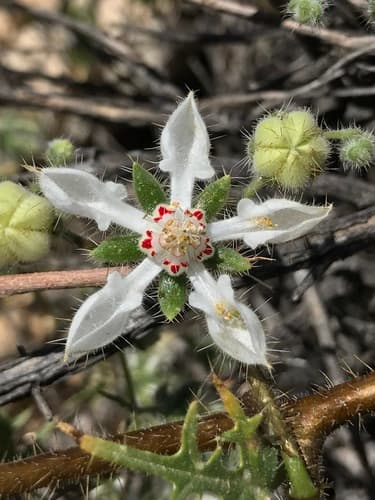
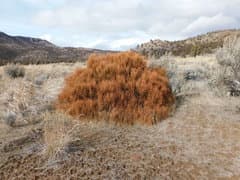
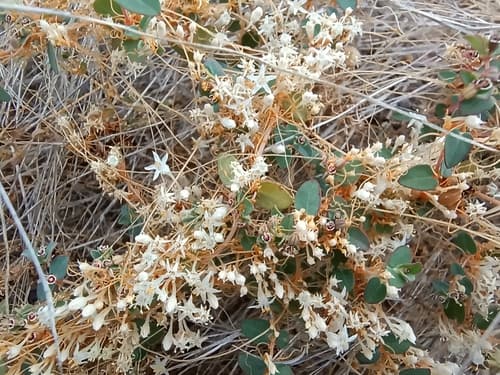
Cuscuta desmouliniana is an annual, obligate parasitic vine characterized by its slender, yellowish-orange, thread-like stems that lack true leaves and twine tightly around host plants. It produces dense clusters of small, white to cream-colored, bell-shaped flowers along its stems.