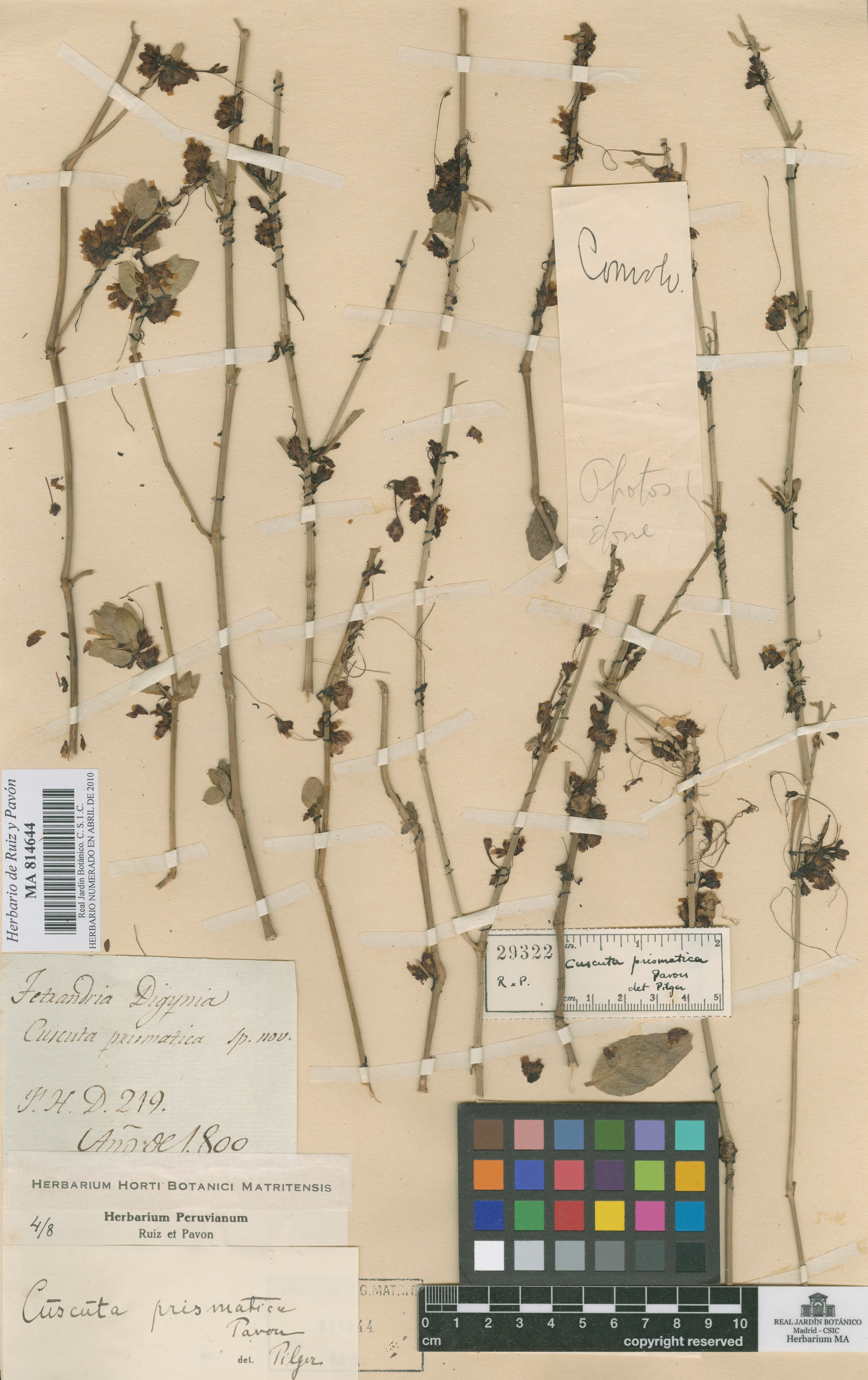
Cuscuta prismatica
NameCuscuta prismatica
Scientific NameCuscuta prismatica Pav. ex Choisy
Common NamesDodder, Cuscuta
Plant FamilyConvolvulaceae
Natural HabitatAs an obligate parasitic plant, it thrives by attaching to various host plants in diverse habitats, typically found in temperate and tropical regions where suitable hosts are available.
Parts Usedwhole_plant,seed
Medicinal Actionsadaptogen, antioxidant, diuretic, anti-inflammatory
Traditional UsesTraditionally, Cuscuta species are used in herbal medicine to support kidney and liver function, enhance reproductive health, and as a general tonic. It is also employed for its potential to improve vision and strengthen bones.
Active ConstituentsFlavonoids, Lignans, Polysaccharides, Cuscutin
Preparation Methodsinfusion, decoction, powder, tincture
Contraindications & WarningsAvoid during pregnancy and lactation. May interact with certain medications due to its diuretic properties. Consult a healthcare professional before use, especially for individuals with chronic conditions.
Cultivation NotesCuscuta species are obligate parasites and cannot be cultivated independently. They require a suitable host plant to germinate and grow, attaching to the host to extract nutrients for survival.
Rarityuncommon
Description
Cuscuta prismatica is a parasitic, herbaceous vine characterized by its slender, yellowish-orange, leafless stems that twine around host plants. It produces small, clustered flowers along its stems, as seen in the dried specimen, and lacks true leaves.