Climbing Hydrangea
NameClimbing Hydrangea
Scientific NameHydrangea anomala subsp. petiolaris
Common NamesClimbing Hydrangea, Japanese Climbing Hydrangea
Plant FamilyHydrangeaceae
Natural HabitatNative to the woodlands of eastern Asia, including Japan, Korea, and Sakhalin, where it naturally climbs on trees and rock faces in moist, shaded environments.
Parts Usedroot
Medicinal Actionsdiuretic, anti-inflammatory
Traditional UsesWhile other species in the Hydrangea genus, particularly Hydrangea arborescens, have traditional medicinal uses for urinary tract and kidney issues, specific traditional medicinal uses for Climbing Hydrangea (Hydrangea anomala subsp. petiolaris) are not well-documented in herbal traditions. Any attributed medicinal actions are generally extrapolated from the genus.
Active Constituentshydrangin, saponins, flavonoids
Preparation Methodsdecoction, tincture
Contraindications & WarningsAs with other Hydrangea species, potential side effects may include gastrointestinal upset. It should be used with caution during pregnancy and lactation, and may interact with diuretics or blood-thinning medications.
Cultivation NotesA robust climbing vine that thrives in partial to full shade and moist, well-drained soil. It requires sturdy support to climb and can reach significant heights, adhering to surfaces with aerial roots.
Raritycommon
Description
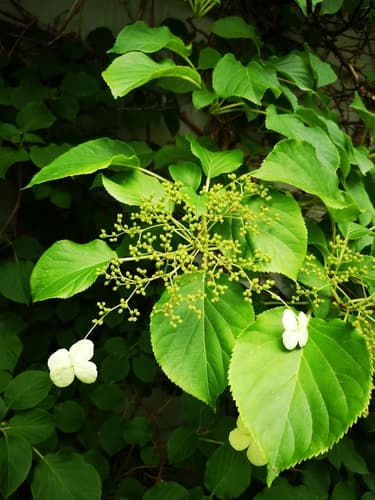
A vigorous, deciduous woody vine that climbs by aerial roots, featuring broad, heart-shaped, serrated green leaves. It produces flat-topped clusters of small, creamy-white fertile flowers surrounded by larger, showy sterile florets.