Cestrum subuniflorum
Image: Conveyor Belt (cc0)
NameCestrum subuniflorum
Scientific NameCestrum subuniflorum Dunal
Plant FamilySolanaceae
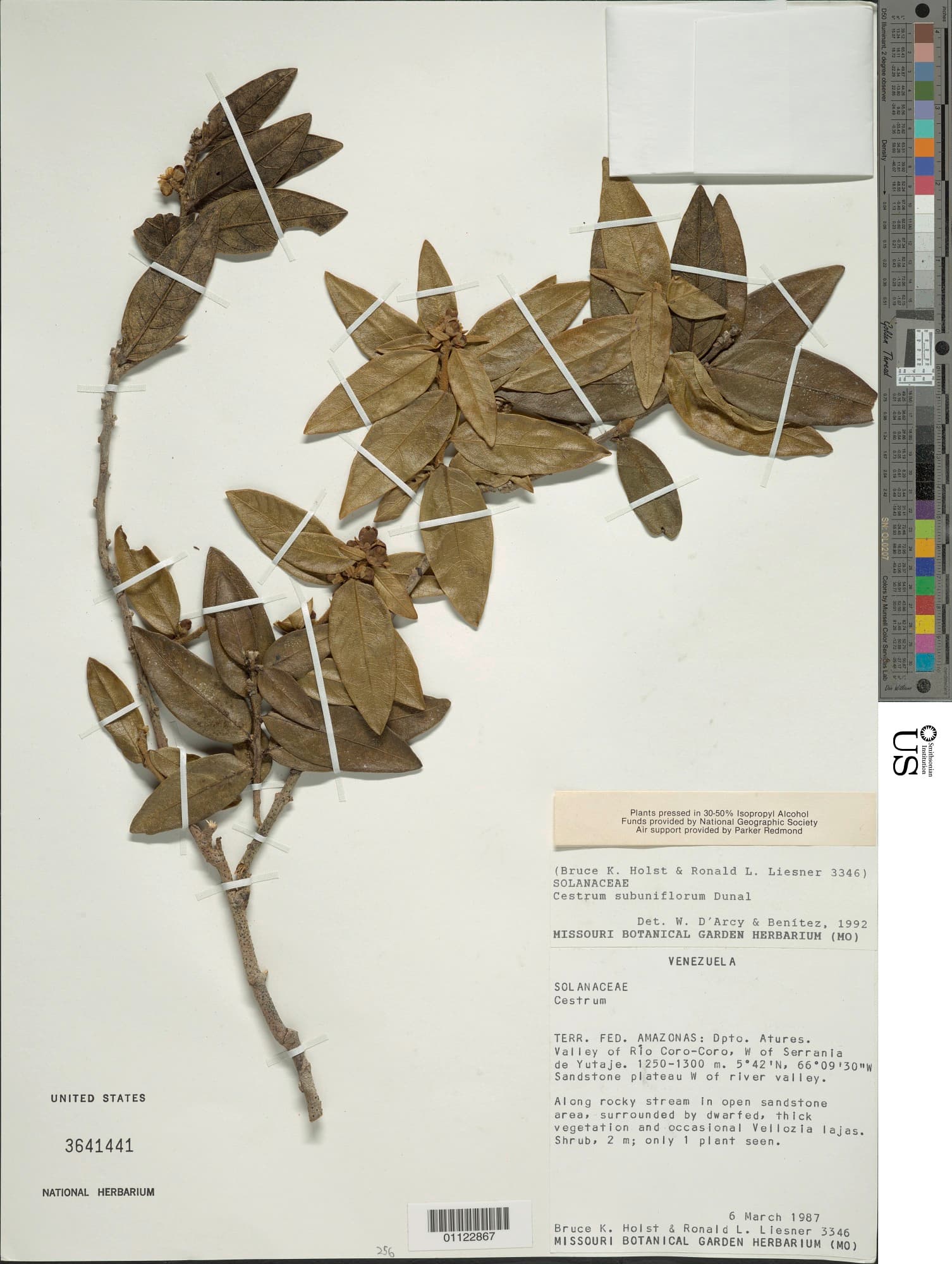
Natural HabitatFound along rocky streams in open sandstone areas, surrounded by dwarfed, thick vegetation, with occasional Vellozia lajas. It grows on sandstone plateaus west of river valleys at altitudes of 1250-1300 meters in the Amazonas region of Venezuela.
Parts Usedleaf,flower
Traditional UsesSpecific traditional medicinal uses for Cestrum subuniflorum are not documented in the provided metadata or image. The genus Cestrum is known to contain toxic compounds, and many species are not widely used medicinally due to potential adverse effects.
Contraindications & WarningsAs a member of the Solanaceae family, the genus Cestrum is often associated with toxicity due to the presence of steroidal alkaloids and saponins. Therefore, Cestrum subuniflorum should be considered potentially toxic, and its internal use is strongly contraindicated without thorough scientific investigation and expert guidance. Specific drug interactions are not documented.
Cultivation NotesThis shrub thrives in rocky, well-drained soil typical of sandstone plateaus and river valleys. It prefers open areas, suggesting a need for ample sunlight. Its natural habitat at 1250-1300m altitude indicates it may tolerate specific temperature ranges.
Rarityrare
Description
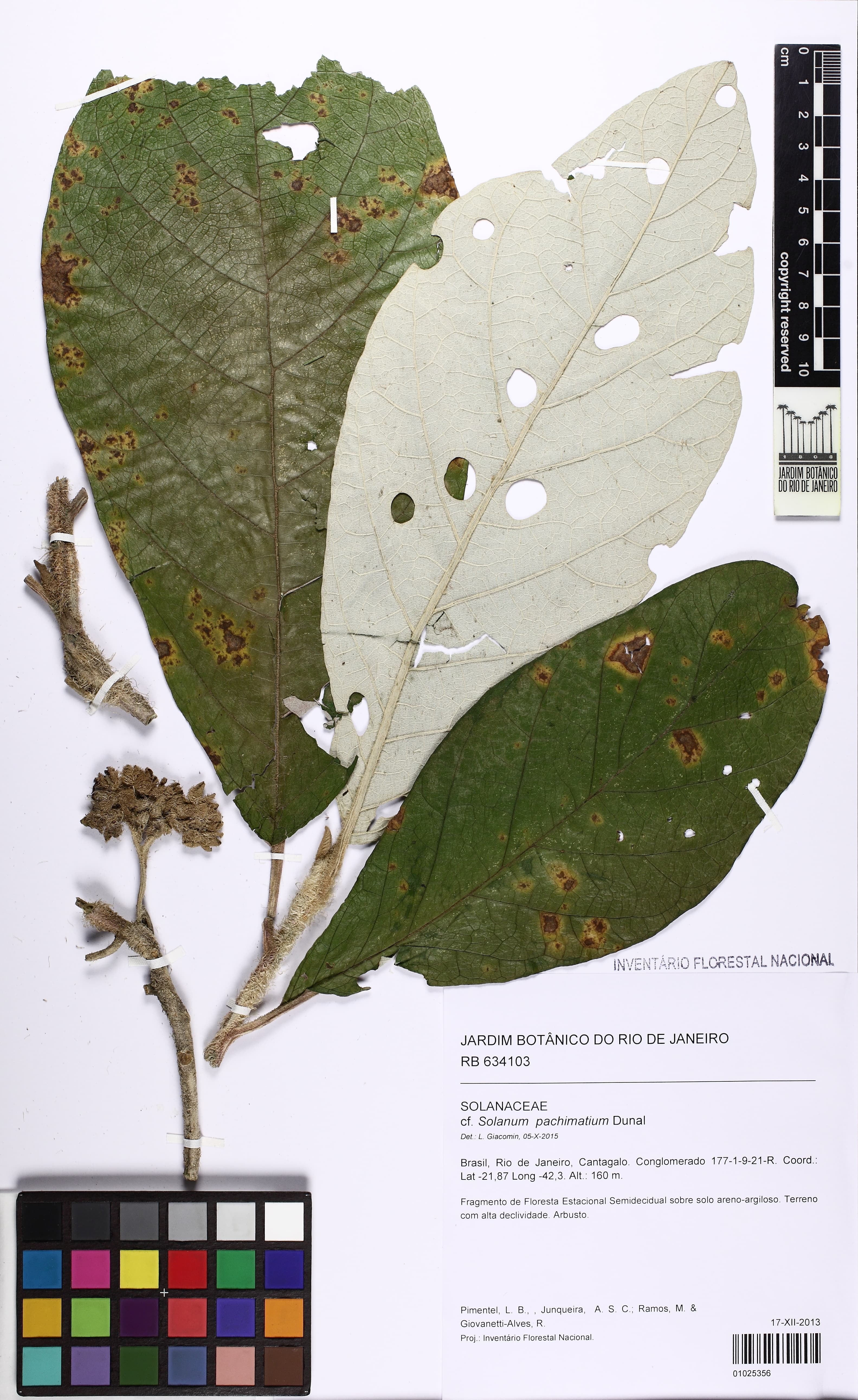
This herbarium specimen displays a dried shrub with woody stems and simple, alternate, ovate to elliptical leaves, which appear to have entire margins. Small, dried floral structures are visible in the leaf axils, indicating its reproductive parts. The plant was observed to grow up to 2 meters tall.