Cuscuta santapaui
Image: Conveyor Belt (cc0)
NameCuscuta santapaui
Scientific NameCuscuta santapaui Banerji & S.Das
Common NamesDodder, Amarbel, Giant Dodder, Akasbel
Plant FamilyConvolvulaceae
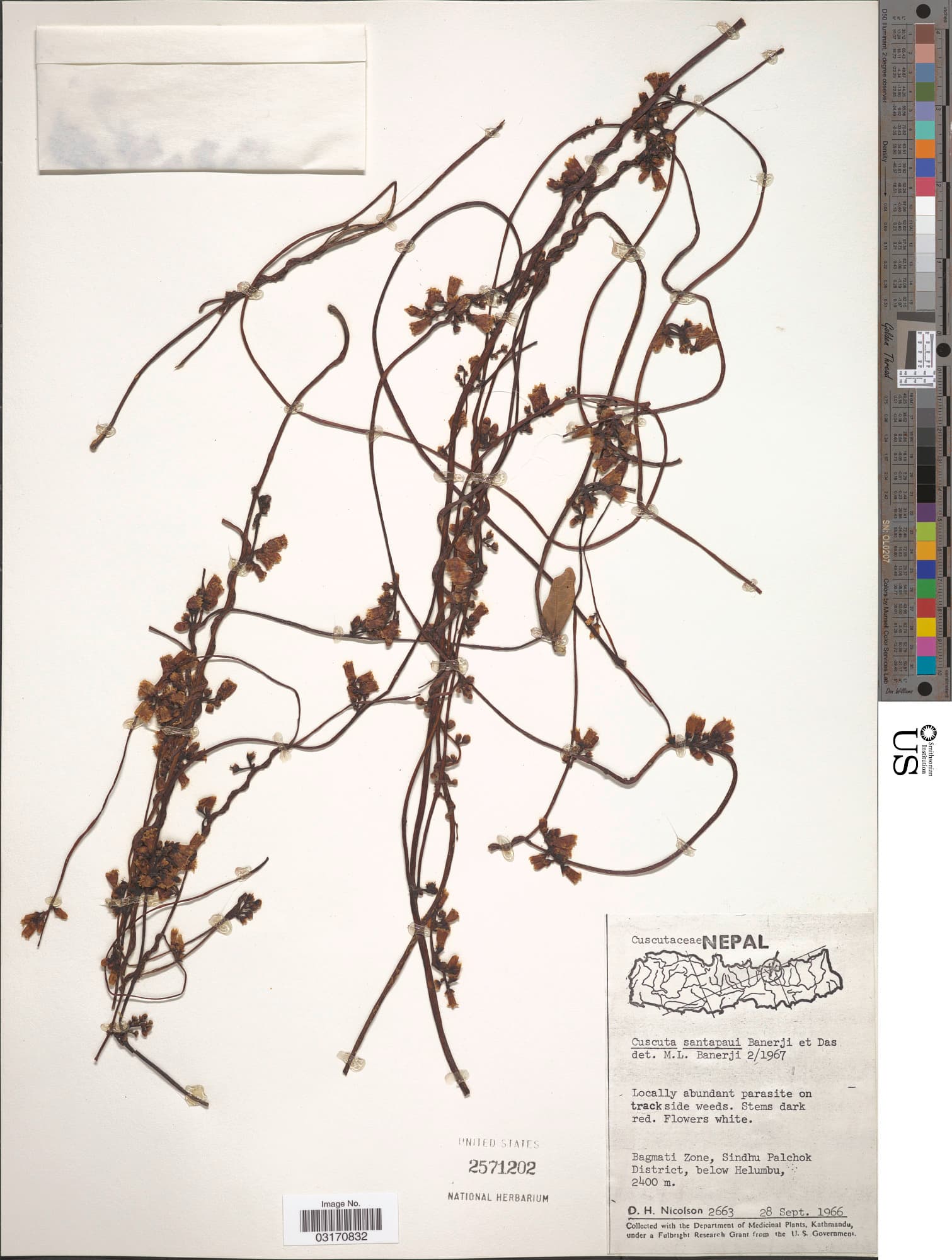
Natural HabitatThis species is a locally abundant parasite found on trackside weeds in mountainous regions, specifically noted in the Bagmati Zone, Sindhu Palchok District, Nepal, at elevations around 2400 meters.
Parts Usedwhole_plant
Medicinal Actionsastringent, diuretic, anti-inflammatory, antioxidant, carminative
Traditional UsesTraditionally, Cuscuta species, including those closely related to C. santapaui like C. reflexa, are used in Ayurvedic and folk medicine for various ailments. It is often employed for liver and spleen disorders, jaundice, skin conditions such as scabies and eczema, and as a general tonic. It is also used to alleviate constipation, flatulence, and urinary tract issues, and applied externally for swellings and wounds.
Active Constituentsflavonoids, lignans, coumarins, alkaloids, saponins
Preparation Methodsinfusion, decoction, powder, poultice, tincture
Contraindications & WarningsCuscuta species should be used with caution during pregnancy. Individuals with severe constipation or those taking diuretic or laxative medications should consult a healthcare professional due to its potential effects on bowel movements and fluid balance.
Cultivation NotesAs a parasitic plant, Cuscuta santapaui cannot be cultivated independently. It requires a suitable host plant to grow and thrive, making conventional cultivation for herbal harvest impractical. It is typically gathered from wild populations.
Raritycommon
Description
Cuscuta santapaui is a parasitic, leafless, twining vine with thread-like, dark red stems. It produces small, white flowers in clusters along its stems, attaching to host plants via haustoria to absorb nutrients.