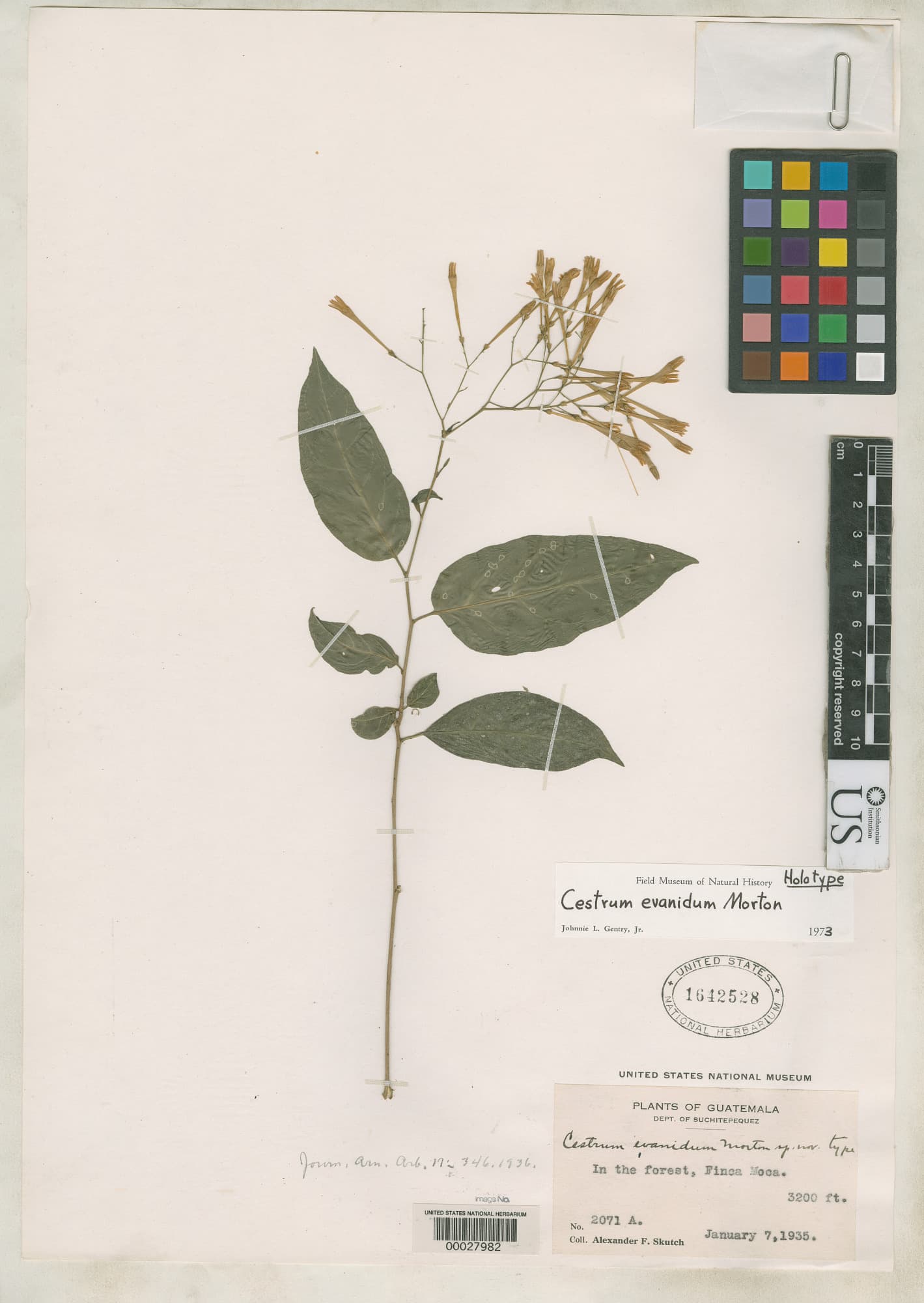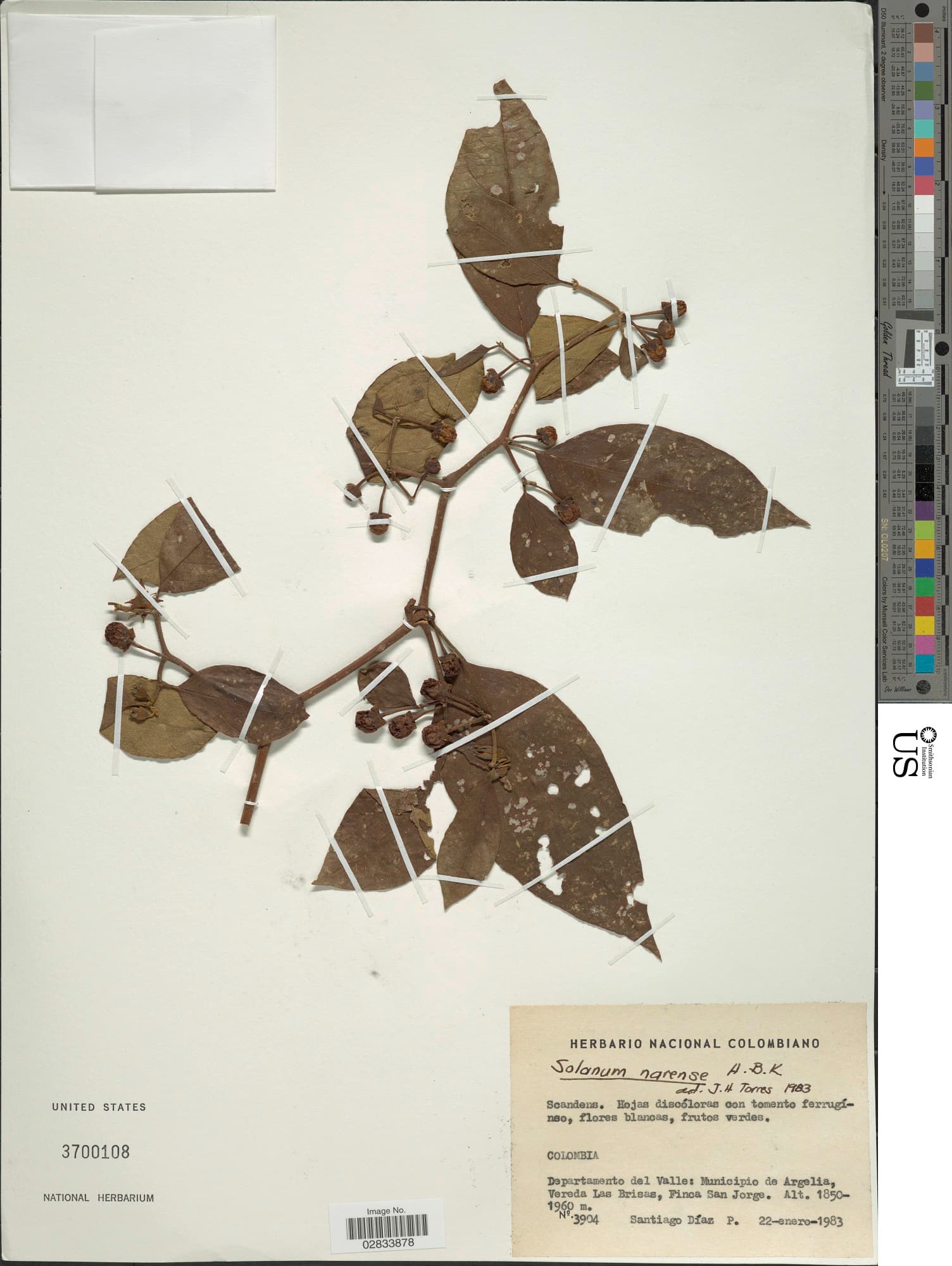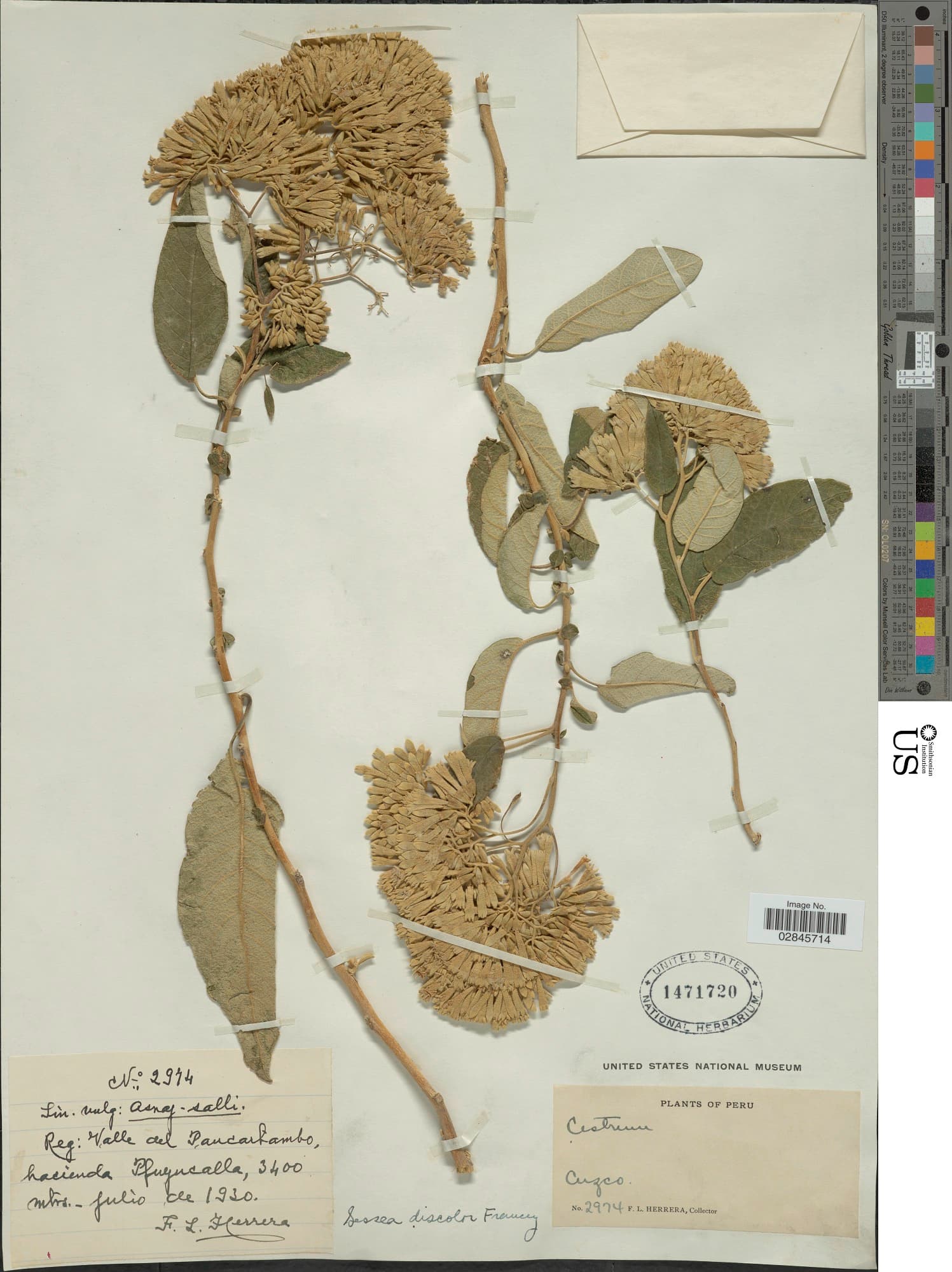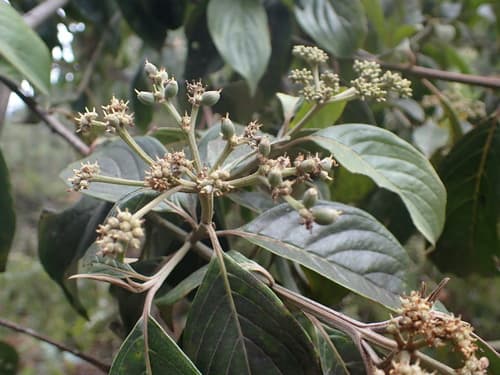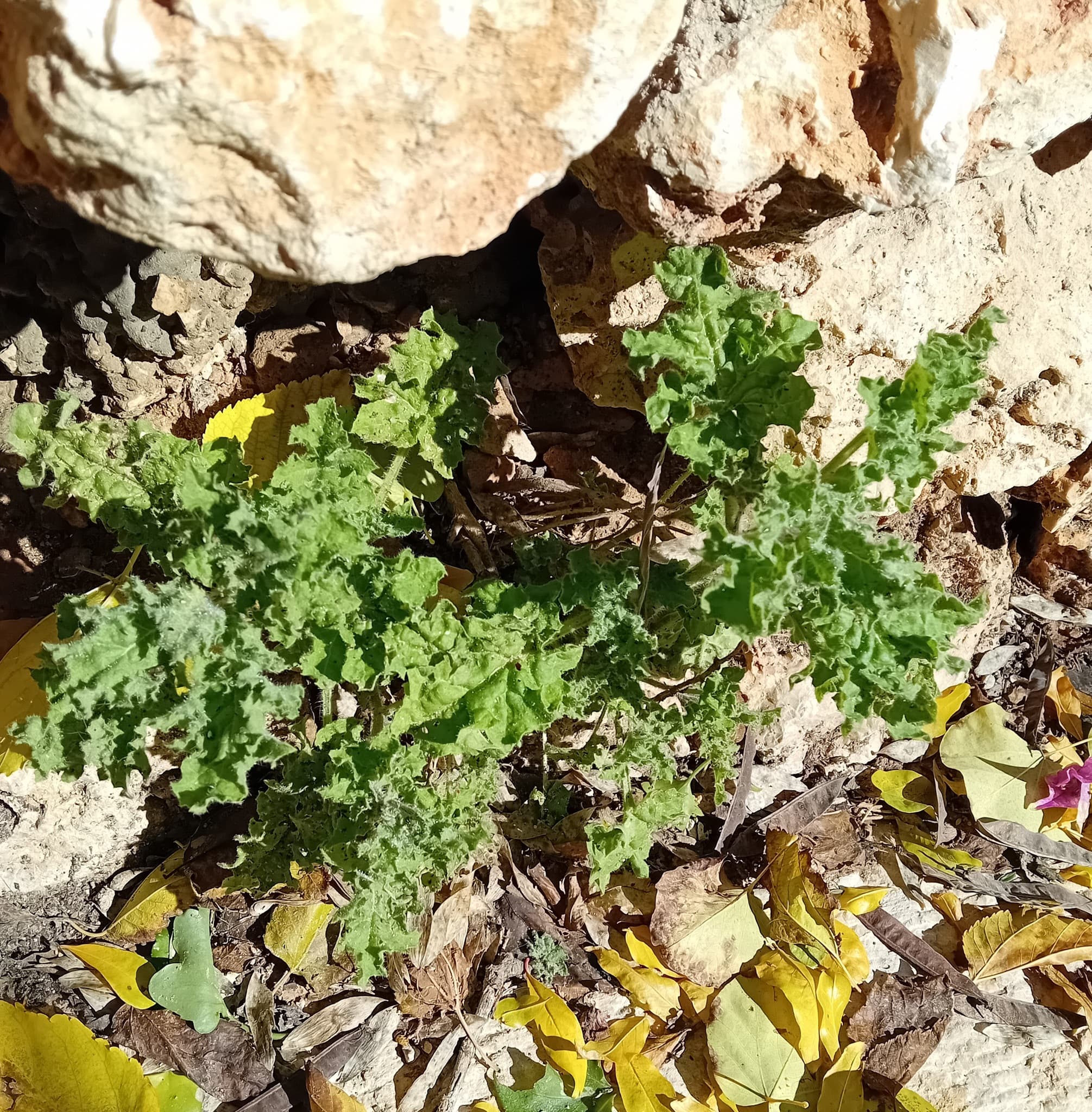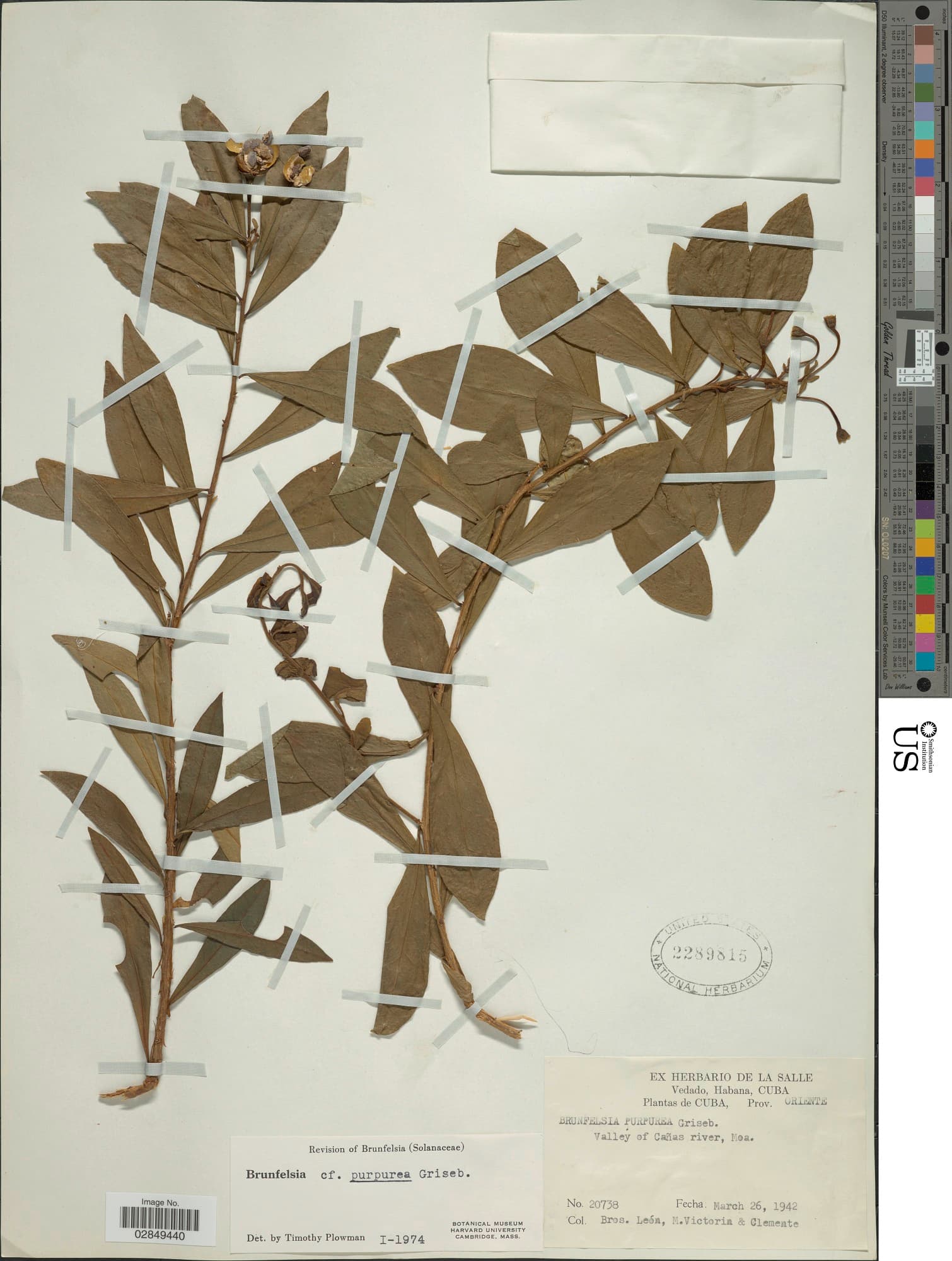
Brunfelsia purpurea
Image: Conveyor Belt (cc0)
NameBrunfelsia purpurea
Scientific NameBrunfelsia purpurea Griseb.
Common NamesManacá, Yesterday-Today-and-Tomorrow
Plant FamilySolanaceae
Natural HabitatNative to the Caribbean, particularly Cuba, where it thrives in moist forests, thickets, and along riverbanks, often found in tropical and subtropical regions.
Parts Usedroot,bark,leaf,flower
Medicinal Actionsanalgesic, anti-inflammatory, diuretic, nervine, sedative
Traditional UsesTraditionally, various parts of Brunfelsia purpurea have been used in folk medicine, particularly for treating rheumatism, syphilis, and fever. The root is especially noted for its use as a diuretic and for its anti-rheumatic properties, often employed with great caution due to its potent nature.
Active ConstituentsBrunfelsamidine, Scopoletin, Coumarins, Alkaloids (e.g., brunfelsine, manacine), Saponins
Preparation Methodsdecoction, infusion, tincture, poultice
Contraindications & WarningsBrunfelsia purpurea is highly toxic if ingested in large quantities, potentially causing nausea, vomiting, dizziness, hallucinations, and paralysis. It is contraindicated for pregnant or breastfeeding women, children, and individuals with liver or kidney conditions, and should not be used with central nervous system depressants.
Cultivation NotesThis plant prefers warm, humid climates with well-drained, rich soil. It can be grown in partial shade to full sun and requires consistent moisture. Propagation is typically by seeds or cuttings.
Rarityuncommon
Description
Brunfelsia purpurea is a shrub or small tree, typically growing up to 3 meters tall, characterized by simple, alternate, entire leaves. It produces tubular flowers that often change color over several days, typically from purple to white, followed by a capsular fruit.