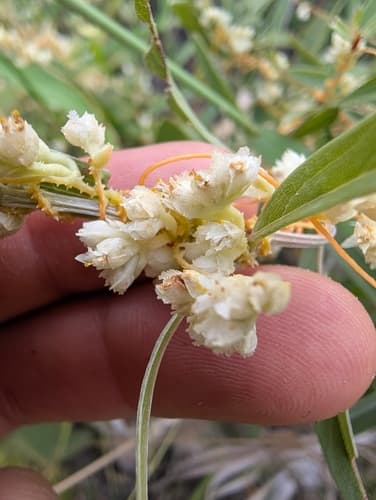
Cuscuta iguanella
NameCuscuta iguanella
Scientific NameCuscuta iguanella
Common NamesDodder, Love Vine, Strangleweed, Witches' Hair
Plant FamilyConvolvulaceae
Natural HabitatAs an obligate parasitic plant, it grows in various habitats where suitable host plants are available, including fields, disturbed areas, roadsides, and gardens, often on herbaceous plants or shrubs.
Parts Usedwhole_plant,seed
Medicinal Actionsadaptogen, antioxidant, diuretic
Traditional UsesTraditionally, species within the Cuscuta genus (especially C. chinensis and C. japonica) have been used in Traditional Chinese Medicine (TCM) to tonify the kidney and liver, improve vision, strengthen bones, and treat conditions like impotence, premature ejaculation, frequent urination, and infertility. It is also used for general debility and to support healthy aging.
Active ConstituentsFlavonoids, Lignans, Polysaccharides, Saponins, Coumarins
Preparation Methodsinfusion, decoction, tincture, powder
Contraindications & WarningsGenerally not recommended for pregnant or breastfeeding women. Caution is advised for individuals with yin deficiency with heat signs. Due to its parasitic nature, it can accumulate compounds from its host plants, which may vary in toxicity.
Cultivation NotesCuscuta species are obligate parasites, meaning they cannot be cultivated independently. They require a host plant to grow and thrive, making traditional cultivation methods impractical and generally undesirable as they are often considered agricultural weeds.
Raritycommon
Description
Cuscuta iguanella is a parasitic annual vine characterized by its thread-like, leafless, yellowish-orange stems that twine around host plants. It produces clusters of small, white to cream-colored, bell-shaped flowers along its stems.