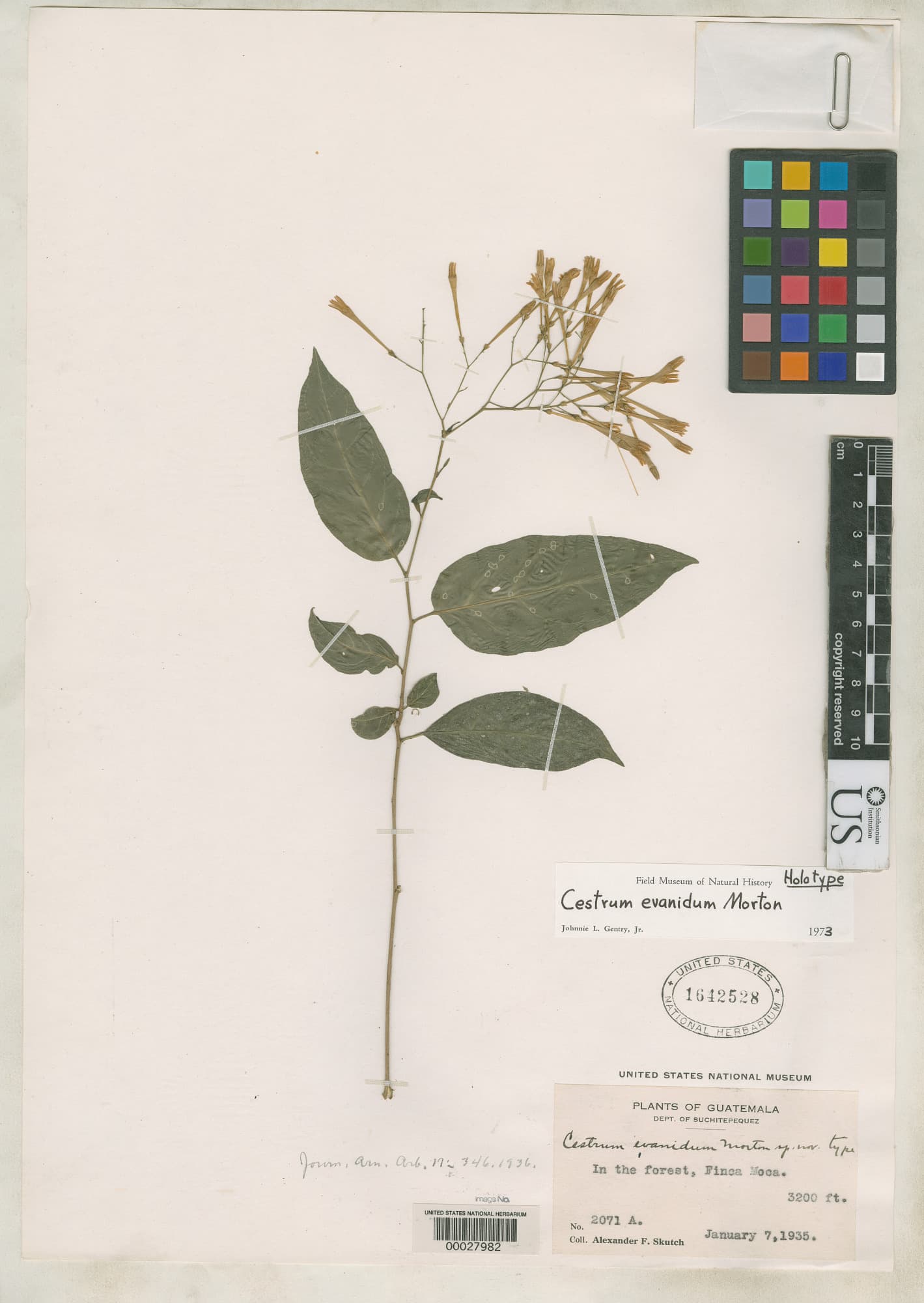
Cestrum evanidum
Image: Ingrid P. Lin (cc0)
NameCestrum evanidum
Scientific NameCestrum evanidum C.V.Morton
Plant FamilySolanaceae
Natural HabitatNative to Central America, specifically found in forest environments at elevations around 3200 feet (approx. 975 meters) in the Suchitepéquez department of Guatemala.
Parts Usedleaf,flower
Medicinal Actionsanti-inflammatory, analgesic
Traditional UsesWhile specific traditional medicinal uses for *Cestrum evanidum* are not widely documented, some species within the *Cestrum* genus have been traditionally used in localized practices for external applications to alleviate pain and inflammation, or for fevers. However, the genus is widely recognized for its toxicity, and internal use is generally avoided.
Active Constituentssteroidal saponins, alkaloids, flavonoids
Preparation Methodspoultice
Contraindications & WarningsIngestion of *Cestrum* species is generally contraindicated due to the presence of toxic compounds, including steroidal saponins and alkaloids, which can cause gastrointestinal distress, neurological symptoms, and cardiac issues. Use with extreme caution, if at all, and only for external applications under expert guidance.
Cultivation NotesPrefers tropical to subtropical forest environments, likely requiring well-drained soil and partial shade. Specific cultivation details for this species are not widely documented.
Rarityuncommon
Description
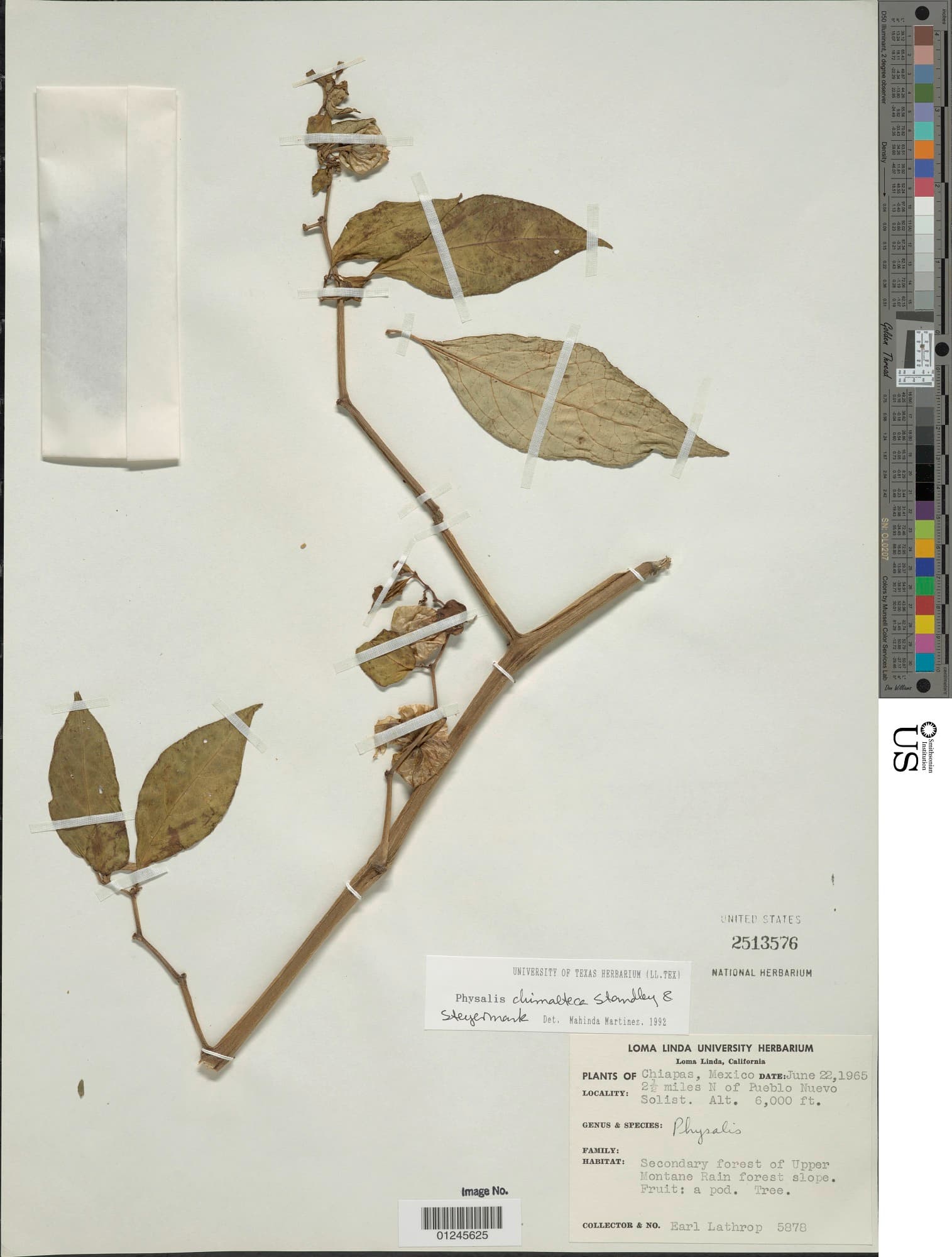
A woody shrub or small tree characterized by alternate, simple, ovate to elliptic leaves. It produces terminal or axillary inflorescences bearing numerous slender, tubular flowers, which appear yellowish-brown in dried specimens.