Western Bunchberry
NameWestern Bunchberry
Scientific NameCornus unalaschkensis
Common NamesWestern Bunchberry, Pacific Bunchberry, Dwarf Dogwood
Plant FamilyCornaceae
Natural HabitatNative to western North America, found in cool, moist, coniferous forests, woodlands, bogs, and clearings, often in acidic soil.
Parts Usedleaf,root,fruit
Medicinal Actionsastringent, anti-inflammatory, analgesic
Traditional UsesIndigenous peoples of western North America traditionally used the leaves as a poultice for wounds, sores, and swellings due to their astringent and anti-inflammatory properties. Infusions of leaves or roots were sometimes taken for colds, coughs, and stomach ailments, and occasionally for pain relief. The berries, while edible, were not a primary medicinal part but were consumed.
Active ConstituentsTannins, Iridoids, Flavonoids
Preparation Methodsinfusion, poultice, decoction
Contraindications & WarningsGenerally considered safe in traditional use. Large quantities of berries can have a mild laxative effect. As with any wild plant, proper identification is crucial before use.
Cultivation NotesPrefers cool, moist, acidic soil and partial to full shade. It can be challenging to cultivate outside its natural range, typically propagating by rhizomes or seed.
Raritycommon
Description
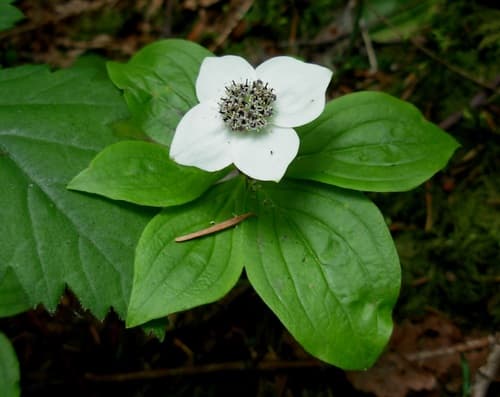
A low-growing perennial herb of the dogwood family, featuring a whorl of broad, ovate leaves and a single white inflorescence composed of four prominent white bracts surrounding a cluster of tiny true flowers. It produces bright red, edible but mealy berries in late summer.