Tobacco
NameTobacco
Scientific NameNicotiana tabacum
Common NamesTobacco, Cultivated Tobacco, Common Tobacco
Plant FamilySolanaceae
Natural HabitatNative to tropical and subtropical Americas, Nicotiana tabacum is now widely cultivated globally in warm climates for its leaves. It thrives in well-drained, fertile soil and full sun.
Parts Usedleaf,flower,root
Medicinal Actionsanalgesic, antimicrobial, sedative
Traditional UsesTraditionally, tobacco has been used by indigenous cultures for ceremonial and spiritual purposes, as well as medicinally. It was applied topically as a poultice for pain relief, insect bites, and skin conditions, and internally (with extreme caution due to toxicity) as an emetic, purgative, and for its stimulating or sedative effects in ritualistic contexts.
Active ConstituentsNicotine, Nornicotine, Anabasine, Myosmine, Nicotyrine
Preparation Methodsinfusion, decoction, tincture, poultice, powder, salve
Contraindications & WarningsTobacco is highly toxic and addictive. It is contraindicated in pregnancy, breastfeeding, heart conditions, hypertension, and by individuals with nicotine sensitivity. Internal use is generally not recommended due to severe toxicity and potential for poisoning.
Cultivation NotesTobacco requires a warm, frost-free climate with full sun exposure and well-drained, fertile soil. Seeds are typically started indoors and transplanted after the last frost. Regular watering and fertilization are beneficial, and 'topping' (removing flower heads) is often done to encourage leaf growth.
Raritycommon
Description
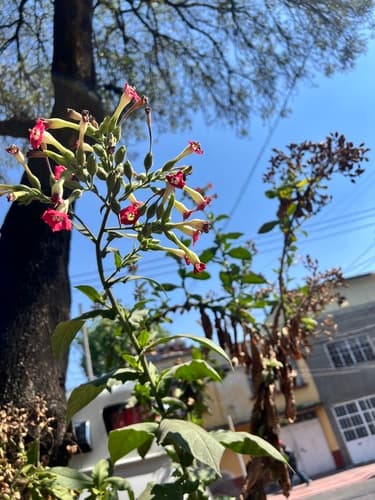
Nicotiana tabacum is a robust herbaceous plant, typically growing 1-2 meters tall, characterized by large, sticky, hairy leaves. It produces clusters of tubular, often pinkish-red to white flowers at the top of the stem, which develop into seed capsules.