Solanum repandum
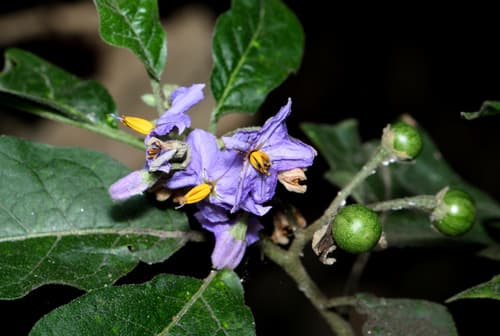
Image: Charles B. Heiser, Jr. (cc-by-nc)
NameSolanum repandum
Scientific NameSolanum repandum G. Forst.
Common NamesSolomon Islands Eggplant, Malaita Eggplant, Wild Eggplant
Plant FamilySolanaceae
Natural HabitatNative to the Pacific Islands, particularly the Solomon Islands, where it grows in tropical forest clearings, disturbed areas, and secondary vegetation.
Parts Usedleaf,fruit
Medicinal Actionsanalgesic, anti-inflammatory, antimicrobial
Traditional UsesTraditionally, the leaves are used topically as a poultice for skin conditions, wounds, and to alleviate pain. The fruits, when ripe, are edible and sometimes consumed, while other parts are used in traditional remedies for various internal ailments like stomachaches.
Active ConstituentsSteroidal glycoalkaloids
Preparation Methodsinfusion, poultice, decoction
Contraindications & WarningsAll parts of the plant, especially unripe fruits, contain steroidal glycoalkaloids and can be toxic if ingested in large quantities. Avoid use during pregnancy or breastfeeding, and for individuals sensitive to the Solanaceae family.
Cultivation NotesThrives in tropical to subtropical climates with full sun to partial shade and well-drained soil. Requires warm temperatures and consistent moisture for optimal growth.
Raritycommon
Description
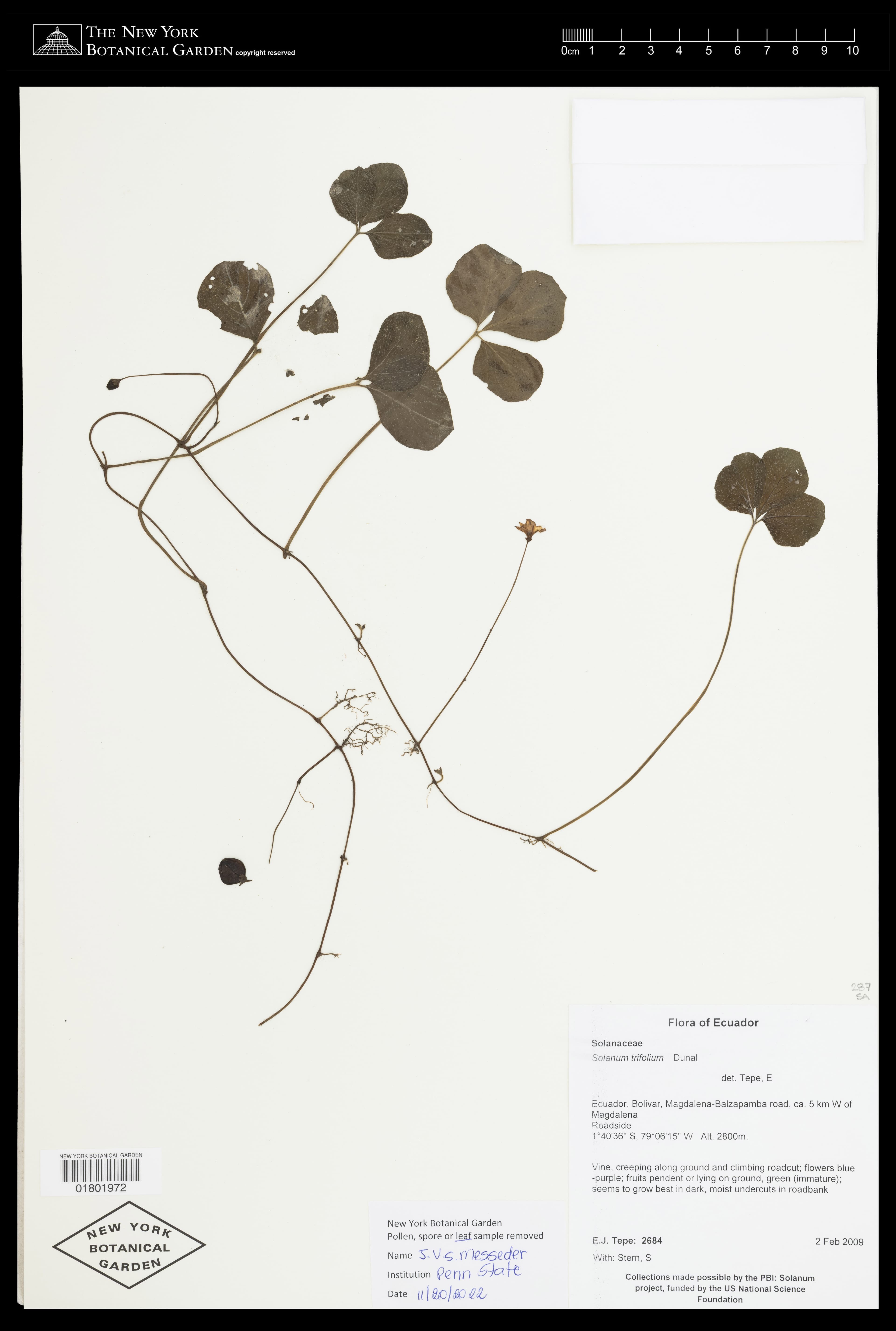
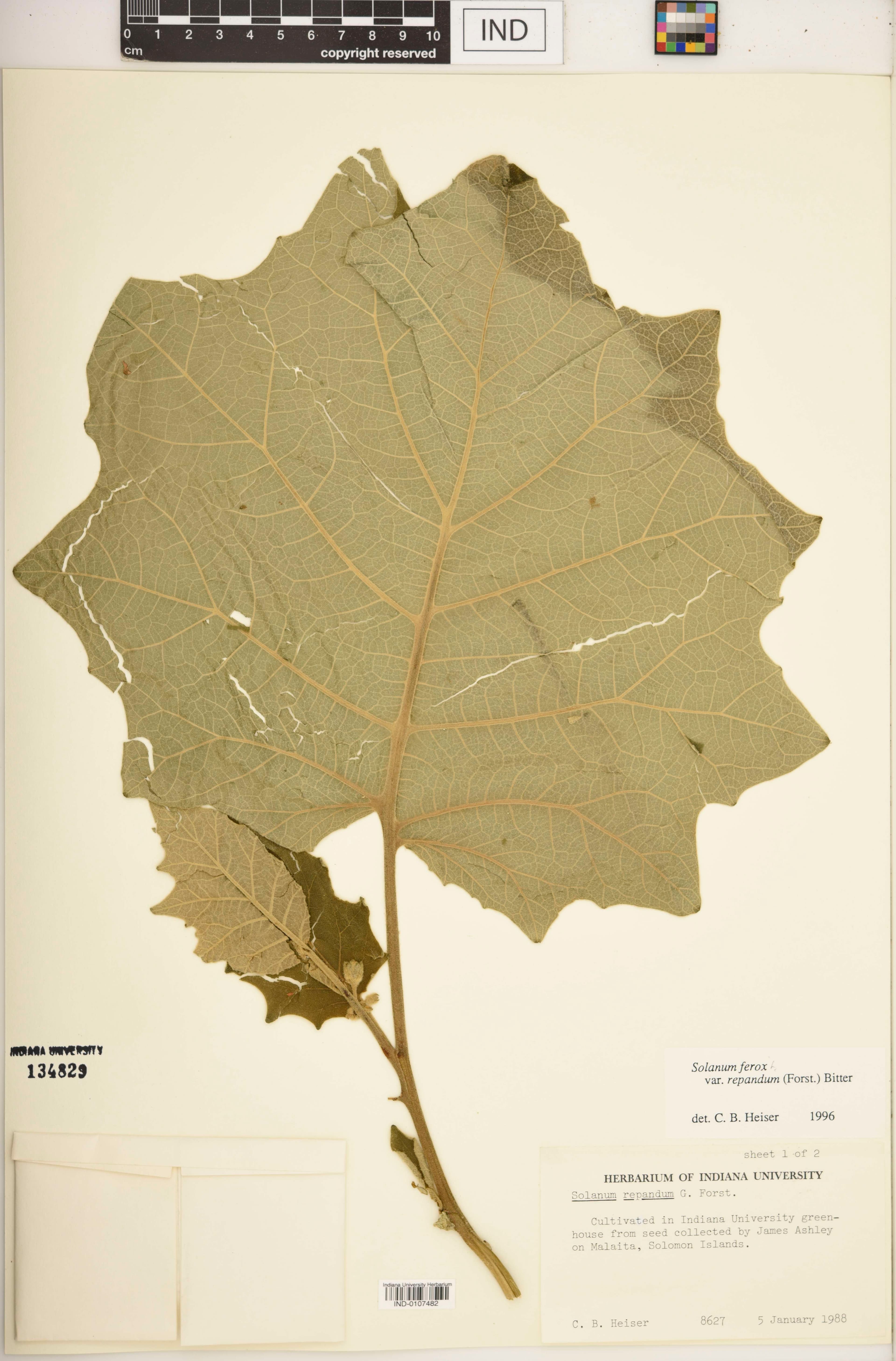
This specimen features a large, broadly ovate to cordate leaf with shallowly lobed margins and prominent venation. The leaf surface and visible stem are covered in fine hairs, and the stem also exhibits small prickles, characteristic of many Solanum species.