Spanish Sage
NameSpanish Sage
Scientific NameSalvia lavandulifolia
Common NamesSpanish Sage, Lavender-leaved Sage, Spanish Common Sage
Plant FamilyLamiaceae
Natural HabitatNative to the Mediterranean region, particularly Spain and southern France, where it thrives in dry, rocky, and calcareous soils, often found in garrigue and maquis shrublands.
Parts Usedleaf,flower
Medicinal Actionsanalgesic, anti-inflammatory, antimicrobial, antioxidant, astringent, carminative, nervine
Traditional UsesTraditionally used to support cognitive function and memory, alleviate digestive complaints such as bloating and indigestion, and reduce excessive sweating. It is also applied topically as an antiseptic for mouth and throat infections, and for minor skin irritations.
Active Constituents1,8-cineole, camphor, alpha-pinene, beta-pinene, limonene, rosmarinic acid, caffeic acid, flavonoids, tannins
Preparation Methodsinfusion, tincture, essential oil, poultice, salve
Contraindications & WarningsAvoid high doses of the essential oil, especially during pregnancy and lactation, due to potential neurotoxicity from thujone (though *S. lavandulifolia* has lower levels than *S. officinalis*). May interact with sedatives or antidiabetic medications.
Cultivation NotesPrefers full sun and well-drained soil, tolerating poor and rocky conditions. It is drought-tolerant once established and can be propagated by seed or cuttings. Hardy in USDA zones 7-10.
Raritycommon
Description
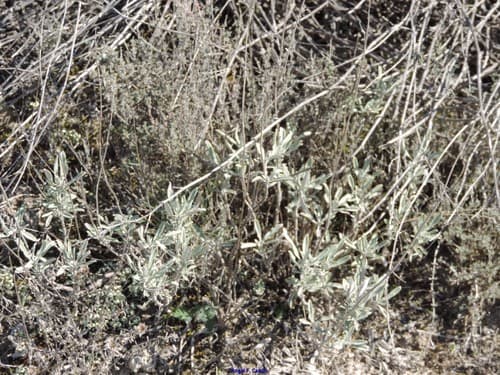
A small, aromatic perennial shrub, typically growing 30-60 cm tall, characterized by its narrow, silvery-green, somewhat leathery leaves. It produces spikes of pale lavender to purple flowers, usually in late spring to early summer.