Cestrum marmoratum
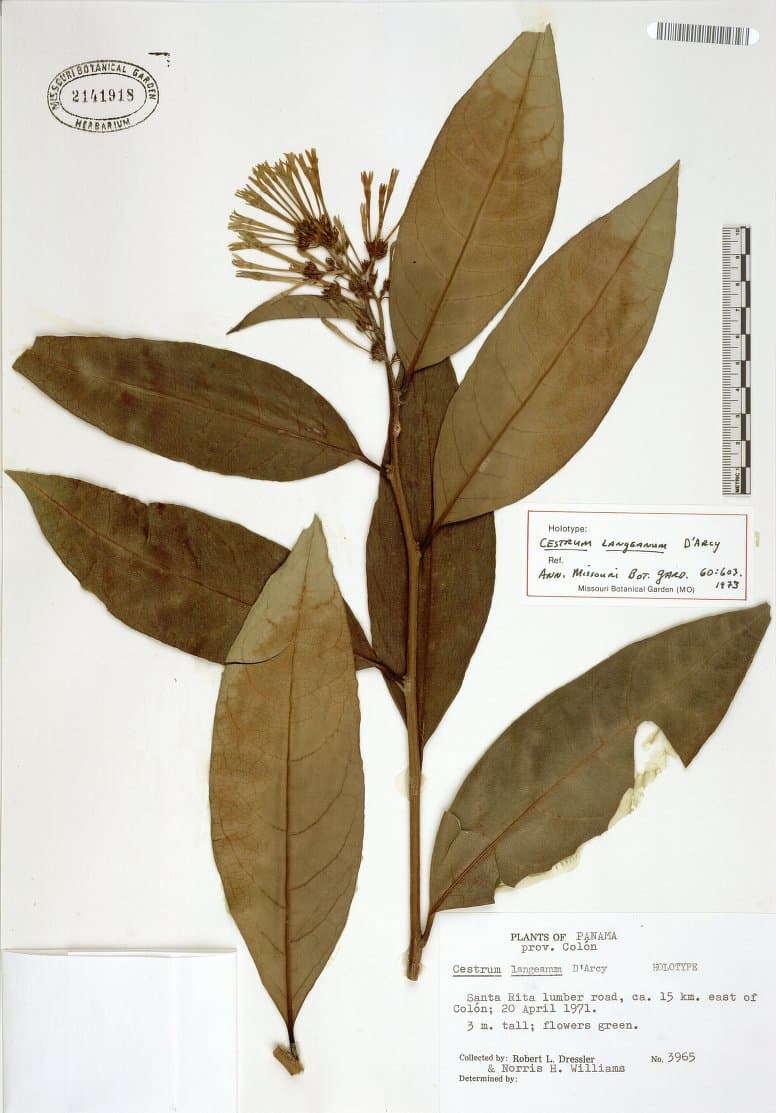
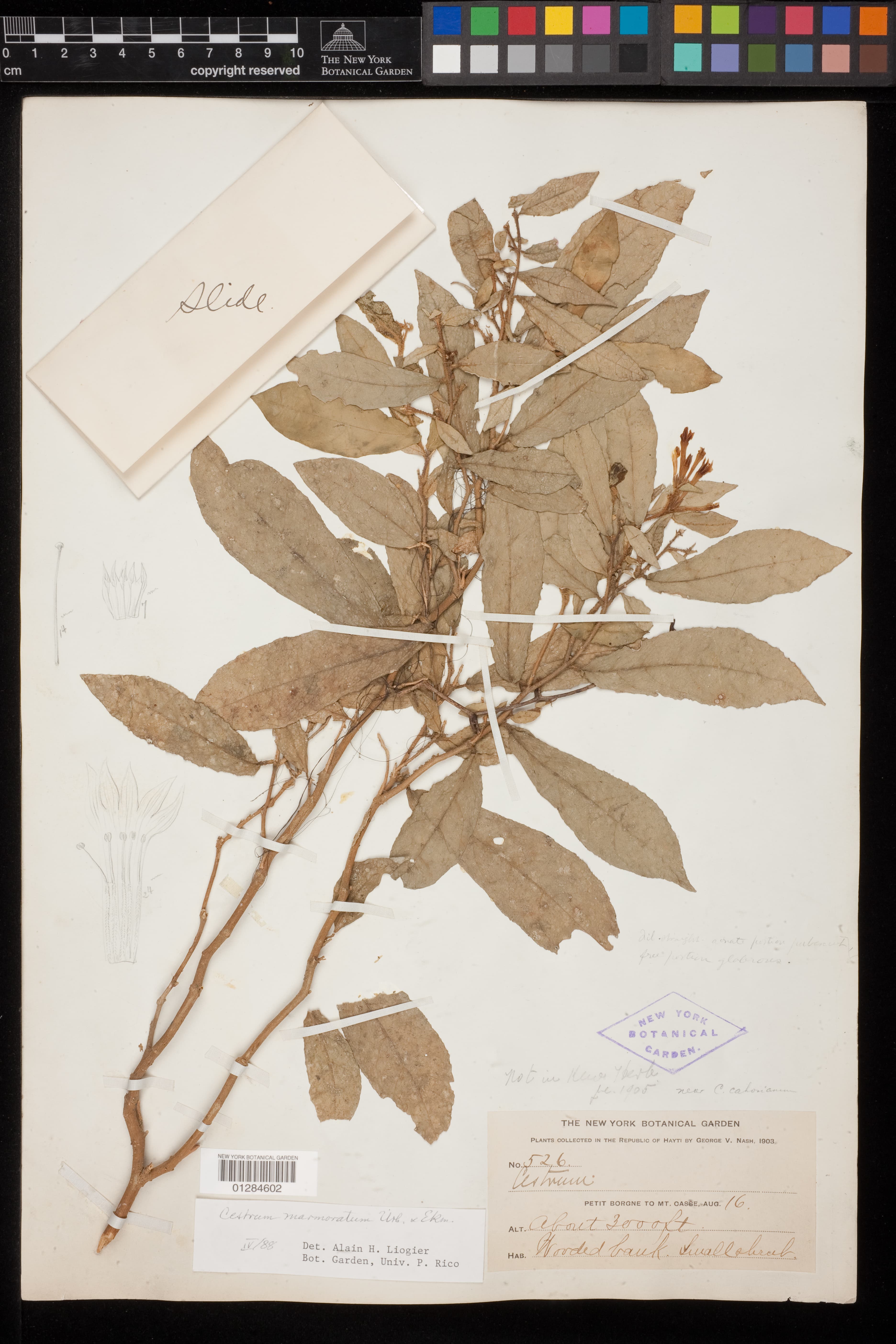
Image: The New York Botanical Garden (cc-by)
NameCestrum marmoratum
Scientific NameCestrum marmoratum Urb. & Ekman
Plant FamilySolanaceae
Natural HabitatEndemic to Hispaniola (Haiti and Dominican Republic), this species is found on wooded banks at elevations around 3000 feet.
Parts Usedwhole_plant
Traditional UsesThere are no widely documented traditional medicinal uses specifically for Cestrum marmoratum. The genus Cestrum is generally known for its toxicity, and many species are considered poisonous.
Active Constituentssteroidal saponins, alkaloids
Contraindications & WarningsAll parts of Cestrum species are generally considered toxic and should not be ingested. Due to the lack of documented safe medicinal uses and the known toxicity of the genus, internal use is strongly contraindicated. Caution is advised for any external use, and it should be avoided by pregnant or lactating individuals and children.
Cultivation NotesAs an endemic shrub from Hispaniola, Cestrum marmoratum likely thrives in warm climates with well-drained soil, preferring conditions ranging from full sun to partial shade.
Rarityuncommon
Description
Cestrum marmoratum is a woody shrub characterized by alternate, ovate to elliptic leaves, which appear somewhat textured or pubescent when dried. The plant features slender stems and terminal clusters of developing flowers or buds, as observed in the herbarium specimen.