Solanum raphanifolium
Image: Conveyor Belt (cc0)
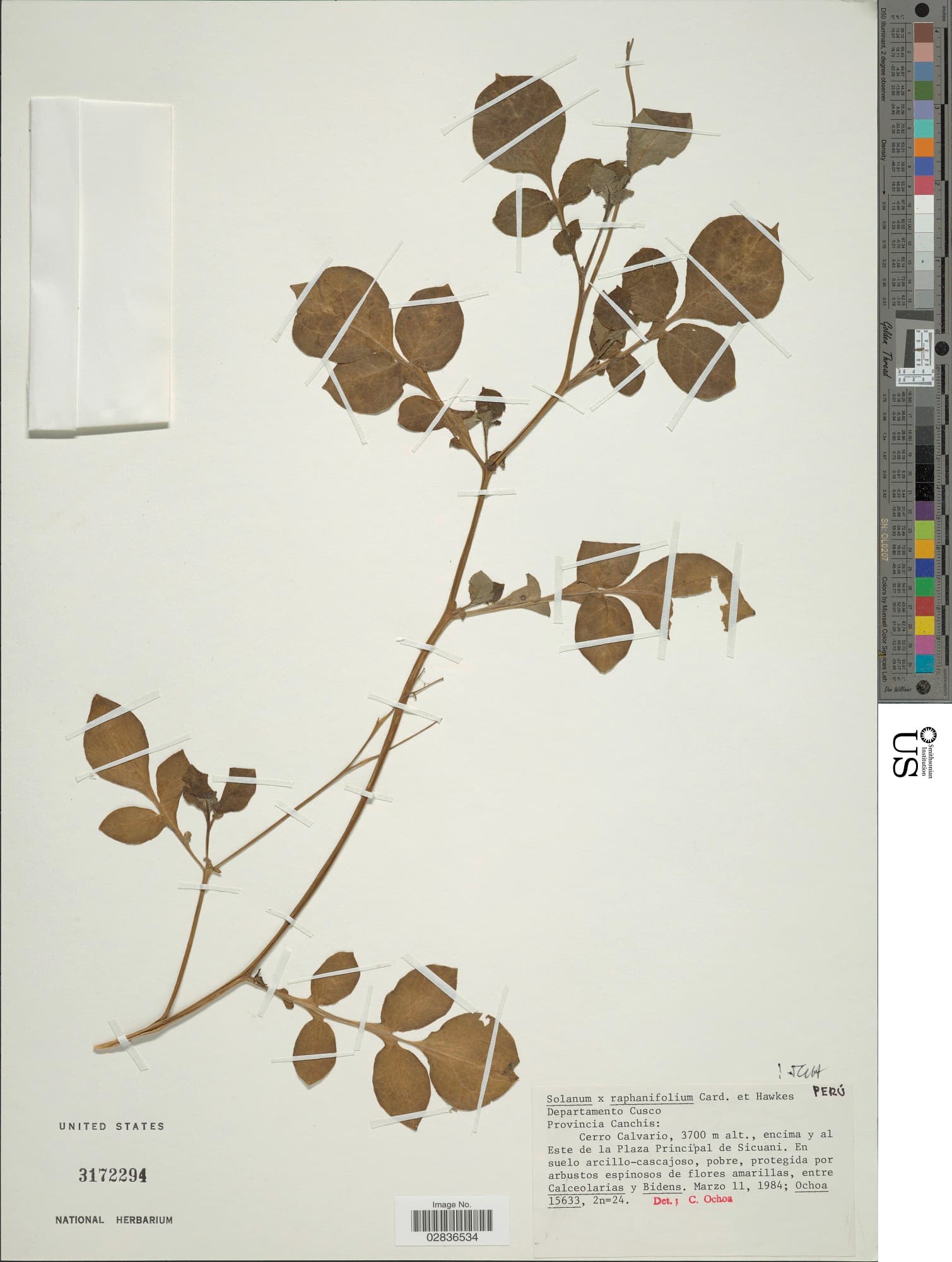
NameSolanum raphanifolium
Scientific NameSolanum raphanifolium Cárdenas & Hawkes
Common NamesWild Potato relative
Plant FamilySolanaceae
Natural HabitatNative to high-altitude Andean regions of Peru, specifically noted at Cerro Calvario, Sicuani, Cusco, at 3700 m altitude. It thrives in poor, clay-gravelly soil, often found growing protected by spiny shrubs.
Parts Usedroot,leaf
Traditional UsesSpecific traditional medicinal uses for Solanum raphanifolium are not widely documented in ethnobotanical literature. As a wild potato relative, its tubers may have been traditionally used as a food source by indigenous communities, likely requiring specific processing to reduce naturally occurring toxic compounds. While some Solanum species possess medicinal properties, these are not specifically attributed to S. raphanifolium.
Active Constituentssteroidal glycoalkaloids, solanine, chaconine
Preparation Methodsdecoction, powder
Contraindications & WarningsContains steroidal glycoalkaloids, which are toxic if consumed raw or in large quantities. Ingestion can lead to gastrointestinal upset, neurological symptoms, and in severe cases, can be fatal. Pregnant women, children, and individuals with liver or kidney conditions should strictly avoid use. Any consumption as food requires thorough cooking or specific traditional processing to detoxify.
Cultivation NotesRequires specific high-altitude conditions mimicking its native Andean habitat, including well-drained, poor, clay-gravelly soil. It is adapted to cold temperatures and the unique light cycles of mountainous regions, making it challenging to cultivate outside its natural range.
Rarityuncommon
Description
A perennial herbaceous plant or subshrub, typically forming tubers. It features simple, alternate, ovate to elliptical leaves and is part of the wild potato complex, known for its genetic diversity.