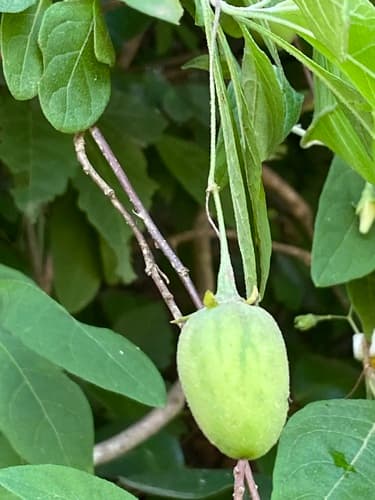
Solanum nematopus
NameSolanum nematopus
Scientific NameSolanum nematopus
Common NamesNematopus Nightshade
Plant FamilySolanaceae
Natural HabitatNative to montane and cloud forests of the Andes in South America, particularly found in Peru and Bolivia, often in disturbed areas or forest edges.
Parts Used
Traditional UsesThere is no widely documented traditional medicinal use for Solanum nematopus in mainstream ethnobotanical literature. Many species within the Solanum genus contain toxic glycoalkaloids, and consumption of parts of this plant is generally not recommended.
Active Constituentssteroidal glycoalkaloids
Contraindications & WarningsAll parts of Solanum nematopus should be considered potentially toxic due to the presence of steroidal glycoalkaloids. Ingestion can lead to gastrointestinal upset, neurological symptoms, and other adverse effects. Avoid consumption, especially of unripe fruits.
Cultivation NotesThis species prefers subtropical to tropical montane climates with well-drained soil and can tolerate some disturbance. It is typically propagated by seed.
Rarityuncommon
Description
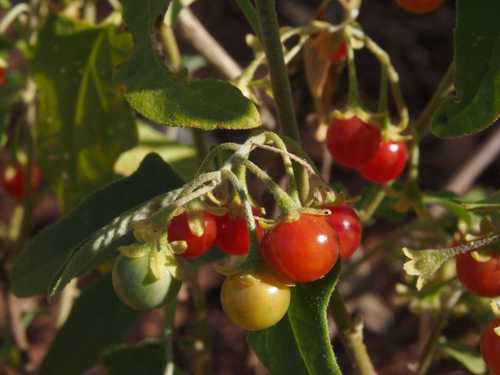
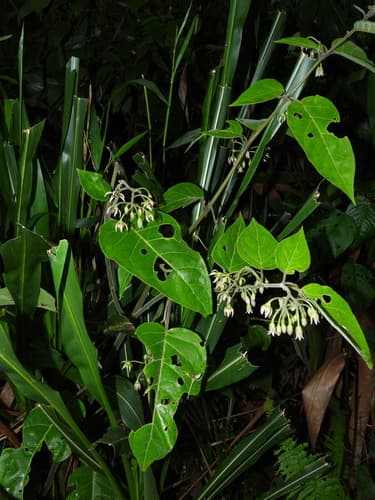
Solanum nematopus is a shrub or small tree characterized by its simple, ovate leaves and pendulous, ovoid to ellipsoid fruits. The unripe fruit, as seen, is green with faint longitudinal stripes and a pubescent surface, tapering to a point at the apex.