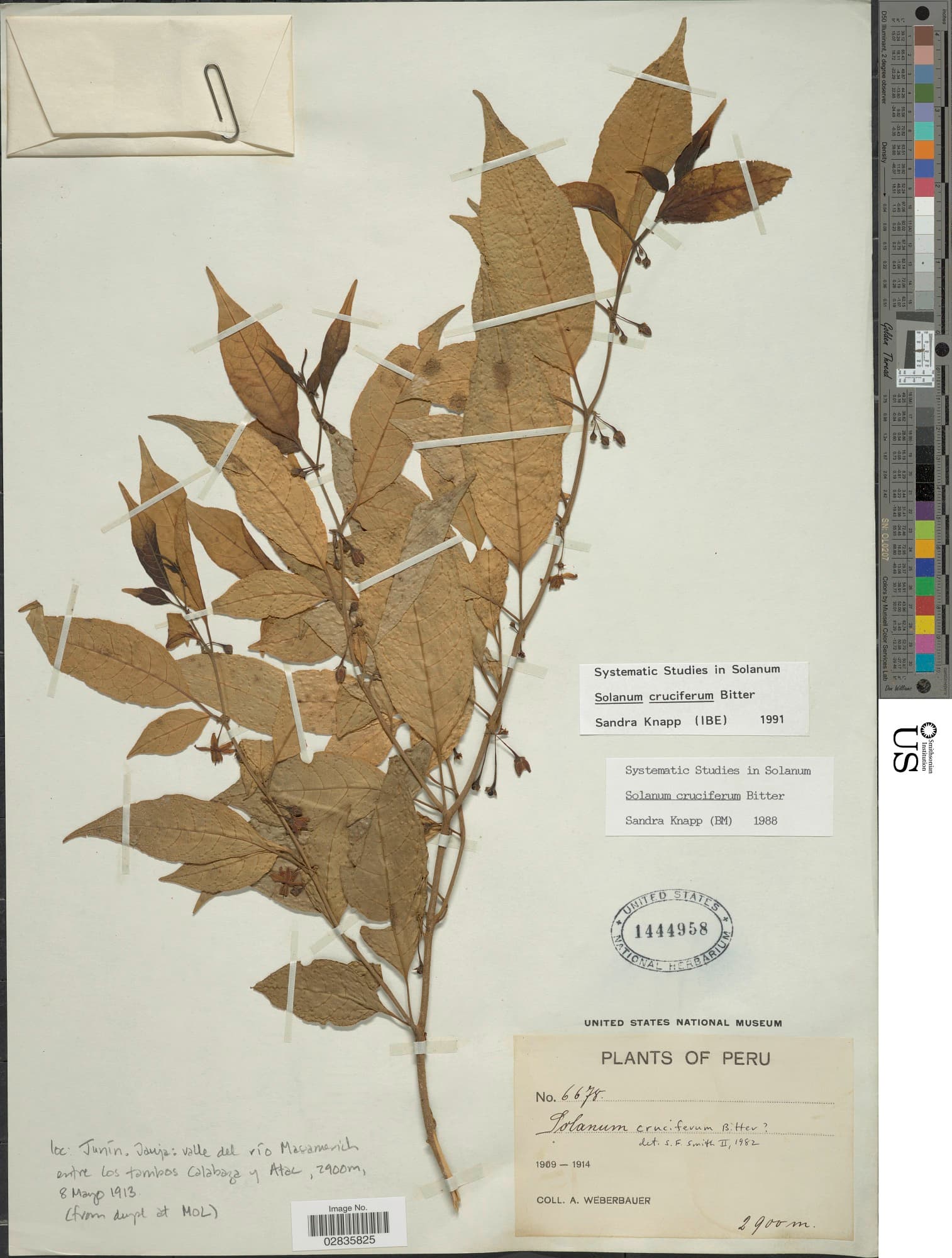
Solanum cruciferum
Image: Conveyor Belt (cc0)
NameSolanum cruciferum
Scientific NameSolanum cruciferum Bitter
Plant FamilySolanaceae
Natural HabitatNative to the Andean region of Peru, specifically found in river valleys at high altitudes, around 2900 meters above sea level, such as the Mantaro River valley in Junín.
Parts Usedleaf,fruit
Medicinal Actionsanti-inflammatory, antimicrobial
Traditional UsesSpecific traditional medicinal uses for Solanum cruciferum are not documented in the provided materials. However, many species within the Solanum genus have been traditionally used for various ailments, often leveraging their steroidal glycoalkaloid content for anti-inflammatory or analgesic effects, though toxicity is a significant concern.
Active Constituentssteroidal glycoalkaloids (e.g., solanine, solamargine)
Preparation Methodsinfusion, decoction, poultice
Contraindications & WarningsDue to the presence of potentially toxic steroidal glycoalkaloids common in the Solanum genus, caution is advised. Avoid use during pregnancy and lactation, and do not consume unripe fruits. Consult a qualified practitioner before use.
Cultivation NotesThis species likely thrives in well-drained soils and requires conditions mimicking its native high-altitude Andean habitat, including specific temperature ranges and light exposure.
Rarityuncommon
Description
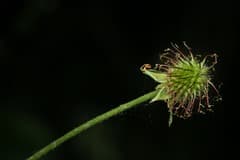
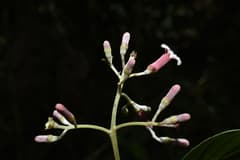
A woody plant characterized by alternate, simple, ovate-lanceolate leaves with entire margins. The specimen displays small, clustered structures that appear to be developing fruits or spent flowers, suggesting a shrubby growth habit.