Cinchona
NameCinchona
Scientific NameCinchona anderssonii
Common NamesQuinine Tree, Fever Tree, Peruvian Bark
Plant FamilyRubiaceae
Natural HabitatNative to the tropical Andean cloud forests of South America, thriving in high-altitude, humid environments with consistent rainfall.
Parts Usedbark
Medicinal Actionsanalgesic, antimicrobial, anti-inflammatory
Traditional UsesHistorically, the bark of Cinchona trees has been used by indigenous Andean peoples to treat fevers and muscle spasms. It gained global prominence as the primary source of quinine, a potent antimalarial compound, and was widely used to combat malaria before synthetic alternatives became available.
Active Constituentsquinine, quinidine, cinchonine, cinchonidine
Preparation Methodsdecoction, tincture, powder
Contraindications & WarningsCinchona bark and its alkaloids can cause 'cinchonism' (tinnitus, headache, visual disturbances), hypersensitivity reactions, and cardiac arrhythmias. It should be avoided by pregnant women, individuals with heart conditions, or those taking anticoagulants, as it can interact with various medications.
Cultivation NotesCinchona species require a tropical or subtropical climate with high humidity, ample rainfall, and well-drained, acidic soil. They prefer partial shade when young, gradually tolerating more sun as they mature, and are sensitive to frost.
Rarityuncommon
Description
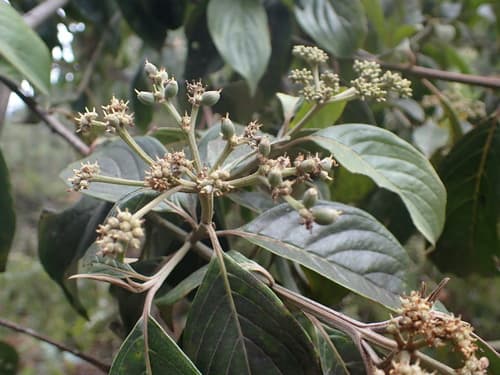
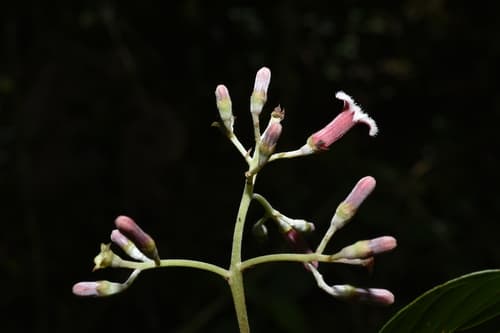
Cinchona anderssonii is a tree species characterized by its distinctive bark, which is the source of quinine. It produces clusters of tubular, often pinkish-red flowers, as depicted in the image, emerging from elongated buds. The leaves are typically simple, opposite, and entire.