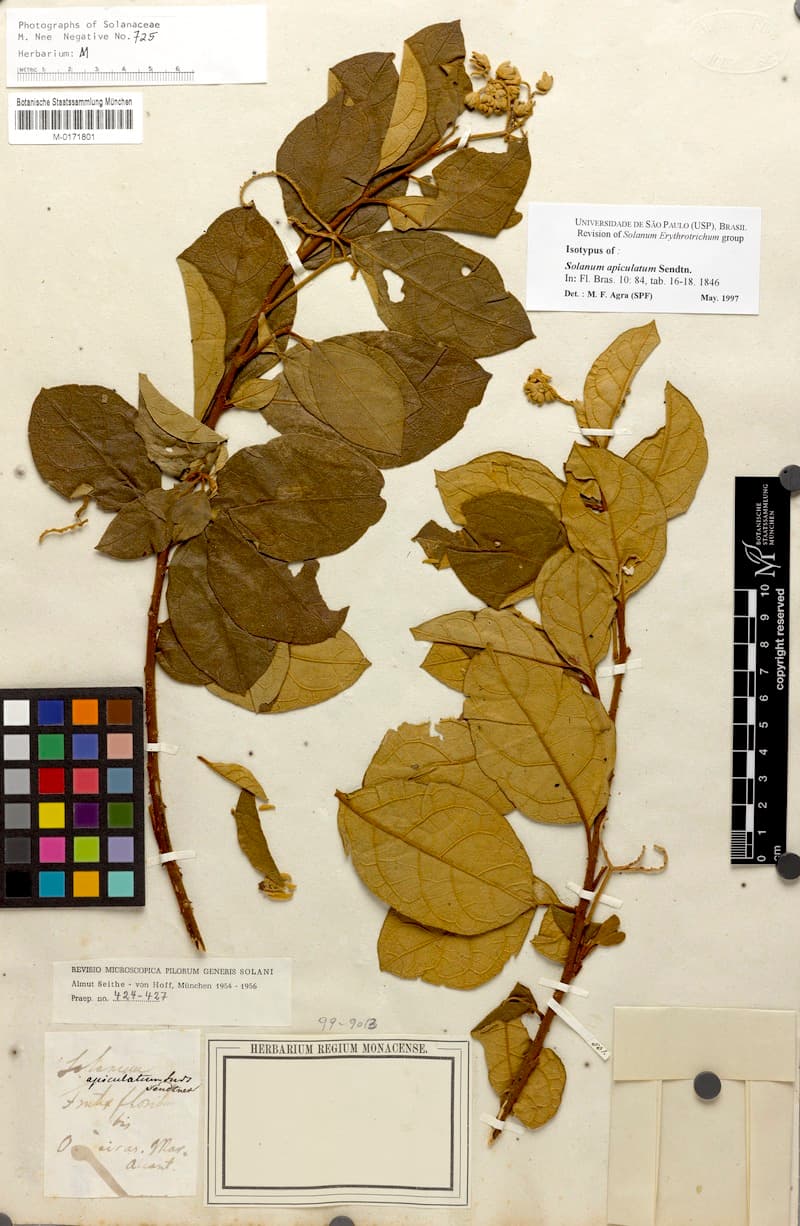
Solanum apiculatum
Image: Martius, C.F.P. von (cc-by-sa)
NameSolanum apiculatum
Scientific NameSolanum apiculatum Sendtn.
Plant FamilySolanaceae
Natural HabitatNative to South America, particularly Brazil, it is typically found in tropical or subtropical forest margins and disturbed areas.
Parts Usedleaf,fruit
Medicinal Actionsanti-inflammatory, analgesic
Traditional UsesWhile specific traditional uses for Solanum apiculatum are not widely documented, other species within the Solanum genus are traditionally used for pain relief, reducing inflammation, and treating various skin conditions. Caution is advised due to potential toxicity common in the genus.
Active Constituentssteroidal glycoalkaloids, solasodine, solanine
Preparation Methodsinfusion, decoction, poultice
Contraindications & WarningsAs with many Solanum species, potential toxicity due to steroidal alkaloids is a significant concern. It is not recommended for pregnant or lactating women, or individuals with pre-existing liver or kidney conditions without expert guidance. Internal use should be approached with extreme caution.
Cultivation NotesPrefers warm, tropical to subtropical climates with well-drained soil and adequate sunlight. Requires consistent moisture but avoids waterlogging.
Rarityuncommon
Description
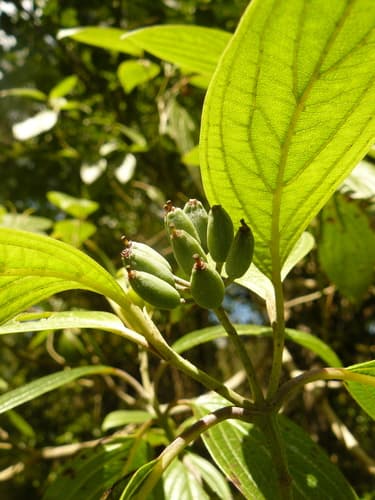
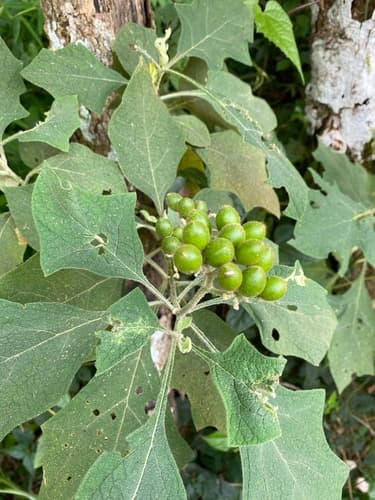
Solanum apiculatum is a woody shrub or small tree, characterized by simple, alternate leaves and small, clustered inflorescences. The specimen displays ovate to elliptical leaves with distinct venation, typical of the genus.