Saw Palmetto
NameSaw Palmetto
Scientific NameSerenoa repens
Common NamesSaw Palmetto, American Dwarf Palm Tree, Cabbage Palm, Fan Palm
Plant FamilyArecaceae
Natural HabitatNative to sandy soils, pine flatwoods, coastal areas, and scrublands in the southeastern United States, particularly Florida and other Gulf Coast states. It thrives in full sun to partial shade and is well-adapted to fire-prone ecosystems.
Parts Usedfruit
Medicinal Actionsanti-inflammatory, diuretic
Traditional UsesTraditionally, Native American tribes used saw palmetto berries for food, as a general tonic, and to treat urinary and reproductive issues. In modern herbalism, it is primarily used to support prostate health, particularly in cases of benign prostatic hyperplasia (BPH), and to address hair loss.
Active ConstituentsFatty acids (e.g., oleic acid, lauric acid, myristic acid), Phytosterols (e.g., beta-sitosterol), Flavonoids, Polysaccharides
Preparation Methodstincture, powder
Contraindications & WarningsMay interact with blood-thinning medications (anticoagulants/antiplatelets). Not recommended for pregnant or breastfeeding women, or children. May cause mild digestive upset in some individuals.
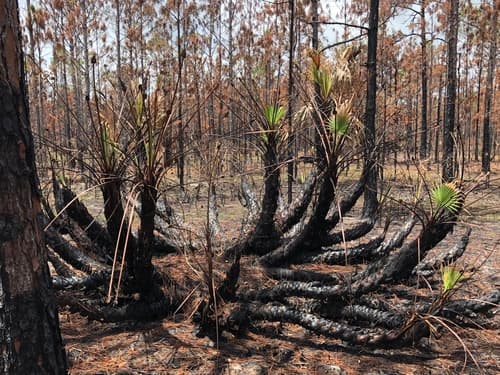
Cultivation NotesPrefers well-drained, sandy soils and can tolerate drought once established. It is slow-growing and thrives in warm, humid climates. It is highly fire-adapted, regenerating from its underground rhizomes after fires.
Raritycommon
Description
Saw Palmetto is a small, slow-growing palm native to the southeastern United States, characterized by its fan-shaped leaves and a creeping stem that often grows along the ground. It is highly resilient to fire, often resprouting vigorously from its rhizomes after burns, as evidenced by the new growth seen in the image.