Quassia
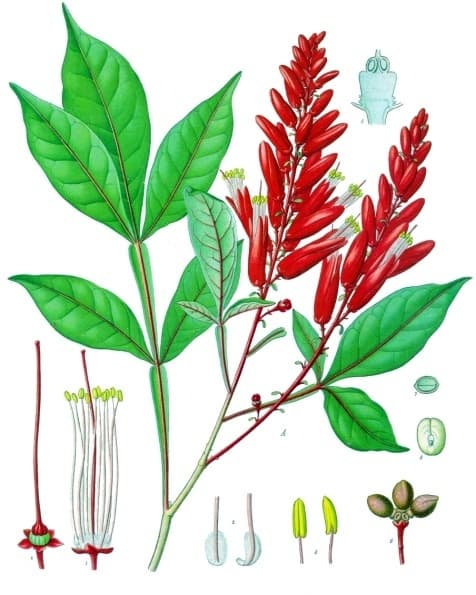
Image: Franz Eugen Köhler, Köhler's Medizinal-Pflanzen (Public domain)
NameQuassia
Scientific NameQuassia amara
Common NamesQuassia, Bitterwood, Bitterholzbaum, Amargo
Plant FamilySimaroubaceae
Natural HabitatNative to tropical regions of South America, particularly Suriname, Brazil, and Peru, where it grows in rainforest understories and clearings.
Parts Usedbark,leaf
Medicinal Actionsantimicrobial, anti-inflammatory
Traditional UsesTraditionally used as a potent bitter tonic to stimulate digestion and appetite, treat fevers (including malaria), and as an anthelmintic for intestinal parasites. It has also been applied externally as an insecticide, particularly for head lice and other ectoparasites.
Active ConstituentsQuassinoids, quassin, neoquassin, isoquassin
Preparation Methodsinfusion, decoction, tincture, powder
Contraindications & WarningsContraindicated in pregnancy, lactation, and individuals with gastric or duodenal ulcers due to its strong bitter properties which can irritate the digestive tract in high doses. Prolonged use should be avoided.
Cultivation NotesThrives in tropical climates with high humidity, requiring well-drained, fertile soil and partial shade to full sun. It can be propagated by seeds or cuttings and is often cultivated for its medicinal properties.
Raritycommon
Description
Quassia amara is a small, evergreen tree characterized by its striking bright red flowers arranged in terminal racemes and pinnate leaves with prominent green leaflets. The image also details its floral structures and developing fruits. It is renowned for the intensely bitter compounds found in its wood and bark.