Egyptian henbane
NameEgyptian henbane
Scientific NameHyoscyamus muticus
Common NamesEgyptian Henbane, Egyptian Black Henbane, Sakran
Plant FamilySolanaceae
Natural HabitatNative to arid and semi-arid regions of North Africa and the Middle East, growing in sandy or rocky soils, often in desert wadis and disturbed areas.
Parts Usedleaf,flower
Medicinal Actionsanalgesic, sedative
Traditional UsesTraditionally used as a powerful narcotic and sedative for severe pain, insomnia, and muscle spasms, particularly in regions where it grows natively. It was also employed as an antispasmodic for conditions like asthma and coughs, but always with extreme caution due to its potent toxicity.
Active Constituentshyoscyamine, scopolamine, atropine
Preparation Methodspowder, tincture
Contraindications & WarningsExtremely toxic and potentially lethal. Contraindicated in pregnancy, glaucoma, prostate enlargement, heart conditions, and with other CNS depressants or anticholinergic drugs. Can cause hallucinations, delirium, coma, and death even in small doses.
Cultivation NotesPrefers full sun and well-drained, sandy or rocky soils, typical of desert environments. It is drought-tolerant and requires minimal water once established. Not recommended for cultivation due to its extreme toxicity.
Raritycommon
Description
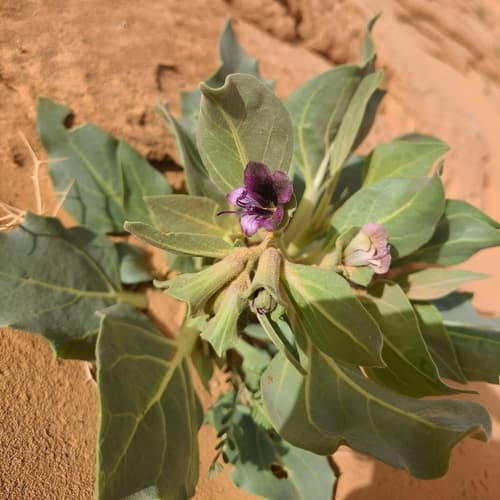
Hyoscyamus muticus is a robust, perennial herb characterized by its thick, hairy, grey-green leaves that are often ovate to oblong. It produces distinctive funnel-shaped flowers, typically purplish-brown with darker veins, emerging from the leaf axils.