Pacific yew
NamePacific yew
Scientific NameTaxus brevifolia
Common NamesPacific Yew, Western Yew, Oregon Yew, California Yew
Plant FamilyTaxaceae
Natural HabitatNative to the Pacific Northwest of North America, from southeastern Alaska to central California, and eastward to Montana. It typically grows in the understory of coniferous and mixed forests, preferring moist, cool, and shady environments, often along streams or in ravines.
Parts Usedbark,leaf
Medicinal Actionsanalgesic, anti-inflammatory
Traditional UsesTraditionally, various indigenous peoples of the Pacific Northwest used Pacific yew with extreme caution due to its toxicity. The wood was highly valued for tools, bows, and paddles. Medicinally, bark and needles were sometimes used externally for rheumatism, pain, and skin ailments, or internally in very small, carefully prepared doses for various conditions, often as a purgative or emetic. Modern medicine has famously extracted paclitaxel (Taxol) from its bark, a potent chemotherapy drug used to treat various cancers.
Active ConstituentsTaxanes, Paclitaxel (Taxol)
Preparation Methodsdecoction, poultice
Contraindications & WarningsAll parts of the Pacific yew, especially the needles and seeds, are highly toxic if ingested, containing cardiotoxic taxine alkaloids. Internal use is extremely dangerous and can be fatal, leading to cardiac arrest. It should never be used internally without strict medical supervision and is not suitable for self-medication. Pregnant or lactating individuals should avoid all contact.
Cultivation NotesPacific yew is a slow-growing tree that prefers cool, moist, and shady conditions, often found in the understory. It thrives in well-drained, acidic to neutral soils. Propagation from seed is difficult due to dormancy, and cuttings are often used. It is sensitive to direct sunlight and drought, especially when young.
Rarityuncommon
Description
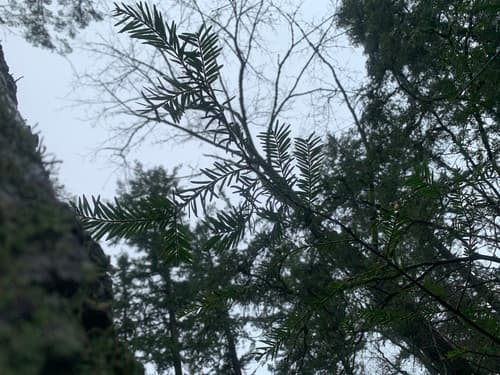
Pacific yew is a small to medium-sized coniferous tree, typically growing as an understory tree in moist forests. It features thin, reddish-brown bark that peels in scales, and flat, dark green, needle-like leaves arranged spirally on the stem but appearing two-ranked on the branchlets. The tree produces small, red, berry-like structures called arils, which contain a single seed.