Nicotiana pila
NameNicotiana pila
Scientific NameNicotiana pila
Common NamesWild Tobacco, Pila Tobacco
Plant FamilySolanaceae
Natural HabitatNative to arid and semi-arid regions of Western Australia, it thrives in sandy or stony soils, often found in disturbed areas and along watercourses.
Parts Usedleaf,whole_plant
Medicinal Actionsanalgesic, sedative, antimicrobial
Traditional UsesIndigenous Australians have traditionally used Nicotiana pila leaves, often chewed or smoked as a stimulant or mild narcotic. Crushed leaves are applied topically as a poultice for pain relief from headaches, toothaches, and muscle aches, and for treating skin conditions or wounds. It also holds significance in ceremonial contexts.
Active ConstituentsNicotine, Nornicotine, Anabasine
Preparation Methodspoultice, powder, infusion
Contraindications & WarningsHighly toxic due to high nicotine content; not for internal consumption. Can cause severe nausea, vomiting, dizziness, tremors, convulsions, and respiratory paralysis. Extremely dangerous for pregnant or breastfeeding women, children, and individuals with heart conditions or neurological disorders. Highly addictive.
Cultivation NotesThis hardy plant is adapted to arid conditions, preferring well-drained soils and full sun. It can be grown from seed and is relatively drought-tolerant once established.
Raritycommon
Description
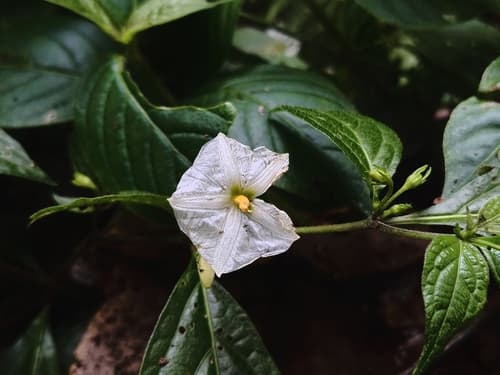
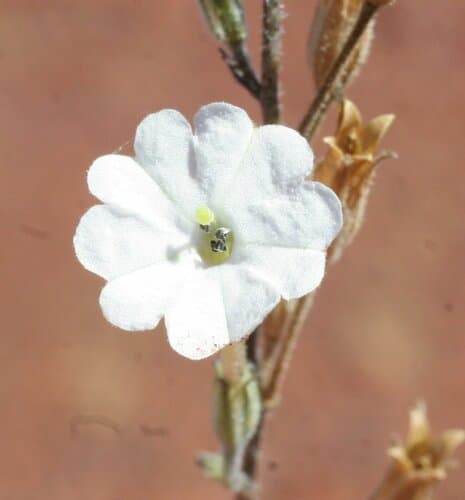
Nicotiana pila is an erect, sticky-hairy annual or short-lived perennial herb, typically growing up to 1.5 meters tall. It produces white, tubular flowers with five spreading lobes, often arranged in terminal racemes, and has ovate to lanceolate leaves.