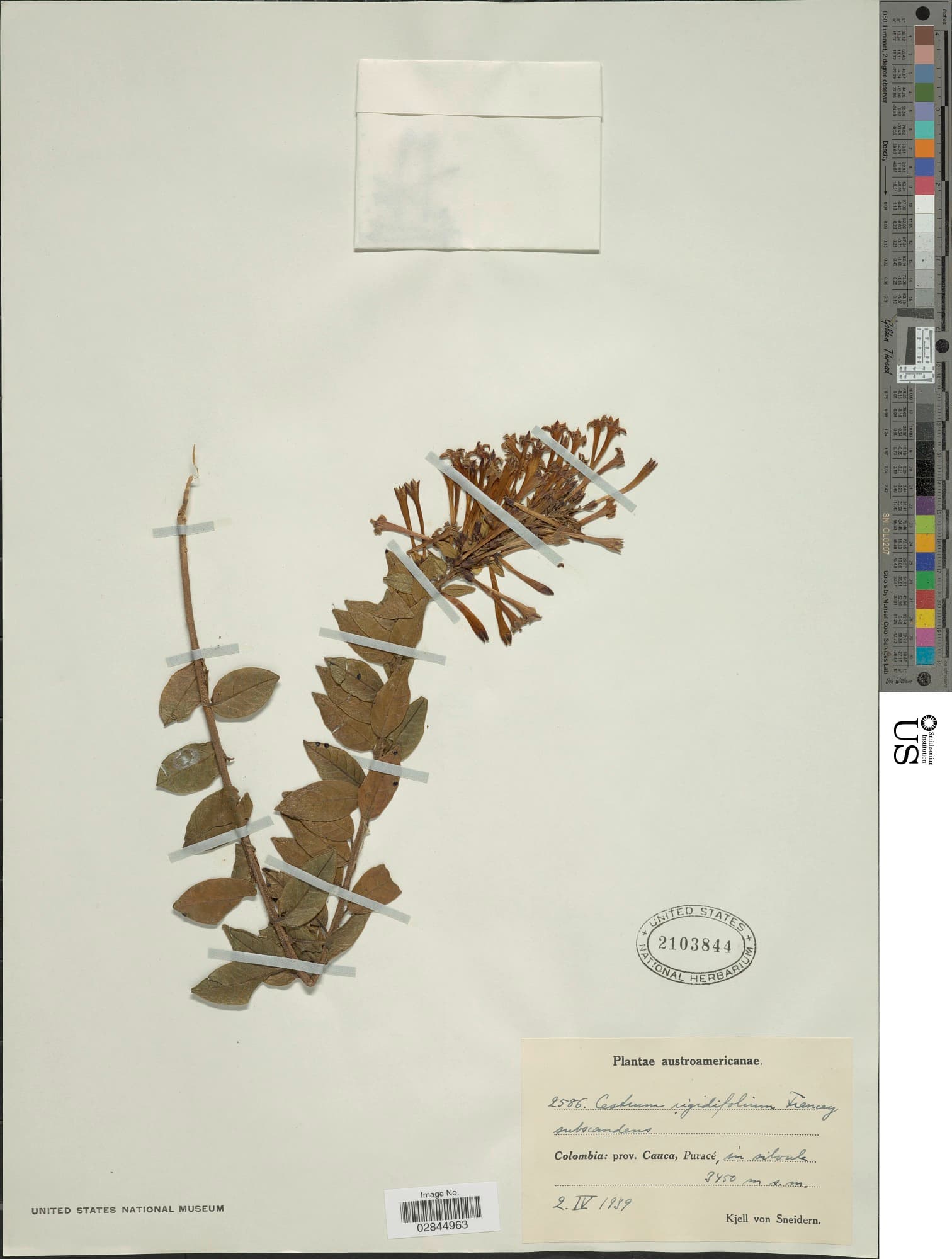
Cestrum rigidifolium
Image: Conveyor Belt (cc0)
NameCestrum rigidifolium
Scientific NameCestrum rigidifolium Francey
Common NamesCestrum
Plant FamilySolanaceae
Natural HabitatNative to high-altitude montane regions of the Andes, specifically documented in the Cauca province of Colombia at elevations around 3450 meters above sea level, suggesting a preference for cool, moist, cloud forest or paramo edge environments.
Parts Usedleaf,flower
Medicinal Actionsanalgesic, anti-inflammatory
Traditional UsesTraditional medicinal uses for Cestrum rigidifolium are not well-documented. For the Cestrum genus generally, some species have been used in folk medicine for pain relief, reducing inflammation, or treating fevers, often with external applications or highly diluted internal preparations due to the inherent toxicity of the plant.
Active ConstituentsSaponins, Tropane Alkaloids, Flavonoids
Preparation Methodsinfusion, poultice
Contraindications & Warnings**HIGHLY TOXIC.** All parts of Cestrum species, including C. rigidifolium, are generally considered poisonous, containing compounds that can cause severe gastrointestinal distress, neurological symptoms, and cardiac issues. Internal use is strongly contraindicated and can be fatal. Avoid use by pregnant/nursing women, children, and individuals with heart conditions or taking CNS depressants. Handle with gloves.
Cultivation NotesPrefers full sun to partial shade and well-drained soil. Thrives in tropical to subtropical montane climates, sensitive to frost. Requires consistent moisture but not waterlogging.
Rarityuncommon
Description
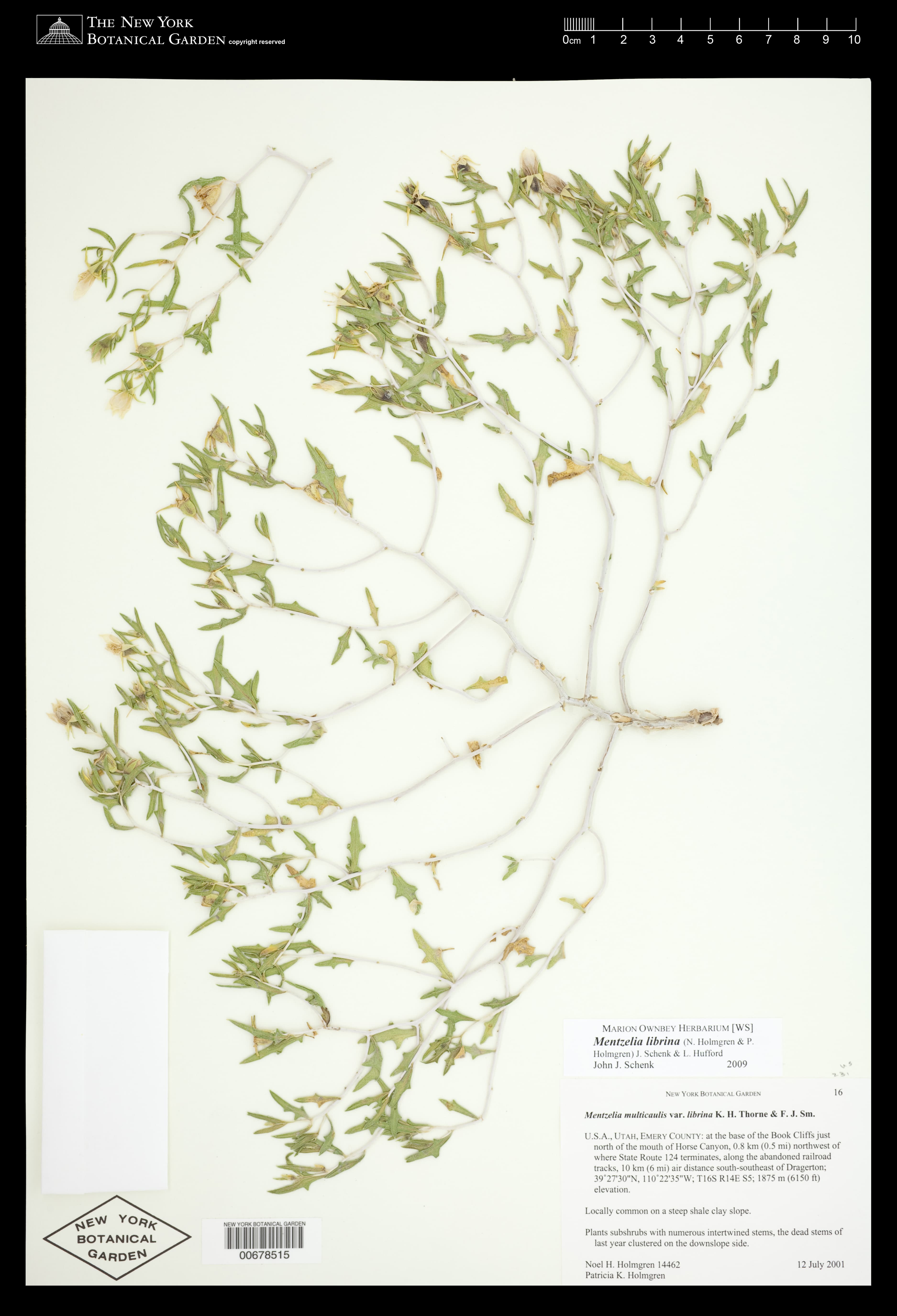
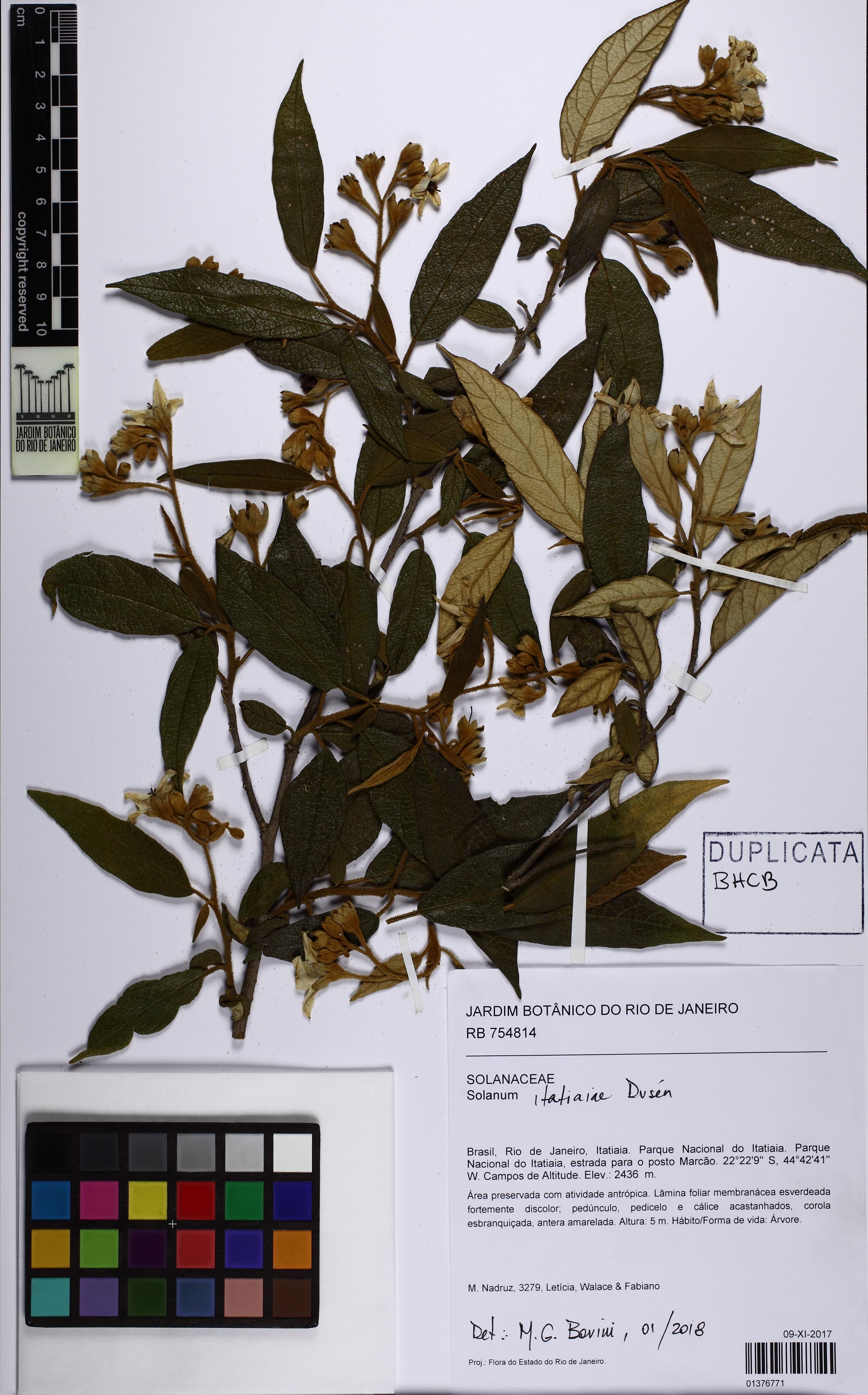
A woody shrub or small tree, Cestrum rigidifolium features alternate, simple, ovate to elliptic leaves. It produces terminal clusters of tubular flowers, which are typically elongated and can be fragrant in other Cestrum species.