Nasa umbraculifera
NameNasa umbraculifera
Scientific NameNasa umbraculifera
Common NamesUmbrella Loasa, Stinging Loasa
Plant FamilyLoasaceae
Natural HabitatNative to the Andean regions of South America, particularly Peru and Bolivia, growing in humid, montane forests and cloud forests, often in shaded, damp locations.
Parts Usedleaf,whole_plant
Medicinal Actionsanalgesic, anti-inflammatory
Traditional UsesSpecific traditional medicinal uses for Nasa umbraculifera are not well-documented. However, other species within the genus Nasa (Loasa) are traditionally used externally as counter-irritants for rheumatic pain and inflammation, utilizing their stinging hairs. This plant's potential uses would likely follow similar external applications.
Active ConstituentsInformation on specific active constituents for Nasa umbraculifera is limited; however, the Loasaceae family is known to contain various secondary metabolites including alkaloids, flavonoids, and terpenes.
Preparation Methodspoultice, salve
Contraindications & WarningsThe plant is covered in stinging hairs (glochids) which can cause severe skin irritation, itching, and blistering upon contact. Internal use is not traditionally documented and should be avoided due to potential toxicity and irritant properties. Allergic reactions are possible.
Cultivation NotesPrefers cool, humid conditions with partial to full shade and well-drained, rich soil. Requires protection from strong winds and direct sun. Cultivation outside its native Andean habitat can be challenging due to specific environmental requirements.
Rarityuncommon
Description
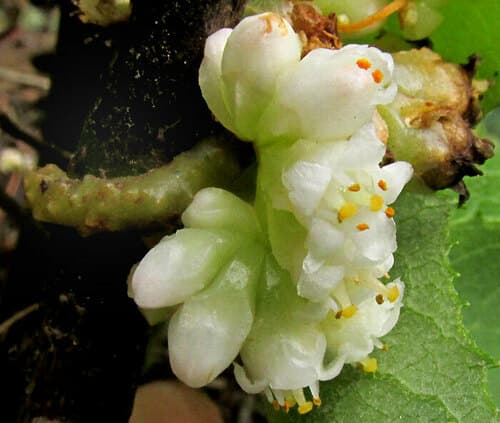
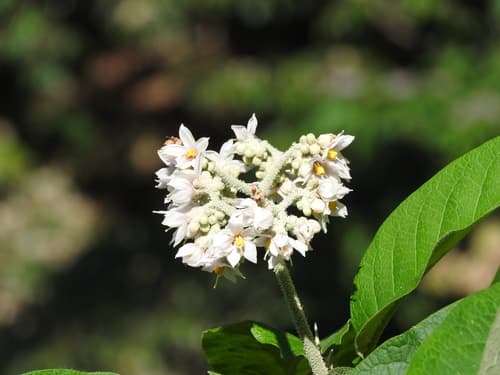
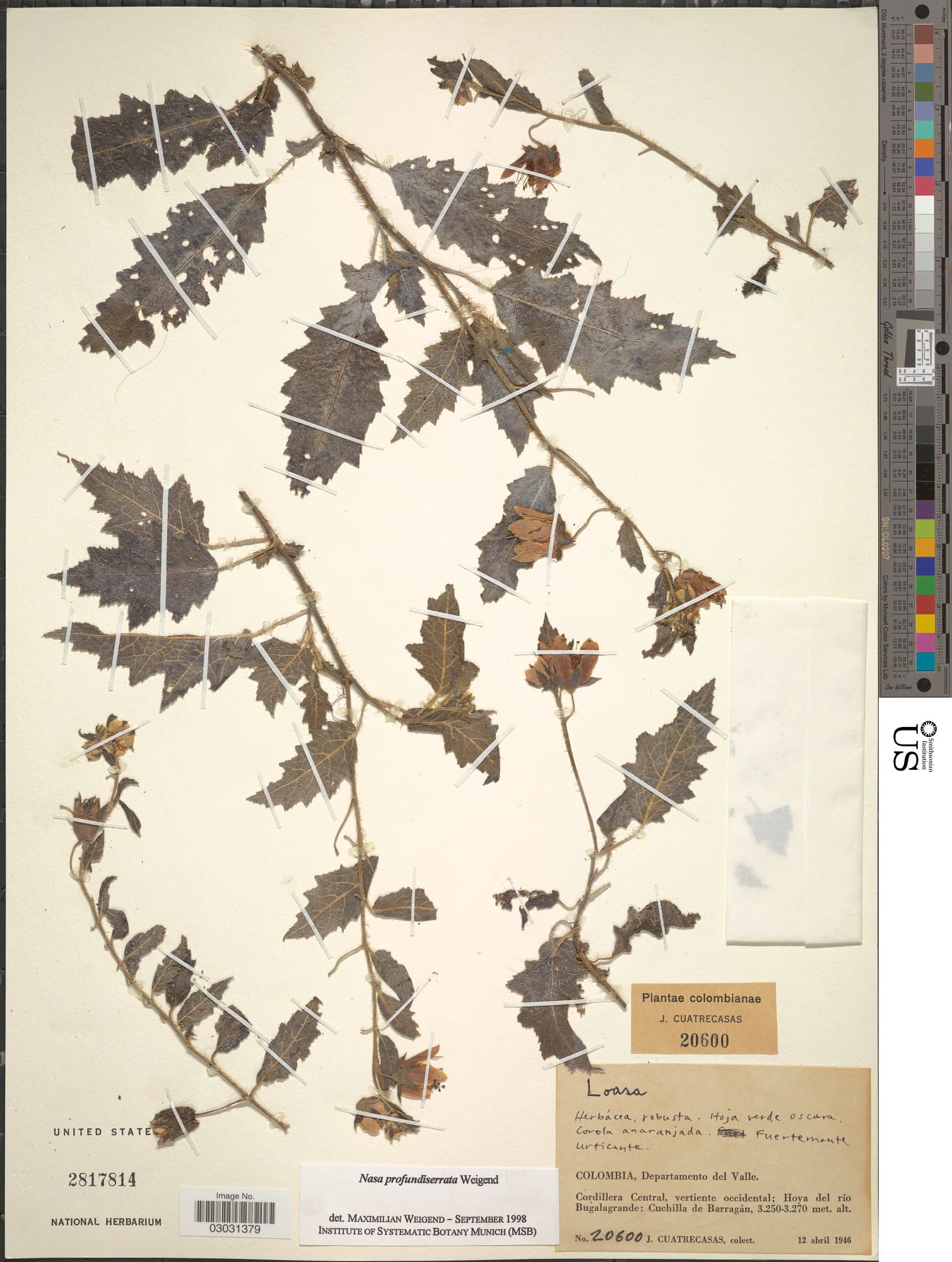
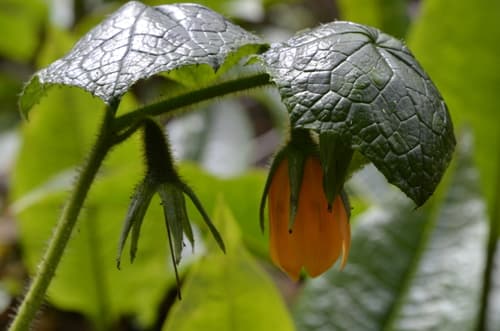
Nasa umbraculifera is a herbaceous plant characterized by large, deeply veined, umbrella-like leaves often covered in stinging hairs. It produces pendulous, bell-shaped flowers, typically orange or yellow, emerging from beneath the leaves.