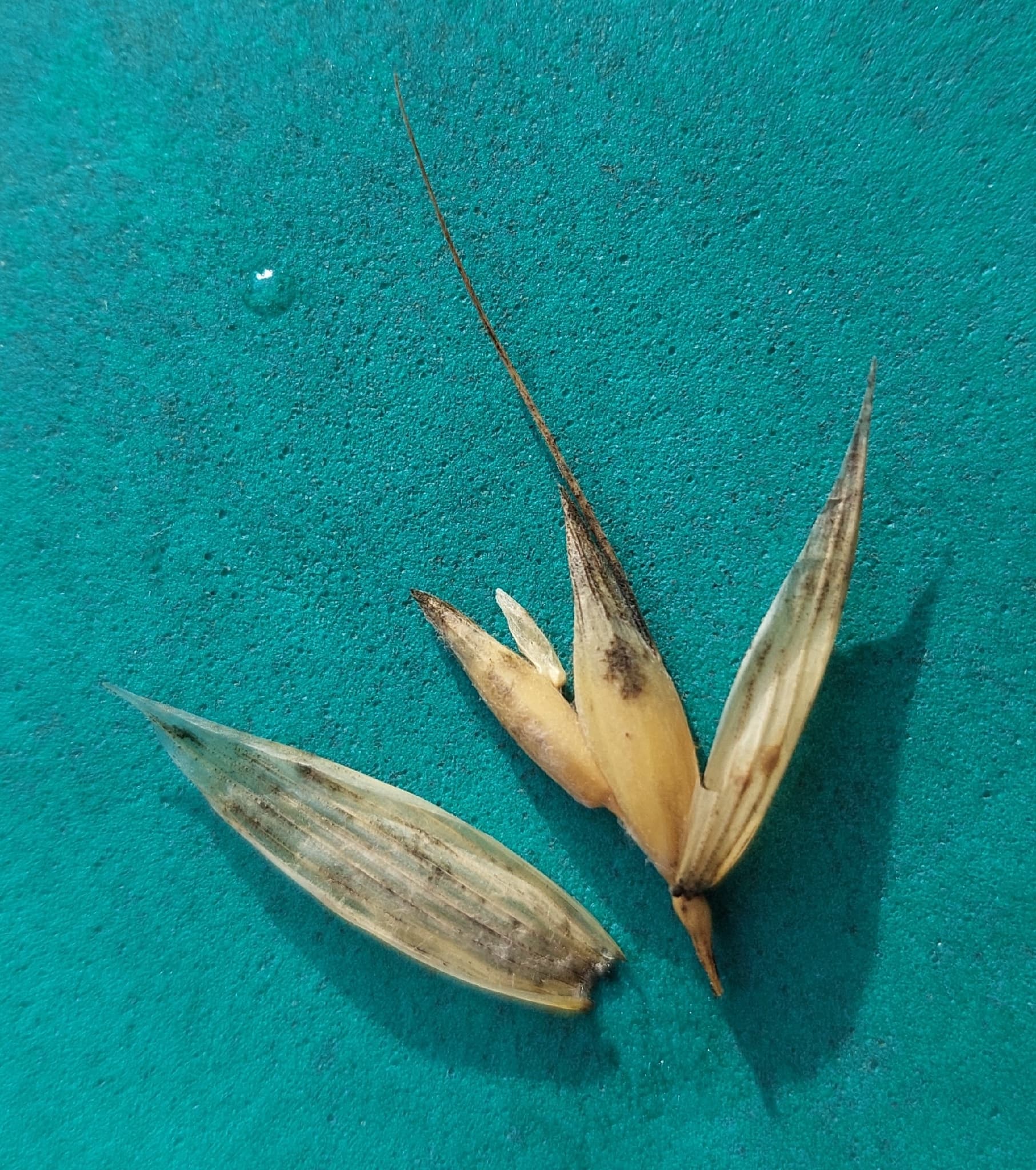
Oat Straw
Image: H. Merz (cc-by-nc)
NameOat Straw
Scientific NameAvena sativa
Common NamesOat Straw, Green Oats, Common Oat
Plant FamilyPoaceae
Natural HabitatOriginally native to the Near East, oats are now widely cultivated globally in temperate regions as a cereal crop. They thrive in cool, moist climates and well-drained soils.
Parts Usedwhole_plant
Medicinal Actionsnervine, adaptogen, demulcent, anti-inflammatory, antioxidant
Traditional UsesTraditionally used to support the nervous system, reduce stress and anxiety, and alleviate exhaustion. It is also valued as a nutritive tonic, to soothe irritated tissues, and to support cardiovascular health and cognitive function.
Active Constituentssaponins (avenacosides), flavonoids, alkaloids (gramine, avenine), beta-glucans, minerals (silica, calcium, magnesium), vitamins (B vitamins)
Preparation Methodsinfusion, tincture, powder
Contraindications & WarningsGenerally considered safe. Individuals with celiac disease or gluten sensitivity should be cautious, as cross-contamination with gluten-containing grains can occur during processing, though pure oats are naturally gluten-free.
Cultivation NotesOats are an annual crop that prefers full sun and well-drained, fertile soil. They are typically sown in spring or fall, depending on the climate, and require moderate water. For oat straw, harvest when the seeds are in the milky stage.
Raritycommon
Description
Avena sativa is an annual grass cultivated for its grain. Oat straw refers to the aerial parts of the plant, typically harvested when the grain is in its milky stage, consisting of the stems, leaves, and immature seed heads. It features long, slender leaves and panicles of spikelets containing the developing oats.