Horseradish
Image: Morgan McKenzie (cc-by-nc)
NameHorseradish
Scientific NameArmoracia rusticana
Common NamesHorseradish, Red Cole, Mountain Radish
Plant FamilyBrassicaceae
Natural HabitatNative to southeastern Europe and western Asia, it is now widely cultivated globally and can be found naturalized in disturbed areas, roadsides, and waste ground in temperate regions.
Parts Usedroot,leaf
Medicinal Actionsexpectorant, antimicrobial, diuretic, anti-inflammatory, antioxidant
Traditional UsesTraditionally, horseradish root has been used to clear sinus congestion, relieve symptoms of colds and flu, and as a diuretic for urinary tract infections. It has also been applied externally as a poultice for muscle aches, joint pain, and inflammation.
Active ConstituentsGlucosinolates, Sinigrin, Allyl isothiocyanate, Ascorbic acid
Preparation Methodstincture, poultice, powder
Contraindications & WarningsNot recommended for individuals with gastric ulcers, kidney disease, or thyroid disorders. High doses can cause stomach upset and irritation; avoid in pregnancy, breastfeeding, and young children.
Cultivation NotesA hardy perennial that thrives in full sun to partial shade and prefers deep, moist, well-drained soil. It spreads readily from root cuttings and can become invasive if not managed, requiring regular harvesting to control growth.
Raritycommon
Description
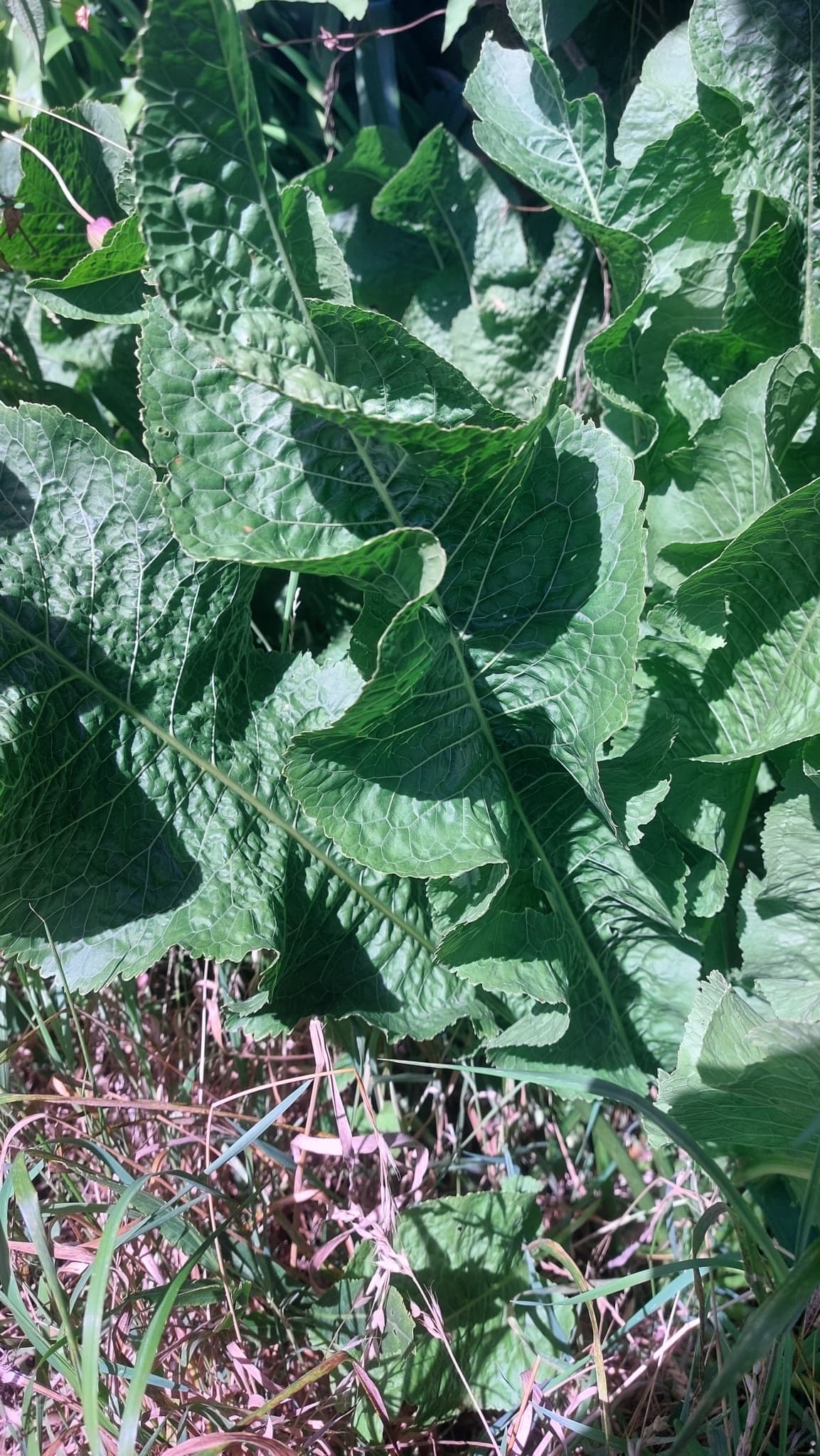
Horseradish is a robust perennial herb characterized by large, oblong-ovate, bright green leaves with wavy or crenate margins. It produces a thick, fleshy, white taproot known for its pungent flavor and aroma, which is the primary part used. Small white flowers appear on stalks in late spring.