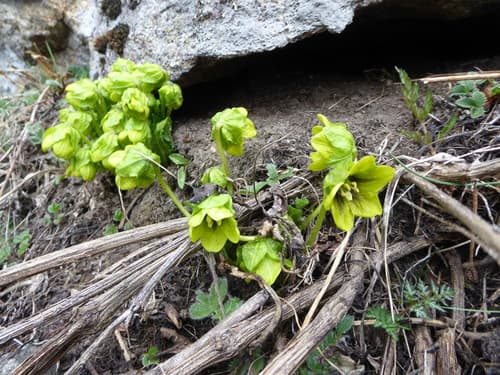
Himalayan mandrake
NameHimalayan mandrake
Scientific NamePodophyllum hexandrum
Common NamesHimalayan Mandrake, Indian Podophyllum, Bakkar Kanta
Plant FamilyBerberidaceae
Natural HabitatSubalpine and alpine regions of the Himalayas, growing in open forests, shrublands, and rocky slopes at high altitudes.
Parts Usedroot
Medicinal Actionsanti-inflammatory, antimicrobial
Traditional UsesTraditionally, the rhizome has been used as a powerful purgative, emetic, and anthelmintic. It was also applied externally for treating warts, tumors, and certain skin conditions due to its potent cytotoxic properties.
Active ConstituentsPodophyllotoxin, Podophyllin, Picropodophyllin
Preparation Methodsdecoction, powder, tincture, poultice
Contraindications & WarningsExtremely toxic; not for internal use without strict medical supervision due to severe side effects including gastrointestinal distress, neurological damage, and bone marrow suppression. Contraindicated in pregnancy, lactation, and in children. Interacts with many drugs.
Cultivation NotesPrefers cool, moist, well-drained soil rich in organic matter, in partial to full shade. Requires a cold stratification period for seed germination. Slow-growing and challenging to cultivate.
Rarityvery-rare
Description
A perennial herb native to the Himalayas, characterized by its large, umbrella-like leaves that emerge with the flowers. It produces distinctive bell-shaped, yellowish-green flowers, often followed by a red, fleshy fruit.