Cuscuta gigantea
Image: iqra baloch (cc-by)
NameCuscuta gigantea
Scientific NameCuscuta gigantea
Common NamesDodder, Strangleweed, Witch's Hair, Devil's Gut
Plant FamilyCuscutaceae
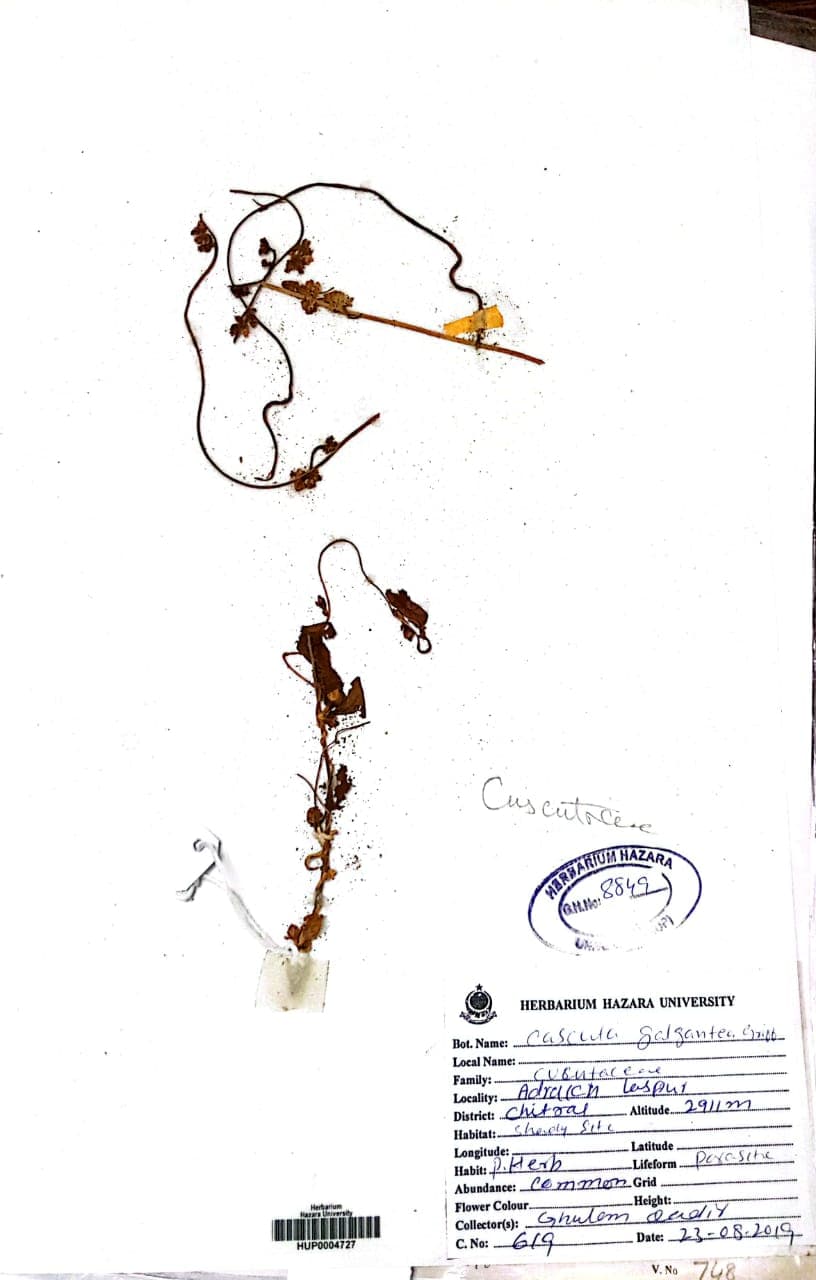
Natural HabitatAs a parasitic plant, it grows on various host plants in diverse environments. The specimen was collected from a 'Sherly Site' in Chitral, indicating it thrives in specific local conditions where suitable hosts are present.
Parts Usedwhole_plant
Medicinal Actionsantioxidant, anti-inflammatory, diuretic, adaptogen
Traditional UsesTraditionally, species of Cuscuta, including potentially Cuscuta gigantea, have been used in herbal medicine to tonify the kidney and liver, improve vision, and treat conditions such as impotence, premature ejaculation, frequent urination, and lower back pain. It is also used for its general tonic and adaptogenic properties.
Active ConstituentsFlavonoids, Lignans, Polysaccharides, Saponins
Preparation Methodsinfusion, decoction, powder, tincture
Contraindications & WarningsPregnant or breastfeeding women should avoid use. Individuals with yin deficiency with heat signs should use with caution. May interact with certain medications, particularly those affecting hormone levels or blood pressure.
Cultivation NotesCuscuta gigantea is a parasitic plant and cannot be cultivated independently. It requires a living host plant to grow and thrive, making conventional cultivation challenging and typically undesirable in agricultural settings due to its parasitic nature.
Raritycommon
Description
Cuscuta gigantea is a parasitic, herbaceous vine characterized by its slender, leafless, yellowish-brown to reddish stems that twine around host plants. It lacks chlorophyll and obtains all its nutrients from its host via haustoria. The plant produces small, clustered flowers and fruits along its stems.