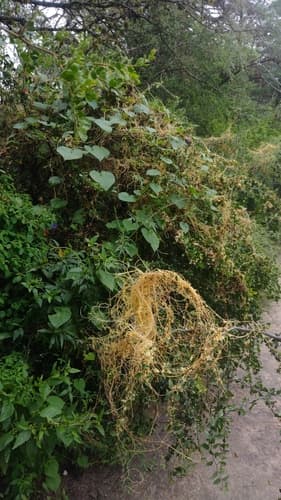
Cuscuta cristata
NameCuscuta cristata
Scientific NameCuscuta cristata
Common NamesDodder, Amarbel, Devil's Guts, Hairweed
Plant FamilyConvolvulaceae
Natural HabitatAs a parasitic plant, Cuscuta cristata grows on a wide variety of host plants in diverse environments, including fields, disturbed areas, roadsides, and natural ecosystems in temperate and tropical regions.
Parts Usedwhole_plant,seed
Medicinal Actionsadaptogen, antioxidant, diuretic, anti-inflammatory
Traditional UsesTraditionally, various Cuscuta species are used as a general tonic, particularly for kidney and liver health. It is employed to improve vision, strengthen bones, and address issues like impotence, premature ejaculation, and frequent urination. In some traditions, it's used for skin conditions and as an adaptogen to enhance overall vitality.
Active Constituentsflavonoids, lignans, polysaccharides, cuscutin, coumarins
Preparation Methodsinfusion, decoction, tincture, powder
Contraindications & WarningsCuscuta species are generally contraindicated during pregnancy and lactation. Individuals with qi stagnation, fire excess, or severe constipation should avoid its use. It may interact with certain medications, and large quantities can be toxic to livestock.
Cultivation NotesCuscuta cristata is a parasitic plant and cannot be cultivated independently; it requires a living host plant to grow and thrive. It is often considered a noxious weed in agricultural settings due to its detrimental effects on host crops.
Raritycommon
Description
Cuscuta cristata is a parasitic herbaceous vine characterized by its thin, thread-like, yellowish-orange stems that twine around host plants. It lacks true leaves, which are reduced to tiny scales, and obtains all its nutrients via haustoria that penetrate the host's vascular system.