Cornus oblonga
NameCornus oblonga
Scientific NameCornus oblonga
Common NamesHimalayan Dogwood, Oblong-leaved Dogwood
Plant FamilyCornaceae
Natural HabitatNative to the Himalayas, it thrives in temperate forests, open woodlands, and shrubberies, often found on hillsides and in valleys at elevations between 1000 and 3000 meters.
Parts Usedbark,leaf,fruit
Medicinal Actionsastringent, anti-inflammatory, antimicrobial, antioxidant
Traditional UsesTraditionally, the bark and leaves of Cornus oblonga have been used in some Himalayan regions for their astringent properties, particularly in treating diarrhea and dysentery. It has also been employed as a febrifuge to reduce fevers and as a general tonic. The fruits are sometimes consumed.
Active ConstituentsTannins, Iridoids, Flavonoids, Triterpenoids
Preparation Methodsinfusion, decoction
Contraindications & WarningsDue to its high tannin content, excessive consumption may cause gastrointestinal upset in sensitive individuals. Caution is advised when taken concurrently with iron supplements, as tannins can inhibit iron absorption.
Cultivation NotesThis species prefers well-drained, fertile soil and can tolerate both full sun and partial shade. It thrives in moist, slightly acidic conditions and is hardy in temperate climates, making it suitable for woodland gardens.
Raritycommon
Description
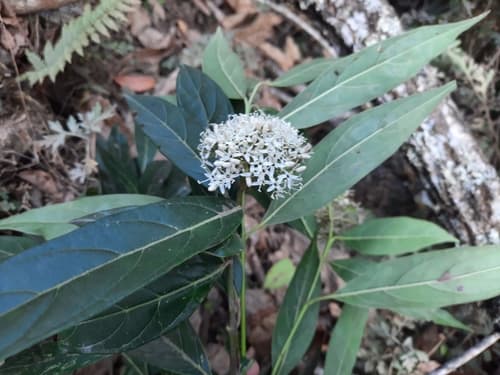
Cornus oblonga is a deciduous shrub or small tree characterized by its oblong to lanceolate, dark green leaves with prominent venation. It produces dense clusters of small, white, four-petaled flowers, typically blooming in late spring to early summer, followed by red, berry-like fruits.