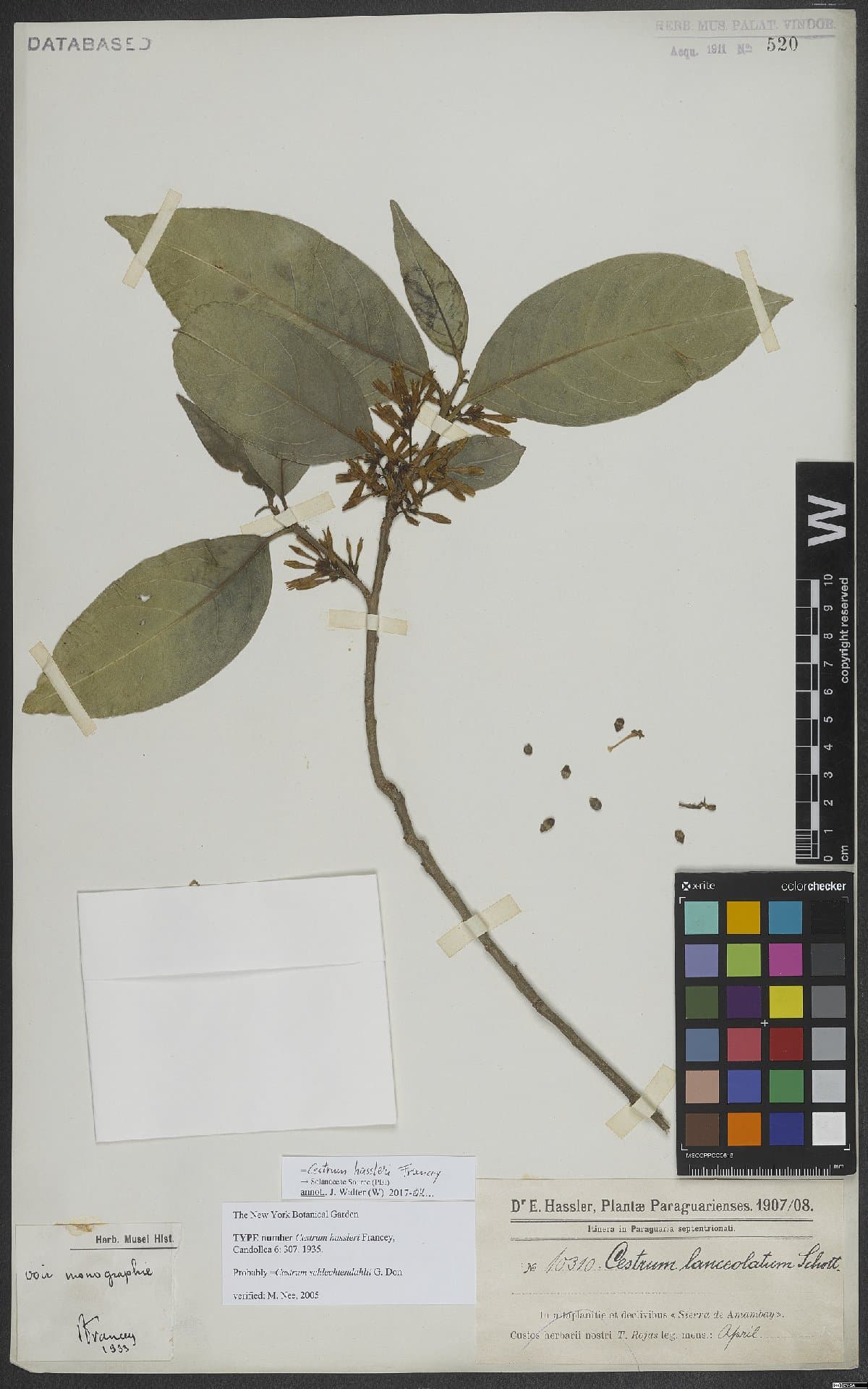
Cestrum hassleri
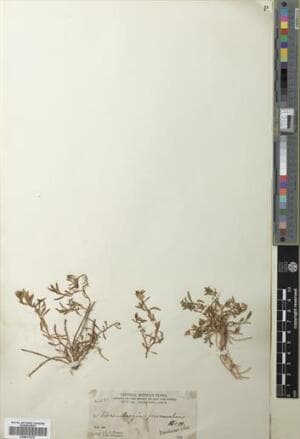
Image: Rojas,T. Dr. E. Hassler, Plantae Paraguarienses 10310 (cc-by)
NameCestrum hassleri
Scientific NameCestrum hassleri Francey
Common NamesJessamine
Plant FamilySolanaceae
Natural HabitatNative to South America, particularly Paraguay, thriving in subtropical to tropical environments, often found in forests or forest margins.
Parts Usedleaf,bark
Medicinal Actionsanti-inflammatory, analgesic, antimicrobial
Traditional UsesTraditional uses for *Cestrum* species often involve external applications for skin conditions, pain relief, and fevers. Due to the plant's inherent toxicity, internal use is generally avoided or used with extreme caution in very small, specific doses.
Active Constituentssteroidal saponins, steroidal glycoalkaloids, flavonoids
Preparation Methodspoultice, decoction, infusion
Contraindications & WarningsAll parts of *Cestrum* species are generally considered toxic, especially due to steroidal glycoalkaloids, which can cause severe gastrointestinal and neurological symptoms upon ingestion. Avoid internal use. Not for use by pregnant or nursing women, or children.
Cultivation Notes*Cestrum hassleri* prefers full sun to partial shade and well-drained soil. It is a fast-growing woody plant best suited for tropical and subtropical climates.
Rarityuncommon
Description
This woody shrub or small tree features alternate, simple, entire, ovate to elliptic leaves. It produces clusters of small, tubular flowers, as seen in the axillary or terminal inflorescences on the specimen.