Cataracta microphysa
NameCataracta microphysa
Scientific NameCataracta microphysa
Common NamesPygmy Groundcherry, Dwarf Cape Gooseberry, Wild Gooseberry, Sunberry
Plant FamilySolanaceae
Natural HabitatCommonly found as a weed in disturbed areas, agricultural fields, roadsides, and open woodlands across tropical and subtropical regions worldwide.
Parts Usedwhole_plant,leaf,fruit
Medicinal Actionsadaptogen, anti-inflammatory, antimicrobial, antioxidant, diuretic
Traditional UsesTraditionally used in various folk medicine systems (e.g., Ayurvedic, African, Southeast Asian) for treating fevers, coughs, skin diseases, and urinary tract infections. The plant is also valued as a general tonic, and its ripe fruits are edible and rich in vitamins.
Active ConstituentsWithanolides, Flavonoids, Alkaloids, Carotenoids, Vitamin C
Preparation Methodsinfusion, decoction, powder, poultice
Contraindications & WarningsGenerally considered safe in traditional use, but consuming large quantities may cause gastrointestinal upset. Unripe fruits, like many in the Solanaceae family, may contain solanine-like compounds and should be avoided. Pregnant and breastfeeding individuals should consult a healthcare professional before use.
Cultivation NotesThis plant is easy to grow from seed in warm climates, preferring full sun to partial shade and well-drained soil. It can readily self-seed and may become weedy in suitable conditions.
Raritycommon
Description
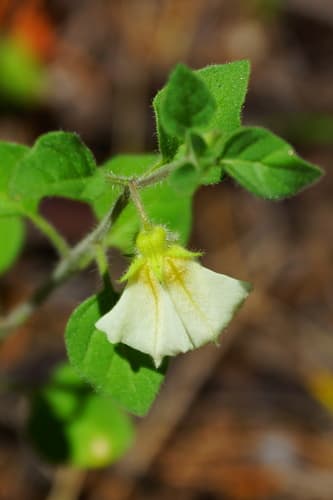
This small, annual herbaceous plant typically grows up to 50 cm tall, featuring hairy stems and ovate leaves. It produces small, pale yellow, bell-shaped flowers that hang downwards, which later develop into small berries enclosed within an inflated, papery calyx.