Cestrum contrerasianum
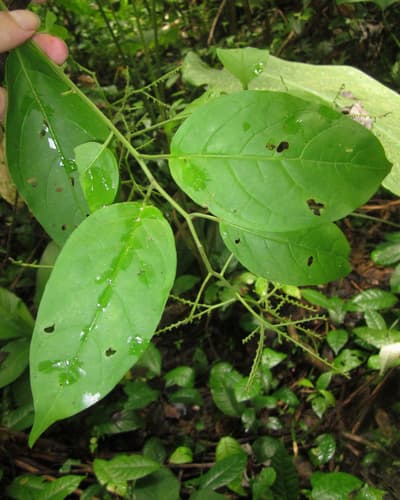
Image: Chamé, A.; Luna, A. (cc0)
NameCestrum contrerasianum
Scientific NameCestrum contrerasianum A.K.Monro
Plant FamilySolanaceae
Natural HabitatFound in disturbed pine-oak forests at elevations around 2300 meters, specifically documented in the region of San Cristóbal de Las Casas, Chiapas, Mexico.
Parts Usedleaf,flower
Medicinal Actionsanalgesic, anti-inflammatory
Traditional UsesWhile specific traditional uses for Cestrum contrerasianum are not documented, other species within the Cestrum genus have been traditionally used in some cultures for their analgesic and anti-inflammatory properties, often applied externally or with extreme caution due to the genus's known toxicity.
Active Constituentssteroidal saponins, glycoalkaloids
Preparation Methodsinfusion, poultice
Contraindications & WarningsThe Cestrum genus is widely known for its toxicity due to steroidal saponins and glycoalkaloids, which can cause gastrointestinal distress, neurological symptoms, and cardiac issues. Internal use is generally not recommended and can be dangerous. External use should also be approached with extreme caution.
Cultivation NotesThis species is a shrub adapted to disturbed pine-oak forest environments at high altitudes (approx. 2300m). It prefers conditions typical of its native habitat in Chiapas, Mexico.
Rarityuncommon
Description
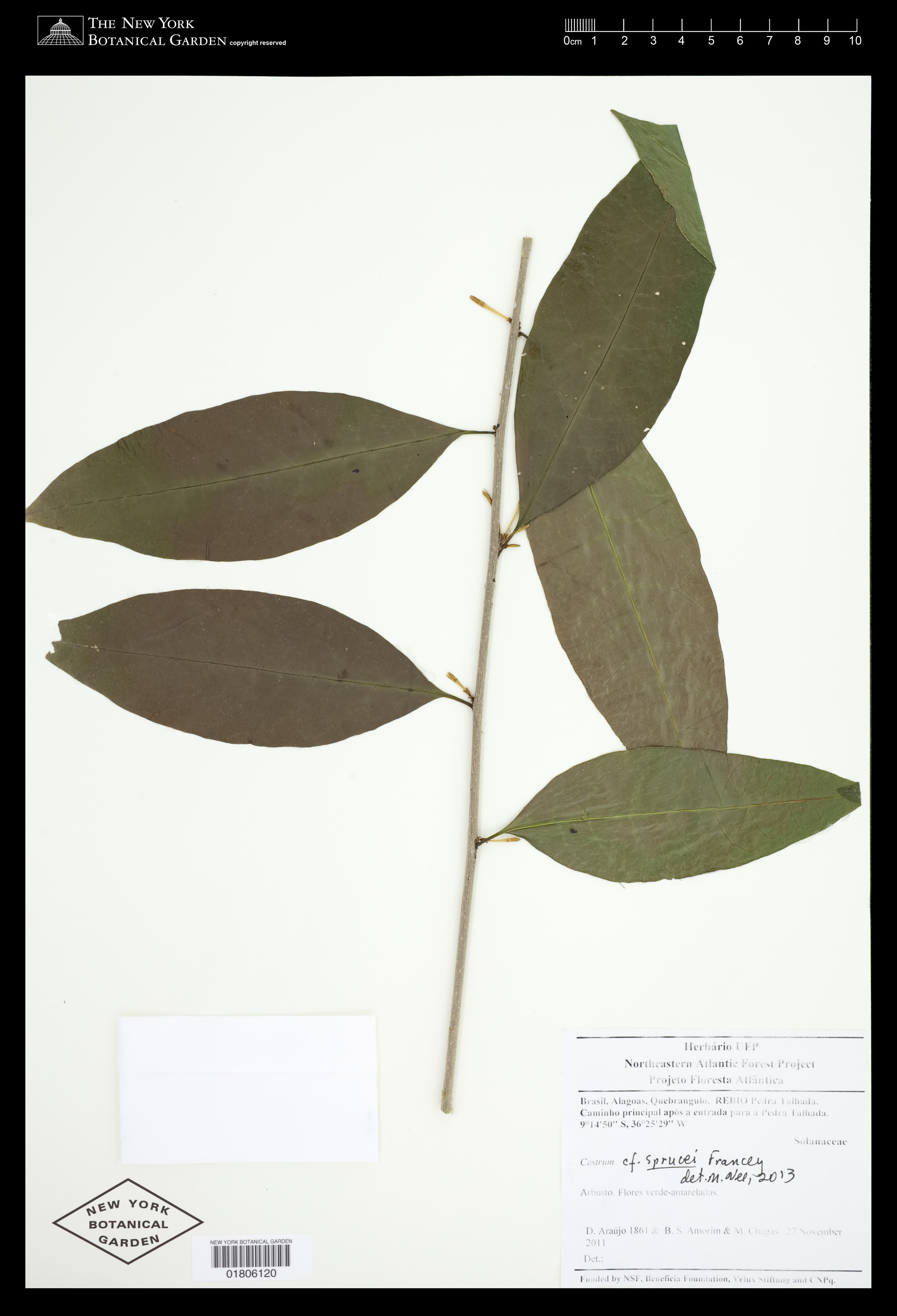
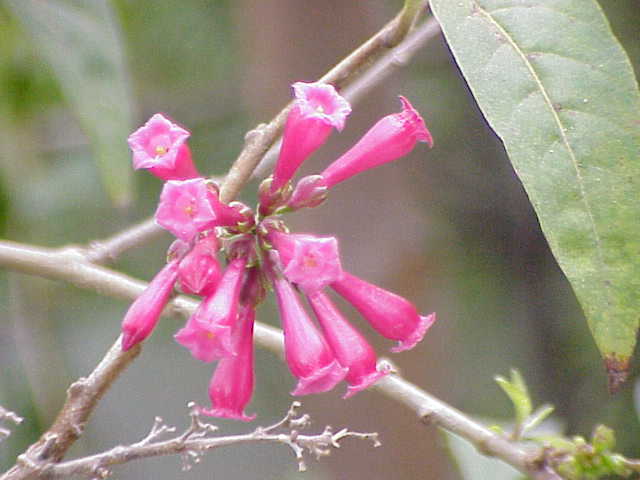
A shrub typically growing up to 1 meter tall, characterized by lustrous, smooth leaves that are lighter on the underside, and gray stems. It produces immature green fruits that ripen to white, containing clear seeds.