Lindheimer's Morning Glory
NameLindheimer's Morning Glory
Scientific NameIpomoea lindheimeri
Common NamesLindheimer's Morning Glory
Plant FamilyConvolvulaceae
Natural HabitatNative to rocky slopes, open woodlands, and disturbed areas, thriving in well-drained soils and full sun. It is drought-tolerant once established.
Parts Usedseed,root
Medicinal Actionsantioxidant
Traditional UsesSpecific traditional medicinal uses for *Ipomoea lindheimeri* are not widely documented in ethnobotanical literature. While other species within the *Ipomoea* genus are known for purgative or psychoactive properties, these uses are not specifically attributed to Lindheimer's Morning Glory.
Active Constituentsresin glycosides (potential, based on genus), ergoline alkaloids (potential, based on genus)
Preparation Methodspowder, decoction
Contraindications & WarningsDue to the lack of specific medicinal documentation for this species, and the known purgative and psychoactive properties of some other *Ipomoea* species, consumption is generally not recommended. Ingestion of related species' seeds can cause nausea, vomiting, abdominal cramps, and psychological effects.
Cultivation NotesThis vine prefers full sun and well-drained soil, tolerating drought once established. It can be grown as a perennial in warmer climates (USDA Zones 8-10) or as an annual elsewhere. Propagation is typically by seed.
Raritycommon
Description
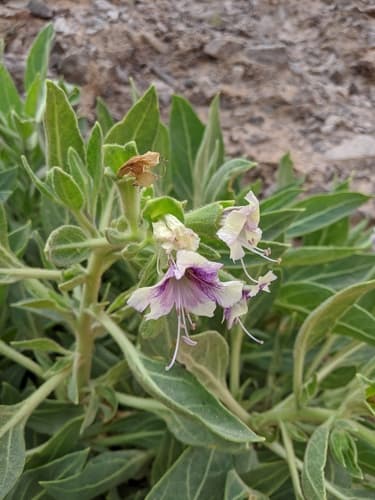
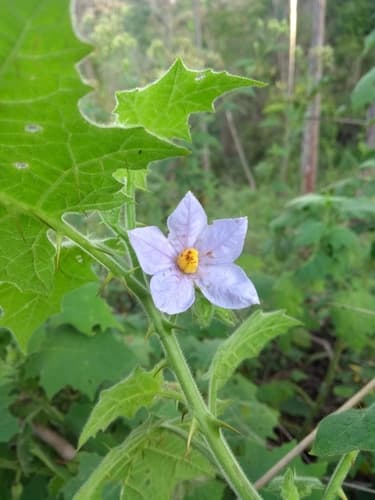
A perennial climbing vine native to the southwestern United States and northern Mexico, characterized by its heart-shaped to lobed leaves and showy, funnel-shaped flowers. The blossoms are typically lavender to purple with a white throat, opening in the morning and closing by afternoon.