Argyreia bracteosa
Image: s.coll. (cc-by)
NameArgyreia bracteosa
Scientific NameArgyreia bracteosa
Common NamesBracteate Wood Rose
Plant FamilyConvolvulaceae
Natural HabitatNative to tropical and subtropical regions of Asia, including India and Sri Lanka, this vine thrives in moist deciduous forests, forest edges, and disturbed areas, often climbing on other vegetation for support.
Parts Usedleaf,root
Medicinal Actionsanalgesic, anti-inflammatory, antimicrobial, antioxidant
Traditional UsesTraditionally, Argyreia bracteosa has been utilized in Ayurvedic and folk medicine for its therapeutic properties. The leaves are commonly applied externally as a poultice to treat wounds, skin infections, and reduce inflammation, while internal preparations from leaves and roots are used for pain relief, fever, and to alleviate symptoms of rheumatism and swelling.
Active Constituentsflavonoids, steroids, triterpenes
Preparation Methodsinfusion, decoction, poultice, powder
Contraindications & WarningsDue to limited specific research, caution is advised. General contraindications for related species suggest avoiding use during pregnancy and lactation, and in individuals with heart conditions or high blood pressure. Potential interactions with CNS depressants or stimulants should also be considered.
Cultivation NotesThis tropical vine prefers warm, humid climates with full sun to partial shade. It requires well-drained, fertile soil and a sturdy support structure for its climbing habit. Propagation can be achieved through seeds or stem cuttings.
Rarityuncommon
Description
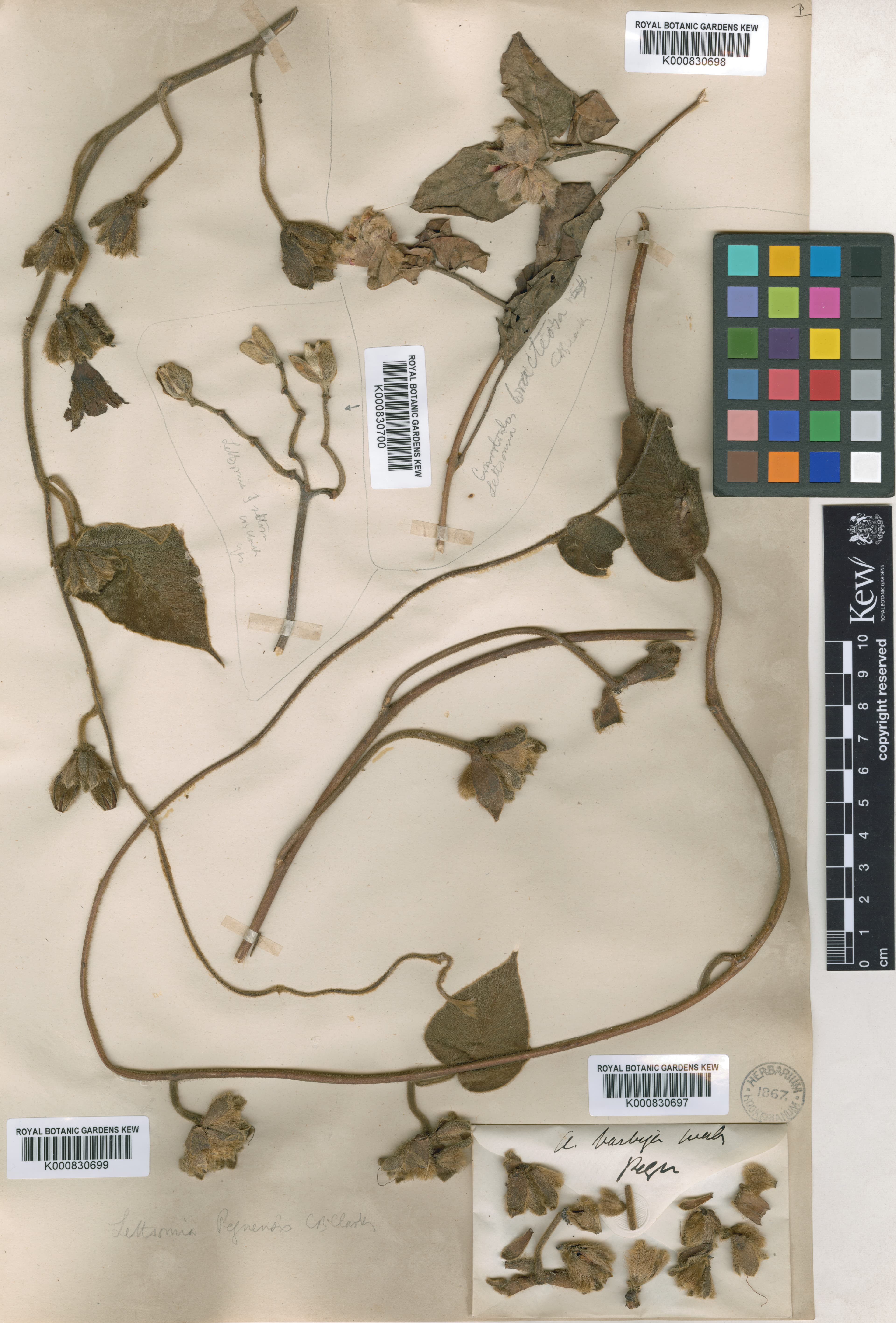
Argyreia bracteosa is a climbing perennial vine characterized by its large, heart-shaped to ovate leaves, which are densely covered in soft, silvery-brown hairs, especially on the underside. It produces clusters of bell-shaped flowers, also typically hairy, that can range in color from pink to purple, often appearing in axillary cymes.