Arabian boxthorn
NameArabian boxthorn
Scientific NameLycium shawii
Common NamesArabian boxthorn, Desert boxthorn, Shaw's boxthorn, Ghargad
Plant FamilySolanaceae
Natural HabitatNative to arid and semi-arid regions of the Arabian Peninsula, North Africa, and the Middle East, thriving in deserts, wadis, rocky slopes, and sandy plains.
Parts Usedfruit,leaf,root
Medicinal Actionsantioxidant, anti-inflammatory, antimicrobial, analgesic, diuretic, adaptogen
Traditional UsesTraditionally, the berries are consumed as a general tonic, for boosting immunity, and for overall health. Leaves and roots have been used in traditional medicine for treating fevers, pain, inflammation, digestive issues, and as a diuretic. It is also applied topically for certain skin conditions.
Active ConstituentsPolysaccharides, Carotenoids, Flavonoids, Alkaloids, Vitamins (C, B), Minerals
Preparation Methodsinfusion, decoction, powder, poultice
Contraindications & WarningsGenerally considered safe when consumed as food. However, large doses might interact with anticoagulant medications. Pregnant or breastfeeding individuals should consult a healthcare professional before medicinal use.
Cultivation NotesThis plant is highly drought-tolerant and thrives in full sun with well-drained, sandy or rocky soils. It is well-adapted to harsh desert conditions and requires minimal water once established. Propagation can be done via seeds or cuttings.
Raritycommon
Description
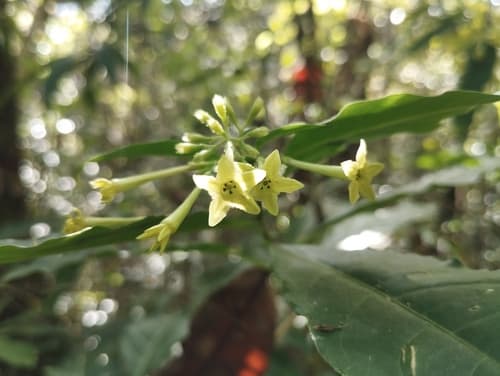
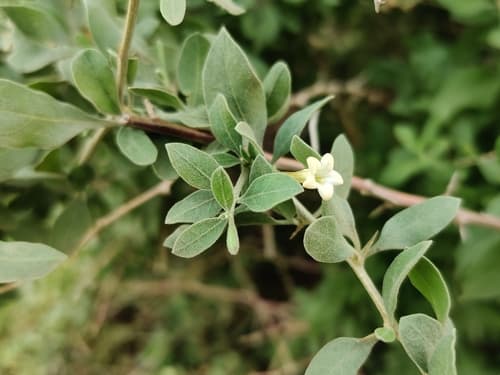
A thorny, deciduous shrub typically growing up to 2-3 meters tall, characterized by small, grey-green, ovate to spatulate leaves often covered in fine hairs. It produces small, pale yellow to whitish, star-shaped flowers that develop into small, red or orange berries.