Yellow Stingbush
NameYellow Stingbush
Scientific NameHypericum calycinum
Common NamesYellow Stingbush, Aaron's Beard, Great St. John's Wort, Creeping St. John's Wort
Plant FamilyHypericaceae
Natural HabitatNative to southeastern Europe and southwestern Asia, it thrives in woodlands, rocky slopes, and open forests. It is widely cultivated globally as an ornamental groundcover.
Parts Usedflower,leaf,whole_plant
Medicinal Actionsanti-inflammatory, antimicrobial, antioxidant, astringent, nervine
Traditional UsesTraditionally, the plant has been used topically for its healing properties, applied to soothe minor burns, wounds, skin irritations, and to alleviate nerve pain. It is valued for its anti-inflammatory and antimicrobial effects on the skin.
Active ConstituentsHypericin, Hyperforin, Flavonoids, Tannins, Volatile oils
Preparation Methodsinfusion, tincture, poultice, salve
Contraindications & WarningsInternal use of *Hypericum* species can cause photosensitivity and may interact with numerous medications, including antidepressants, oral contraceptives, and anticoagulants. While *H. calycinum* is less potent than *H. perforatum*, caution is advised, especially with internal consumption. Topical use is generally safer but should be tested on a small area first.
Cultivation NotesThis hardy plant prefers partial shade to full sun and well-drained soil. It is drought-tolerant once established and spreads readily, making it an excellent groundcover for gardens.
Raritycommon
Description
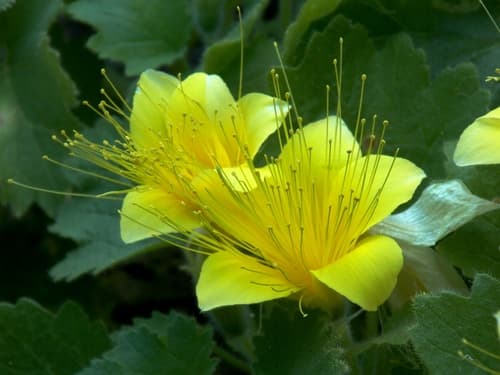
A low-growing, evergreen subshrub characterized by large, bright yellow flowers with five petals and a prominent cluster of numerous long stamens. Its opposite, ovate leaves are dark green and often have a slightly crinkled texture.