Withania echinata
NameWithania echinata
Scientific NameWithania echinata
Plant FamilySolanaceae
Natural HabitatIt thrives in dry, rocky, or sandy soils, often found in arid and semi-arid regions, and can tolerate varying light conditions from full sun to partial shade.
Parts Usedroot,leaf,fruit
Medicinal Actionsadaptogen, anti-inflammatory, antioxidant, nervine, sedative
Traditional UsesTraditionally, plants of the Withania genus are valued in Ayurvedic medicine for their adaptogenic properties, used to reduce stress, improve vitality, support cognitive function, and enhance overall well-being. While specific uses for *W. echinata* are less documented than *W. somnifera*, it is likely employed for similar purposes as a general tonic and restorative.
Active ConstituentsWithanolides, Alkaloids, Saponins
Preparation Methodsinfusion, decoction, tincture, powder
Contraindications & WarningsPregnant or breastfeeding individuals, those with autoimmune diseases, and individuals on sedative medications or thyroid hormones should exercise caution or avoid use. Consult a healthcare professional before use.
Cultivation NotesPrefers well-drained, sandy or loamy soils and thrives in full sun to partial shade. It is drought-tolerant once established and can be propagated by seed or cuttings.
Rarityuncommon
Description
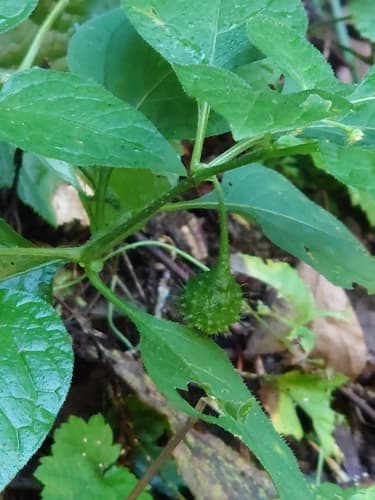
Withania echinata is a perennial herb or small shrub characterized by its simple, ovate to lanceolate leaves and distinctive spiky, green, tear-drop shaped fruits. The plant typically grows in a bushy habit, often found in undergrowth or open woodland areas.