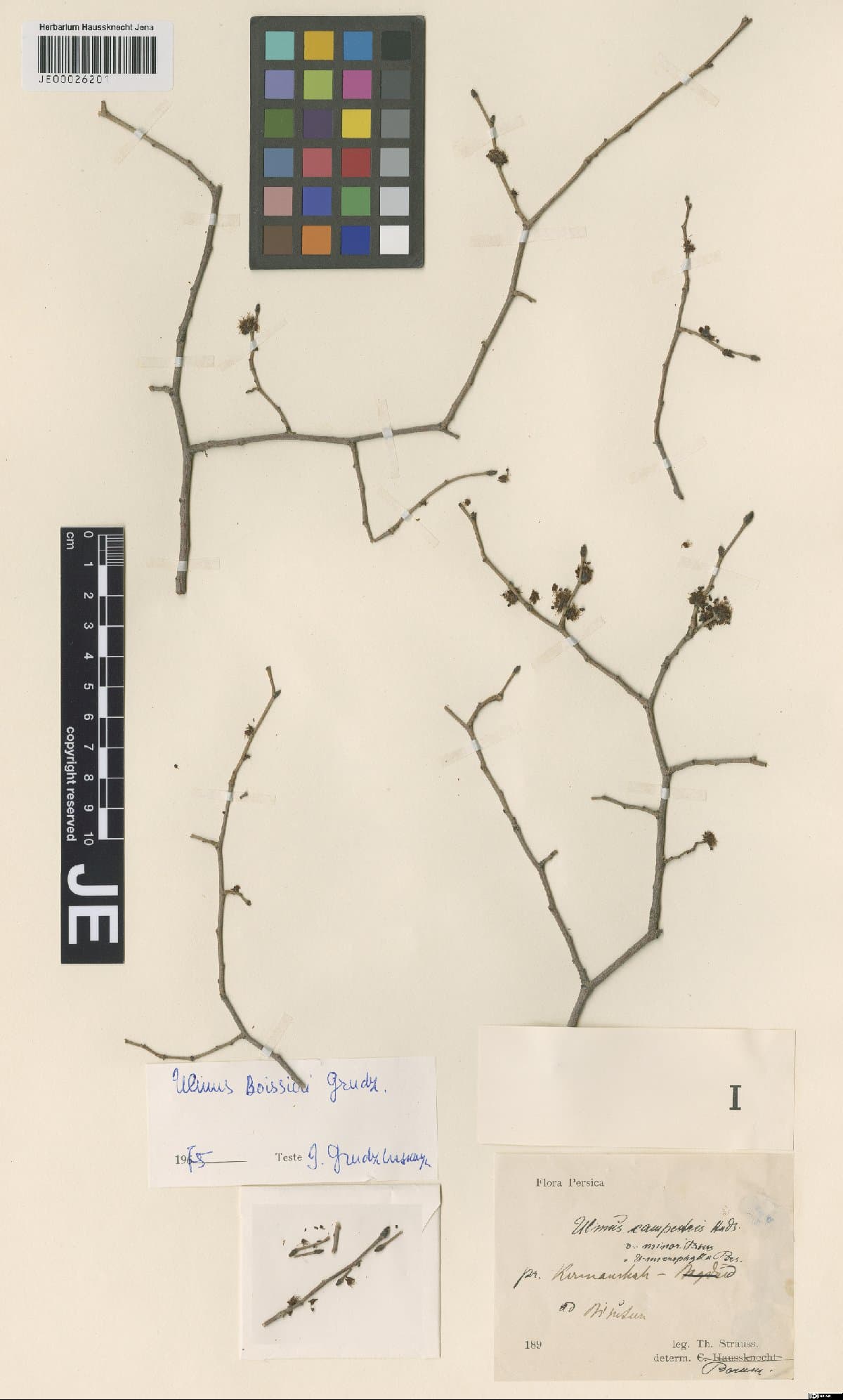
Ulmus boissieri
Image: Strauss,T. Flora Persica s.n. [s.d.] (cc-by)
NameUlmus boissieri
Scientific NameUlmus boissieri Grudz.
Common NamesBoissier's Elm, Elm
Plant FamilyUlmaceae
Natural HabitatNative to Western Asia, particularly Iran and Iraq, it thrives in mountainous areas, rocky slopes, and dry, often calcareous soils.
Parts Usedbark,leaf
Medicinal Actionsdemulcent, anti-inflammatory, astringent
Traditional UsesWhile specific traditional uses for *Ulmus boissieri* are not widely documented, other *Ulmus* species, particularly Slippery Elm (*Ulmus rubra*), have a long history of medicinal use. The inner bark is traditionally used to soothe irritated mucous membranes of the digestive, respiratory, and urinary tracts, and applied externally as a poultice for wounds, boils, and skin irritations.
Active Constituentsmucilage, tannins
Preparation Methodsinfusion, decoction, poultice, powder
Contraindications & WarningsGenerally considered safe. Due to its high mucilage content, it may slow the absorption of other medications if taken concurrently; it is advisable to take other medications an hour before or several hours after consuming elm preparations.
Cultivation NotesElms generally prefer well-drained soil and can tolerate a range of light conditions from full sun to partial shade. *Ulmus boissieri* is adapted to drier, rocky environments, suggesting good drought tolerance once established.
Rarityuncommon
Description
Ulmus boissieri is a deciduous tree or shrub, typically found in arid and semi-arid regions. The specimen shows leafless twigs bearing clusters of small, dried flowers or developing fruits, characteristic of early spring or winter morphology before leaf emergence.