Tasmanian Dodder
NameTasmanian Dodder
Scientific NameCuscuta tasmanica
Common NamesTasmanian Dodder, Dodder
Plant FamilyConvolvulaceae
Natural HabitatEndemic to Tasmania, Australia, where it parasitizes various native plants, often found in damp or coastal heathlands and grasslands.
Parts Usedwhole_plant,seed
Medicinal Actionsantioxidant, anti-inflammatory, adaptogen
Traditional UsesWhile specific traditional uses for *Cuscuta tasmanica* are not widely documented, other *Cuscuta* species (like *C. chinensis*) have been traditionally used in Traditional Chinese Medicine as a kidney tonic, to support liver function, improve vision, and address issues related to fertility. The whole plant might be used topically for skin conditions.
Active Constituentsflavonoids, lignans, polysaccharides, coumarins
Preparation Methodsinfusion, decoction, powder
Contraindications & WarningsPregnant or breastfeeding women should avoid. Individuals with yin deficiency with heat signs should use with caution. Consult a healthcare professional before use, especially if on other medications.
Cultivation NotesAs a parasitic plant, *Cuscuta tasmanica* cannot be cultivated independently. It requires a suitable host plant to grow and thrive, making conventional cultivation for harvest challenging.
Rarityuncommon
Description
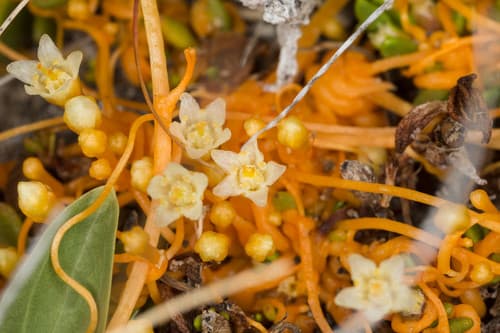
Cuscuta tasmanica is a parasitic annual plant characterized by its slender, leafless, orange to yellowish-orange stems that twine around host plants. It produces clusters of small, star-shaped, creamy-white to pale yellow flowers.