Sweet Woodruff
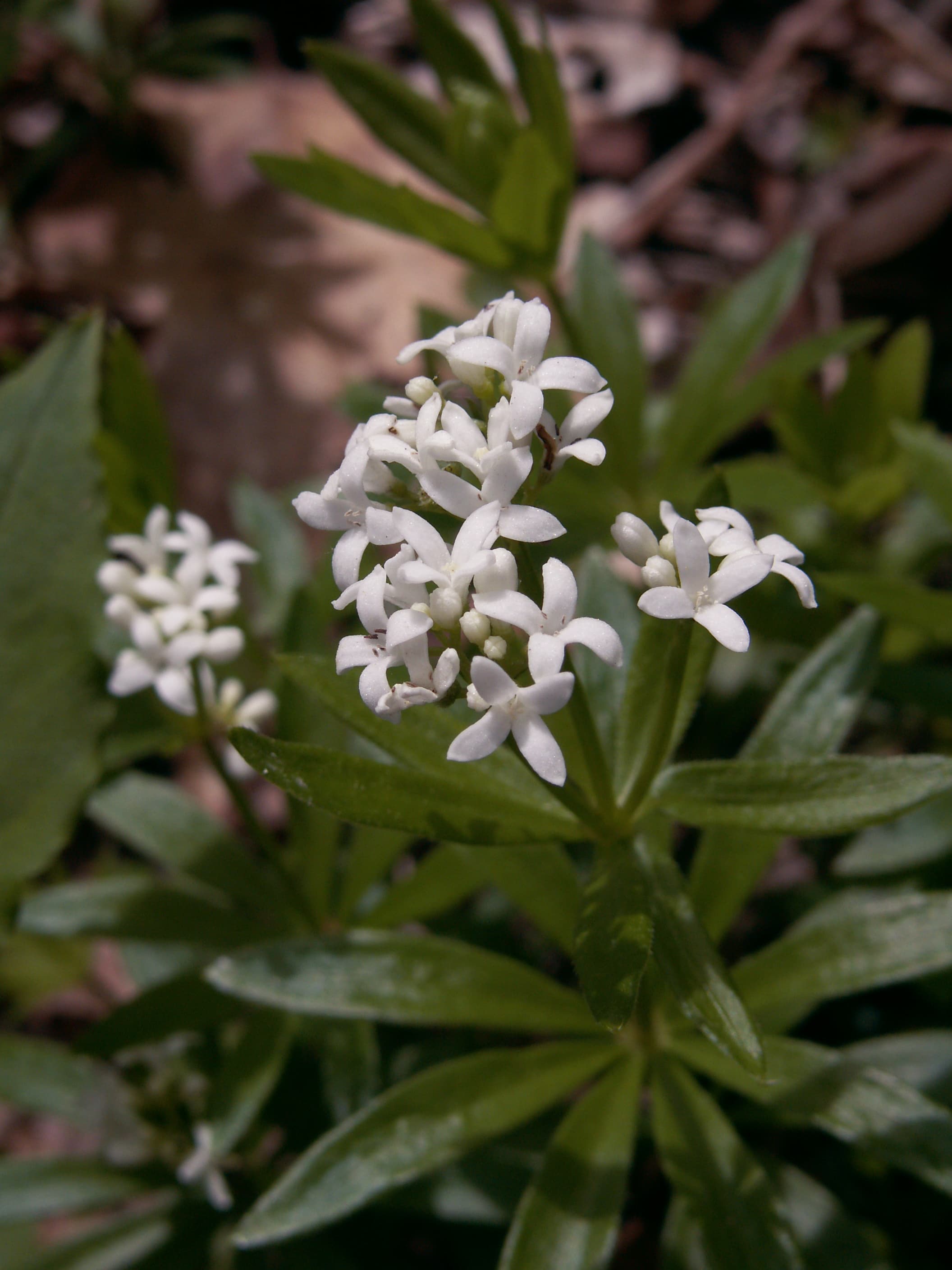
Image: Cbaile19 (CC0)
NameSweet Woodruff
Scientific NameGalium odoratum
Common NamesSweet Woodruff, Woodruff, Wild Baby's Breath, Master of the Woods
Plant FamilyRubiaceae
Natural HabitatNative to Europe, North Africa, and Western Asia, it thrives in cool, moist, shady woodlands, often forming dense groundcover under deciduous trees. It prefers rich, well-drained soil.
Parts Usedwhole_plant
Medicinal Actionsdiuretic, sedative, astringent, carminative, anti-inflammatory
Traditional UsesTraditionally, Sweet Woodruff has been used as a mild sedative to aid sleep and calm nerves, a diuretic for urinary tract issues, and a carminative for digestive complaints. It was also applied externally as a poultice for wounds and used as a flavoring agent for beverages like May Wine.
Active Constituentscoumarins, iridoid glycosides, tannins, flavonoids
Preparation Methodsinfusion, tincture, powder
Contraindications & WarningsHigh doses of Sweet Woodruff can cause headaches, dizziness, and liver damage due to its coumarin content. It should be avoided by individuals on anticoagulant medication or those with pre-existing liver conditions. Pregnant and breastfeeding women should also avoid its use.
Cultivation NotesSweet Woodruff prefers full to partial shade and consistently moist, well-drained soil rich in organic matter. It spreads aggressively via rhizomes, making it an excellent groundcover but requiring containment in some garden settings. It is relatively low-maintenance once established.
Raritycommon
Description
Sweet Woodruff is a low-growing perennial herb characterized by its whorled, lance-shaped leaves and clusters of small, star-shaped white flowers. It emits a sweet, hay-like fragrance, especially when dried, due to its coumarin content.