springblossom
Namespringblossom
Scientific NameTabernaemontana divaricata
Common NamesPinwheel Flower, Crape Jasmine, East Indian Rosebay, Nandiarkil
Plant FamilyApocynaceae
Natural HabitatNative to Southeast Asia and India, this plant thrives in warm, humid climates. It is commonly found in gardens, disturbed areas, and as an understory plant in tropical and subtropical forests.
Parts Usedleaf,flower,root,bark,whole_plant
Medicinal Actionsanti-inflammatory, antimicrobial, antioxidant, analgesic, sedative
Traditional UsesTraditionally, various parts of the plant are used in Ayurvedic and other folk medicines. It has been employed for treating skin diseases, fever, pain, and inflammation. The milky sap is sometimes applied topically to wounds and skin irritations.
Active ConstituentsAlkaloids (e.g., ibogaine, coronaridine, voacangine), flavonoids, triterpenoids, steroids
Preparation Methodsinfusion, decoction, poultice, powder
Contraindications & WarningsPregnant and breastfeeding women should avoid internal use. Due to its alkaloid content and potential sedative effects, it should be used with caution and under professional guidance, especially if taking other sedative medications.
Cultivation NotesThis plant prefers full sun to partial shade and well-drained soil. It requires regular watering, particularly during dry spells, and benefits from warm, humid conditions. It can be easily propagated by stem cuttings.
Raritycommon
Description
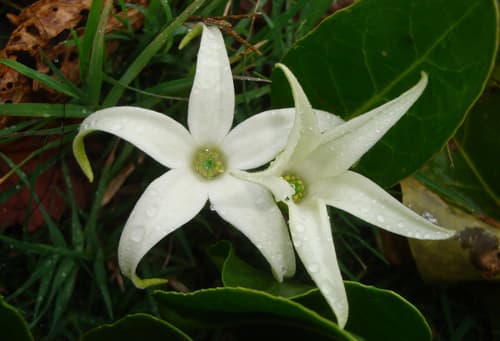
A tropical evergreen shrub featuring glossy green leaves and fragrant, pinwheel-shaped white flowers, often appearing in clusters. The flowers typically have five petals and a distinct central corona, often covered in dew drops as seen in the image.