Solanum versicolor
Image: Bean, A.R. (cc-by)
NameSolanum versicolor
Scientific NameSolanum versicolor A.R.Bean
Plant FamilySolanaceae
Natural HabitatFound in woodlands and open forests, specifically documented from Queensland, Australia, such as areas north-east of Mt. Coolum.
Parts Usedleaf,fruit
Medicinal Actionsantioxidant, anti-inflammatory
Traditional UsesNo specific traditional medicinal uses are widely documented for Solanum versicolor. Many species within the Solanum genus are known for their toxicity, particularly their fruits, due to the presence of steroidal glycoalkaloids.
Contraindications & WarningsDue to the genus Solanum being known for containing potentially toxic steroidal glycoalkaloids (e.g., solanine), especially in unripe fruits and other plant parts, Solanum versicolor should be considered potentially toxic. Internal use is strongly contraindicated without specific knowledge and expert guidance.
Cultivation NotesAs an Australian native from Queensland, it likely prefers well-drained soils and full sun to partial shade. It would be adapted to warm climates.
Rarityuncommon
Description
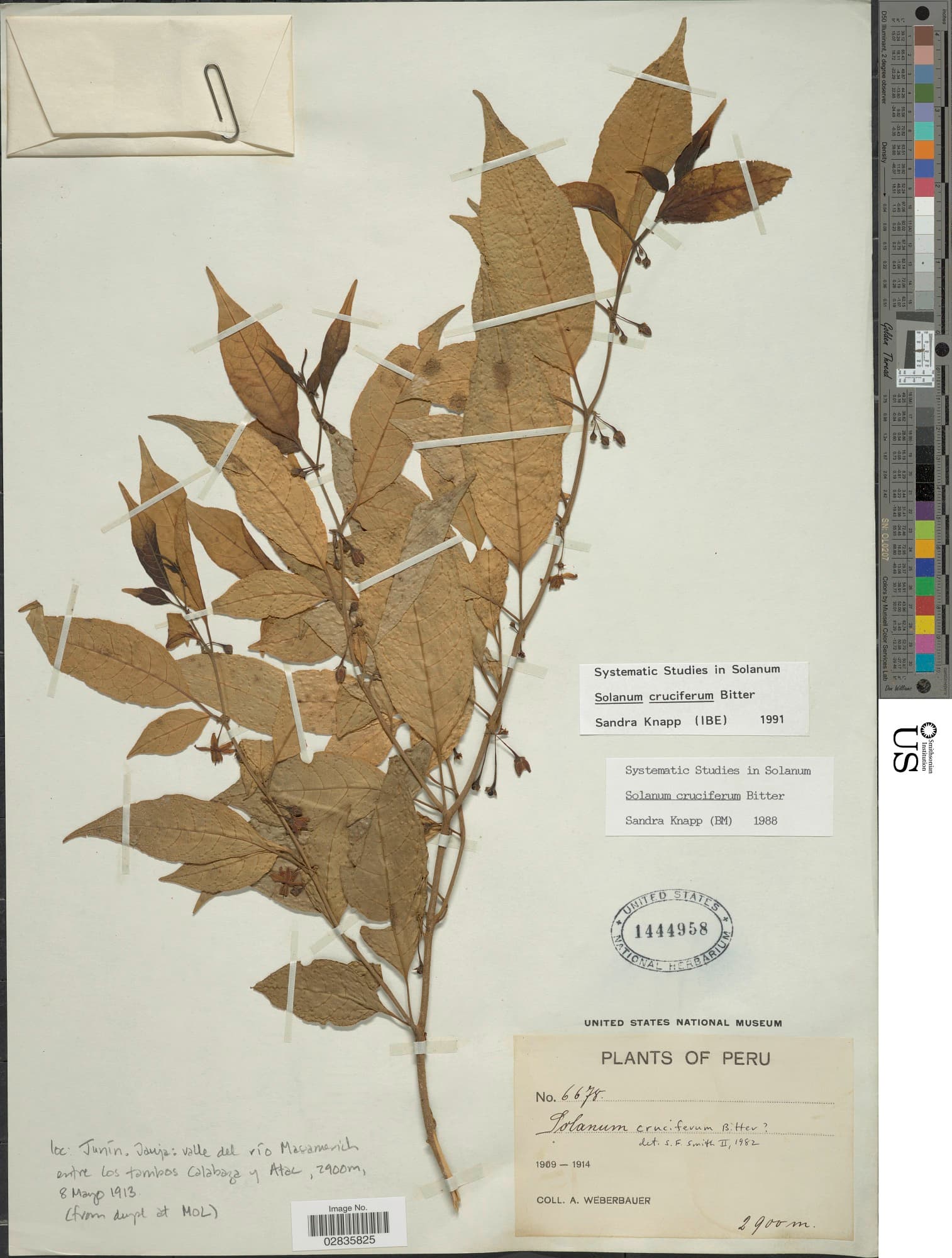
Solanum versicolor is a woody shrub characterized by its alternate, simple leaves and small, dark, berry-like fruits. The plant typically exhibits prickles on its stems and leaves, a common feature within its subgenus.