Borage
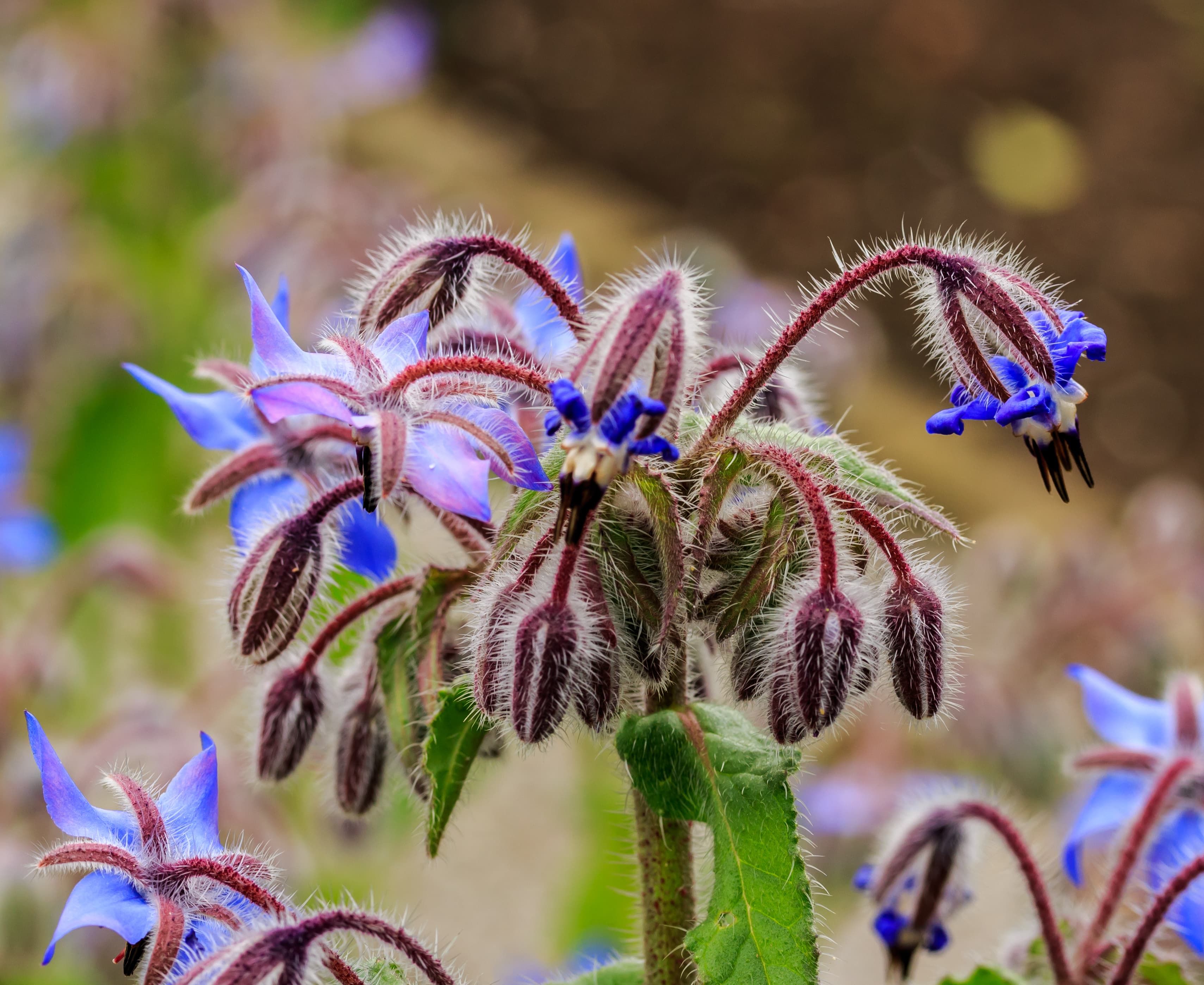
Image: Dominicus Johannes Bergsma (CC BY-SA 4.0)
NameBorage
Scientific NameBorago officinalis
Common NamesStarflower, Bee Bread, Bugloss
Plant FamilyBoraginaceae
Natural HabitatNative to the Mediterranean region, Borage thrives in sunny, well-drained soils. It is often found in disturbed areas, gardens, and cultivated fields, having naturalized in many temperate regions worldwide.
Parts Usedleaf,flower,seed
Medicinal Actionsanti-inflammatory, demulcent, diuretic, nervine, antioxidant
Traditional UsesTraditionally, borage leaves and flowers were used internally as a demulcent for coughs and colds, a diuretic, and a nervine to uplift spirits and alleviate melancholy. Externally, poultices of the leaves were applied to reduce inflammation, soothe skin irritations, and ease joint pain. Borage seed oil is highly valued for its gamma-linolenic acid (GLA) content, used for inflammatory conditions like eczema and rheumatoid arthritis.
Active ConstituentsGamma-linolenic acid (GLA), Pyrrolizidine alkaloids (PAs), Mucilage, Flavonoids, Saponins, Tannins
Preparation Methodsinfusion, tincture, poultice, essential oil, salve
Contraindications & WarningsInternal use of borage herb (leaves, stems) should be limited due to the presence of pyrrolizidine alkaloids (PAs), which can be hepatotoxic. It should be avoided by pregnant/nursing women, individuals with liver disease, or those taking liver-toxic medications. Borage seed oil is generally considered safer as it contains very low or no PAs, but caution is still advised. May interact with blood-thinning medications.
Cultivation NotesBorage is an easy-to-grow annual herb that thrives in full sun to partial shade and well-drained soil. It is drought tolerant once established and readily self-seeds, often returning year after year.
Raritycommon
Description
Borage is an annual herb characterized by its bristly, hairy stems and leaves, clearly visible in the image. It produces vibrant, star-shaped blue flowers with prominent black anthers that droop downwards, giving it a distinctive appearance. The plant has a somewhat sprawling growth habit and is often cultivated for its ornamental and medicinal properties.