Solanum sitiens
NameSolanum sitiens
Scientific NameSolanum sitiens
Common NamesAtacama Nightshade
Plant FamilySolanaceae
Natural HabitatEndemic to the Atacama Desert in Chile and Peru, growing in extremely arid, sandy, and rocky soils. It is often found in coastal fog oases (lomas formations) or dry riverbeds, thriving in environments with minimal rainfall.
Parts Usedleaf
Medicinal Actionsanti-inflammatory, analgesic
Traditional UsesTraditional medicinal uses for Solanum sitiens are not widely documented. However, within the Solanum genus, some species have been traditionally used by indigenous communities for their potential anti-inflammatory and analgesic properties, often applied topically for skin ailments or pain, though many species are known to be toxic.
Active Constituentssteroidal glycoalkaloids, flavonoids
Preparation Methodspoultice
Contraindications & WarningsDue to the presence of steroidal glycoalkaloids common in the Solanum genus, Solanum sitiens is presumed to be toxic. Ingestion is strongly discouraged and can be dangerous. Topical use should be approached with extreme caution due to potential skin irritation or absorption of toxic compounds. Consult with an expert before any use.
Cultivation NotesRequires extremely well-draining soil and full sun. Highly drought-tolerant once established, it prefers arid to semi-arid climates. Cultivation outside its native habitat can be challenging due to its specific environmental requirements.
Rarityuncommon
Description
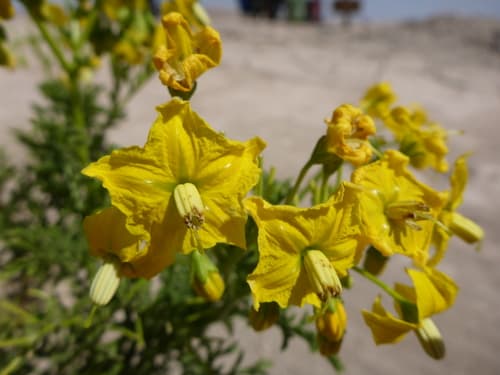
Solanum sitiens is a perennial shrub native to the Atacama Desert, characterized by its bright yellow, star-shaped flowers with prominent yellow anthers. It typically grows as a low-lying or sprawling plant, exhibiting remarkable adaptations to extremely arid conditions.