Morning Glory
NameMorning Glory
Scientific NameIpomoea laeta
Common NamesMorning Glory, Blue Morning Glory
Plant FamilyConvolvulaceae
Natural HabitatThis species thrives in tropical and subtropical climates, commonly found in disturbed areas, roadsides, fields, and gardens. It can grow as a cultivated ornamental or a naturalized weed.
Parts Usedseed,leaf,root
Medicinal Actionsanalgesic, anti-inflammatory, diuretic, nervine, sedative
Traditional UsesTraditionally, the seeds of *Ipomoea* species, including those closely related to *I. laeta*, have been used as potent purgatives and, in some indigenous cultures, for their psychoactive properties in ritualistic contexts. Leaves and roots have been employed for various ailments, such as skin conditions, headaches, and as diuretics.
Active ConstituentsErgoline alkaloids, Glycosides, Resins
Preparation Methodspowder, infusion, decoction, poultice
Contraindications & WarningsThe seeds contain toxic compounds and should not be ingested without expert guidance due to potential for severe nausea, vomiting, dizziness, and hallucinogenic effects. Contraindicated in pregnancy, liver disease, glaucoma, heart conditions, and psychiatric disorders. May interact with CNS depressants or other psychoactive medications.
Cultivation NotesEasily grown from seed in full sun to partial shade with well-drained soil. It is a fast-growing vine that requires support for climbing and can become invasive in favorable conditions.
Raritycommon
Description
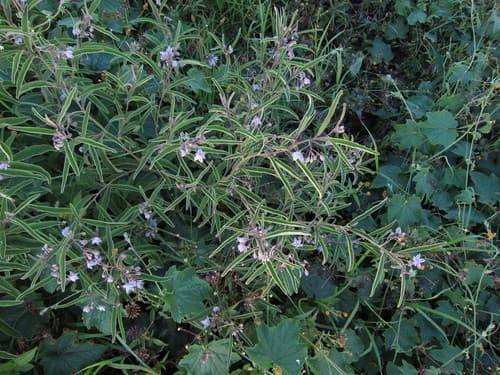
Ipomoea laeta is a vigorous, climbing herbaceous vine known for its heart-shaped leaves and large, showy, trumpet-shaped flowers. The blossoms are typically a vibrant blue or purple with a lighter, often white or pinkish, throat, opening in the morning sun.