Solanum petraeum
NameSolanum petraeum
Scientific NameSolanum petraeum
Common NamesDesert Nightshade, Rock Nightshade
Plant FamilySolanaceae
Natural HabitatFound in arid and semi-arid environments, often growing in rocky soils, sandy areas, and open woodlands in its native Australian range.
Parts Usedleaf,whole_plant
Medicinal Actionsanti-inflammatory, antimicrobial
Traditional UsesWhile specific traditional medicinal uses for Solanum petraeum are not widely documented, other Solanum species have been traditionally used by Indigenous Australians for external applications to treat skin ailments, wounds, and reduce localized pain and inflammation. The fruits of some Solanum species are consumed after specific detoxification processes, but S. petraeum edibility is often questioned.
Active ConstituentsSteroidal glycoalkaloids
Preparation Methodspoultice, decoction
Contraindications & WarningsAll parts of Solanum petraeum, like many Solanum species, are considered potentially toxic, especially if ingested. Internal use is strongly discouraged due to the presence of steroidal glycoalkaloids which can cause gastrointestinal distress, neurological symptoms, and even death in large doses. Not for use by pregnant or lactating women, or children.
Cultivation NotesThis drought-tolerant plant thrives in full sun and well-drained, sandy or rocky soils. It is adapted to arid conditions and requires minimal water once established.
Rarityuncommon
Description
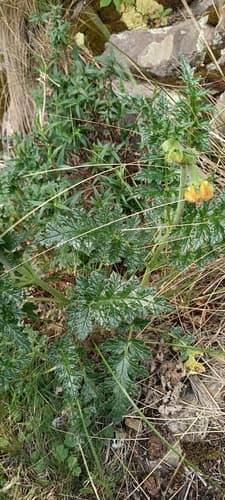
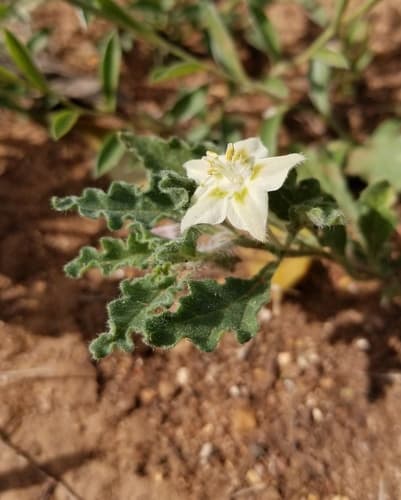
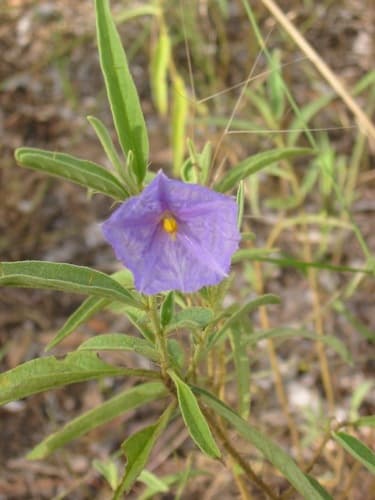
Solanum petraeum is a perennial subshrub native to arid regions, characterized by its narrow, often hairy leaves and striking purple, star-shaped flowers with a prominent yellow central cone of anthers. It typically produces small, spherical berries.