Solanum palmillae
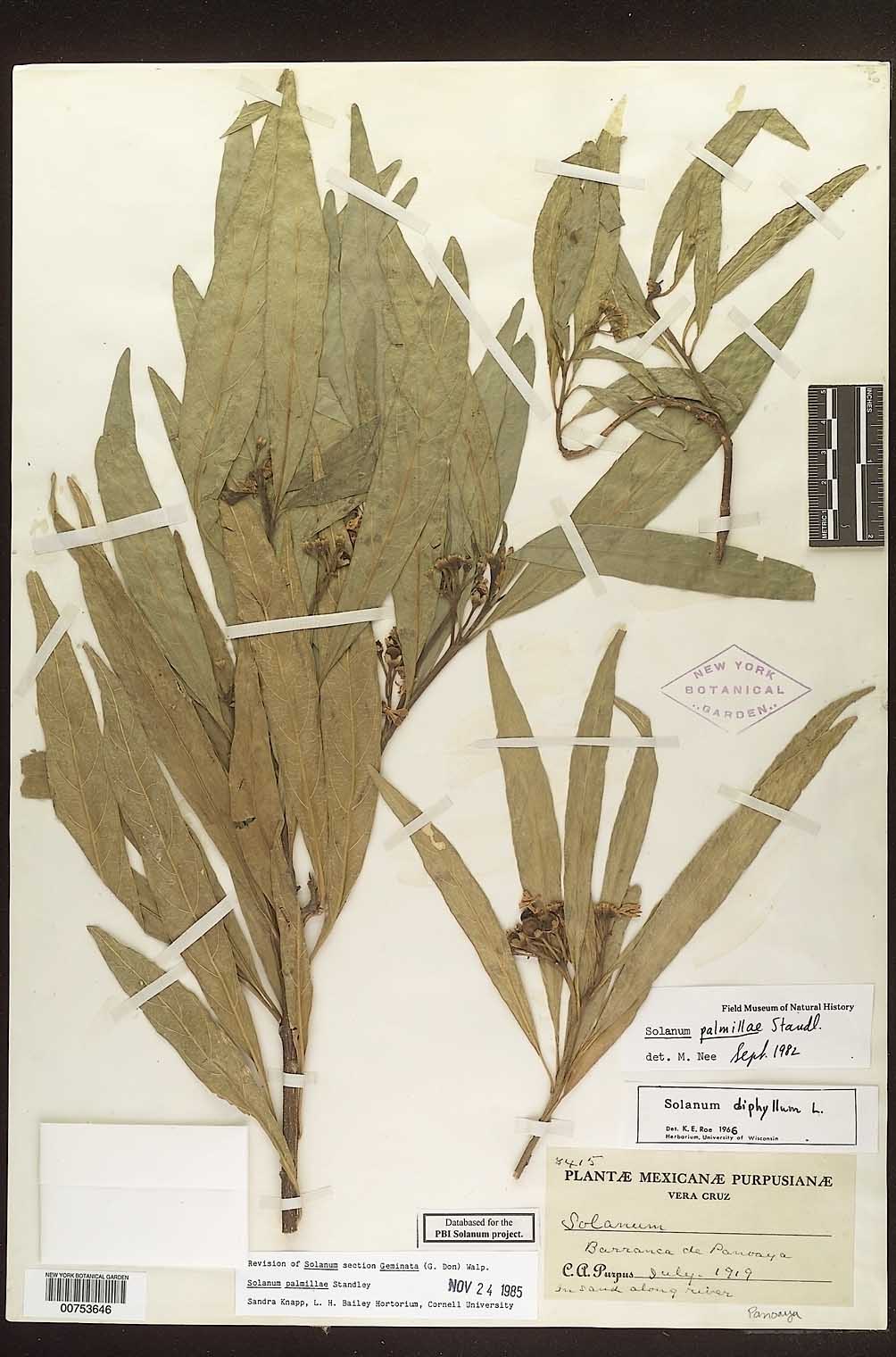
Image: The New York Botanical Garden (cc-by)
NameSolanum palmillae
Scientific NameSolanum palmillae Standl.
Plant FamilySolanaceae
Natural HabitatNative to Mexico, specifically documented from Vera Cruz, where it grows in sandy areas along rivers, indicating a preference for riparian or disturbed sandy habitats.
Parts Used
Traditional UsesNo specific traditional medicinal uses are widely documented for Solanum palmillae. While many species within the Solanum genus have ethnobotanical uses, often with caution due to potential toxicity, specific applications for this particular species are not well-recorded.
Contraindications & WarningsDue to the general presence of potentially toxic steroidal glycoalkaloids (e.g., solanine, solamargine) in the Solanum genus, internal use of Solanum palmillae is generally not recommended without specific ethnobotanical knowledge and chemical analysis. All parts should be considered potentially toxic.
Cultivation NotesLikely prefers warm climates with well-drained, sandy soils, consistent with its native habitat in riparian zones of Mexico. Specific cultivation requirements are not widely documented, suggesting it is not commonly cultivated.
Rarityuncommon
Description
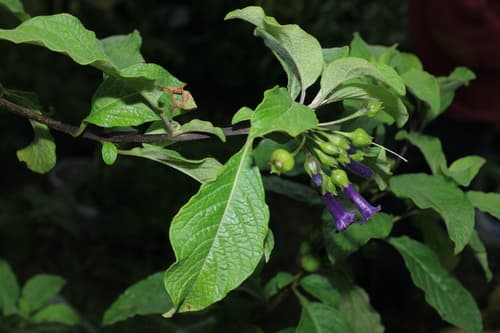
Solanum palmillae is a species characterized by its elongated, lanceolate leaves, as seen in the dried herbarium specimen. It appears to be a shrub or small tree, with mature foliage and dried inflorescences. The leaves are simple with entire margins.